LONDON: The owner of a plane that crashed with Argentine footballer Emiliano Sala on board told a UK court on Wednesday she had ordered the operator not to use the pilot.
The plane — a single-engined Piper Malibu — came down in the Channel in January 2019, killing the 28-year-old striker and the 59-year-old pilot David Ibbotson as they returned from France to Wales.
The plane’s operator, David Henderson, is standing trial at Cardiff Crown Court in Wales, accused of endangering the safety of the plane.
The plane’s owner, Fay Keely, said she bought the plane on Henderson’s advice and allowed him to operate it and choose pilots.
But she told the hearing that on July 6, 2018, six months before the fatal incident, she emailed the operator telling him not to use Ibbotson again.
She did this after the Civil Aviation Authority informed her of two infringements when he was piloting.
She later learnt that Henderson had nevertheless hired Ibbotson for a flight with her sister on board just a month later.
“He allowed that to happen without my permission,” she stressed.
Asked by the defense whether she had repeated her warning to Henderson not to use the pilot, she said: “No. As far as I was concerned I had made my feelings clear that he shouldn’t be flying the aircraft.”
Lawyer Martin Goudie, for the prosecution, told the court on Tuesday that Henderson was unavailable to pilot the return flight carrying Sala and arranged for Ibbotson to fly instead.
Henderson, from Hotham, in Yorkshire, northern England, has denied one charge of endangering the safety of an aircraft.
The court was told on Monday he had admitted one count of attempting to discharge a passenger without valid permission or authorization.
That charge typically concerns a business operator failing to acquire the appropriate licenses to hire a plane commercially.
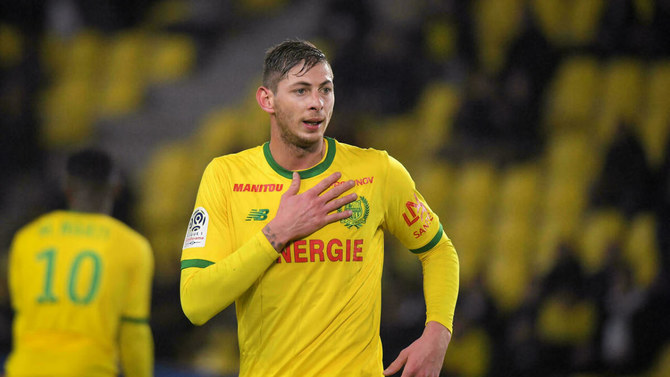
Sala died on the return flight from France, which he had visited to collect his belongings and say goodbye to teammates at Nantes after signing with Cardiff for a record £15 million (18 million euros, $19 million).
British air accident investigators in March 2020 concluded that Ibbotson was not licensed to fly the plane or to fly at night, and that he lost control and flew too fast as he tried to avoid bad weather.
The Air Accidents Investigation Branch said both the pilot and Sala were affected by carbon monoxide poisoning before the crash.


![]()

Owner of plane in Sala crash ‘forbade use of pilot’
Short Url
https://arab.news/nzsh9
Owner of plane in Sala crash ‘forbade use of pilot’
- Fay Keely told the hearing that on July 6, 2018, six months before the fatal incident, she emailed David Henderson telling him not to use David Ibbotson again
- Investigators in March 2020 concluded that Ibbotson was not licensed to fly the plane or to fly at night, and that he lost control and flew too fast as he tried to avoid bad weather


Latest updates


© 2026 SAUDI RESEARCH & PUBLISHING COMPANY, All Rights Reserved And subject to Terms of Use Agreement.