

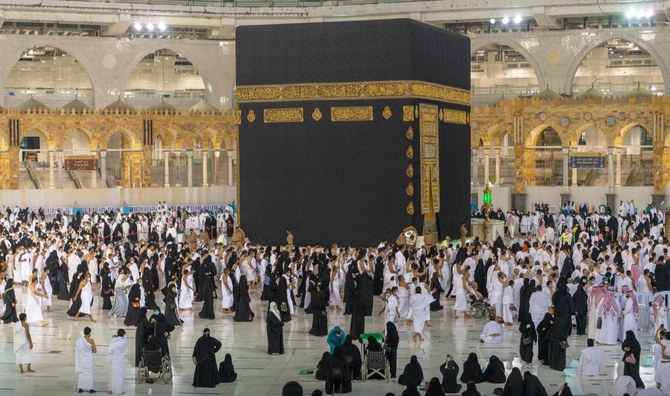
Makkah’s Grand Mosque ready to receive worshippers at full capacity

Short Url
Updated 17 October 2021
Follow

Makkah’s Grand Mosque ready to receive worshippers at full capacity

  • Visitors to the mosque will still be required to wear face masks and make reservations through the relevant apps
  • Workers at the mosque on Saturday were seen removing stickers reminding people to socially distance

RIYADH: The Grand Mosque in Makkah is ready to receive pilgrims and worshippers at full capacity on Sunday as Saudi Arabia loosens COVID-19 restrictions, an official said.

The Under-Secretary-General for the Affairs of the Grand Mosque, Dr. Saad bin Mohammed Al-Muhaimid, said that a plan has been implemented for the mosque to operate at full capacity whilst ensuring the safety of all.

Al-Muhaimid added that visitors to the holy mosque will still be required to wear face masks and make reservations to perform Umrah and prayers through the Tawakkalna and Eatmarna applications.
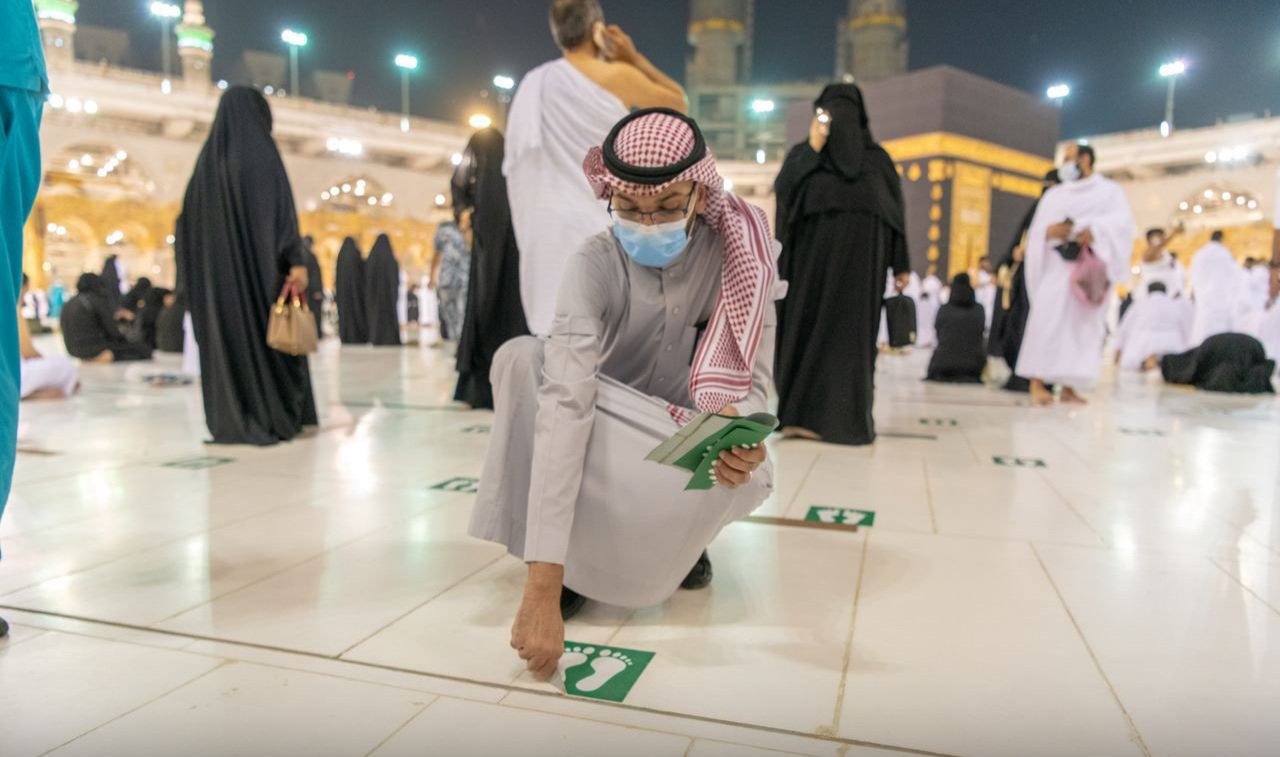
Workers at the Grand Mosque on Saturday evening were seen peeling stickers reminding people to socially distance off the floor, marking an end to the era of people in the Kingdom praying with 1-2 meter gaps between them due to the coronavirus pandemic.

As of Sunday, social distancing will no longer be mandatory at social gatherings or in public settings including on public transport and in restaurants, cinemas, and malls.

Face masks will no longer be mandatory in outdoor settings, except for certain specific locations including the two holy mosques.


Saudi Arabia launches initiative to reroute Gulf cargo to Red Sea ports

Updated 13 March 2026
Follow

Saudi Arabia launches initiative to reroute Gulf cargo to Red Sea ports

  • The initiative comes as shipping through the Strait of Hormuz has been severely disrupted by the widening conflict in the region
  • Since the US and Israel struck Iran last month, Tehran has moved to restrict passage through the waterway


RIYADH: Saudi Arabia has launched an initiative to redirect shipping from ports in the Arabian Gulf to its Red Sea ports amid the ongoing US-Israel-Iran war.

Transport Minister Saleh Al-Jasser, who also chairs the Saudi Ports Authority (Mawani), launched the Logistics Corridors Initiative alongside Zakat, Tax and Customs Authority Governor Suhail Abanmi, Mawani President Suliman Al-Mazroua, and other officials, the Saudi Press Agency reported.

The initiative will establish dedicated operational corridors to receive containers and cargo redirected from ports in the Kingdom's Eastern Region and other Gulf Cooperation Council states to Jeddah Islamic Port and other Red Sea coast ports.

Al-Jasser said the Kingdom was committed to ensuring supply-chain stability and the smooth flow of goods through global trade routes. Jeddah Islamic Port and other west coast ports, he added, were already playing a key role in accommodating shipments redirected from the east, while also linking Gulf cargo to regional and international markets.

The initiative comes as shipping through the Strait of Hormuz has been severely disrupted by the widening conflict in the region. Iran has long threatened to close the strait — the world's most critical oil and gas chokepoint, through which roughly a fifth of global oil supplies pass — in the event of a war.

Since the US and Israel struck Iran last month, Tehran has moved to restrict passage through the waterway, sending freight rates soaring and forcing shipping companies to seek alternative routes.

Saudi Arabia's Red Sea ports offer a viable bypass, connecting Gulf cargo to global markets without passing through the strait.