

Pakistani museum exhibits never-before-seen Gandhara art revealing centuries of multiculturalism

Young Pakistani women look at statues of Buddha on display in a museum at Taxila in Punjab province of Pakistan on April 3, 2012. (AFP/File)
Short Url
Updated 16 October 2021
Follow

Pakistani museum exhibits never-before-seen Gandhara art revealing centuries of multiculturalism

  • Show organized by Taxila Museum, UN Educational, Scientific and Cultural Organization, Punjab Tourism for Economic Growth Project 
  • “This exhibition shows we have been making global interactions and cultural exchanges for centuries,” curator says

TAXILA: The Taxila Museum, home to a comprehensive collection of Gandharan art dating from the 1st to the 7th centuries CE, is exhibiting a collection of never-before-seen artefacts this week that aim to highlight the the region’s centuries old multiculturalism, the curator of the event told Arab News this week.

The Gandhara region makes up parts of present day northern Pakistan and northeast Afghanistan. The area is famous for its Gandhara style of art which is heavily influenced by the classical Greek and Hellenistic traditions. 
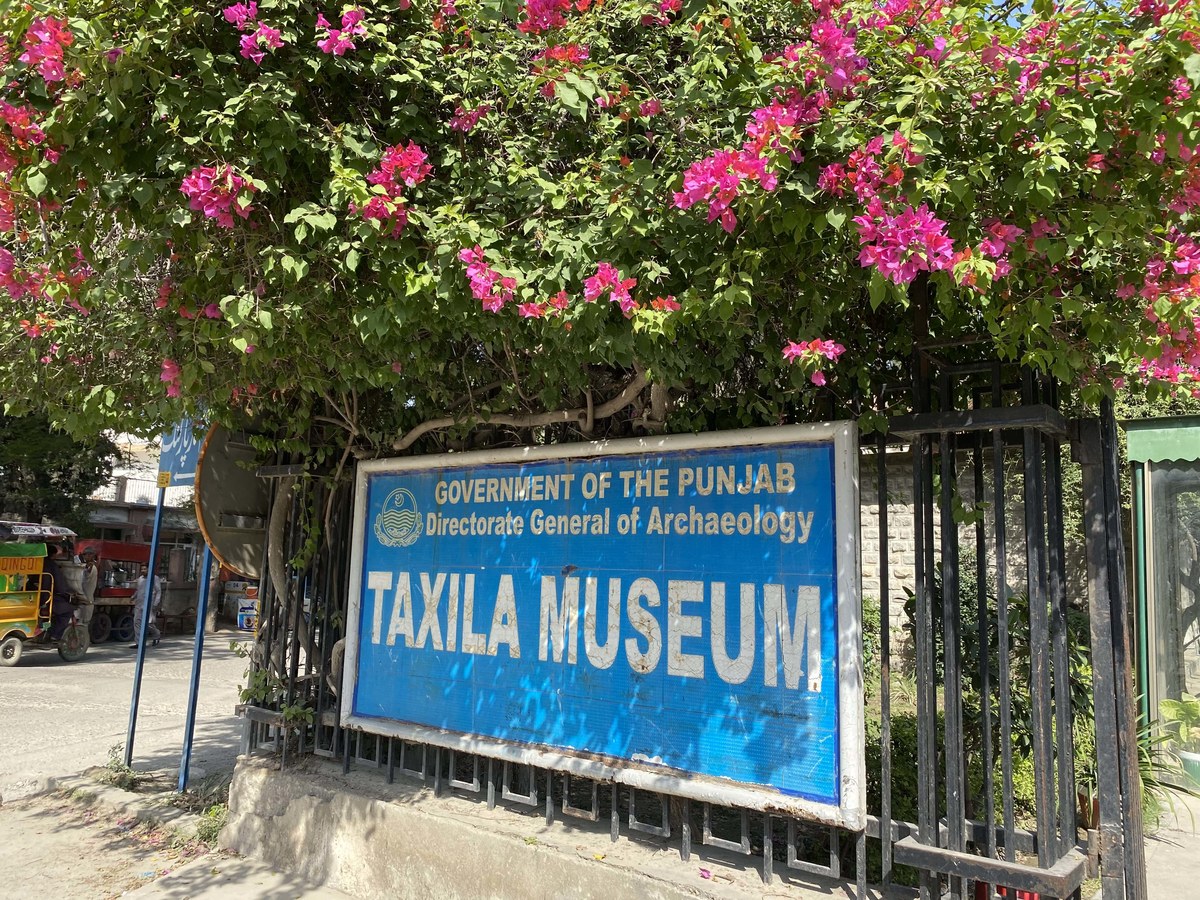


The Taxila Museum in Taxila, Pakistan on October 13, 2021 (AN Photo)

The 10-day exhibition, which is currently ongoing, has been organized by the Taxila Museum in collaboration with the United Nations Educational, Scientific and Cultural Organization (UNESCO) and the Punjab Tourism for Economic Growth (PTEG) Project.
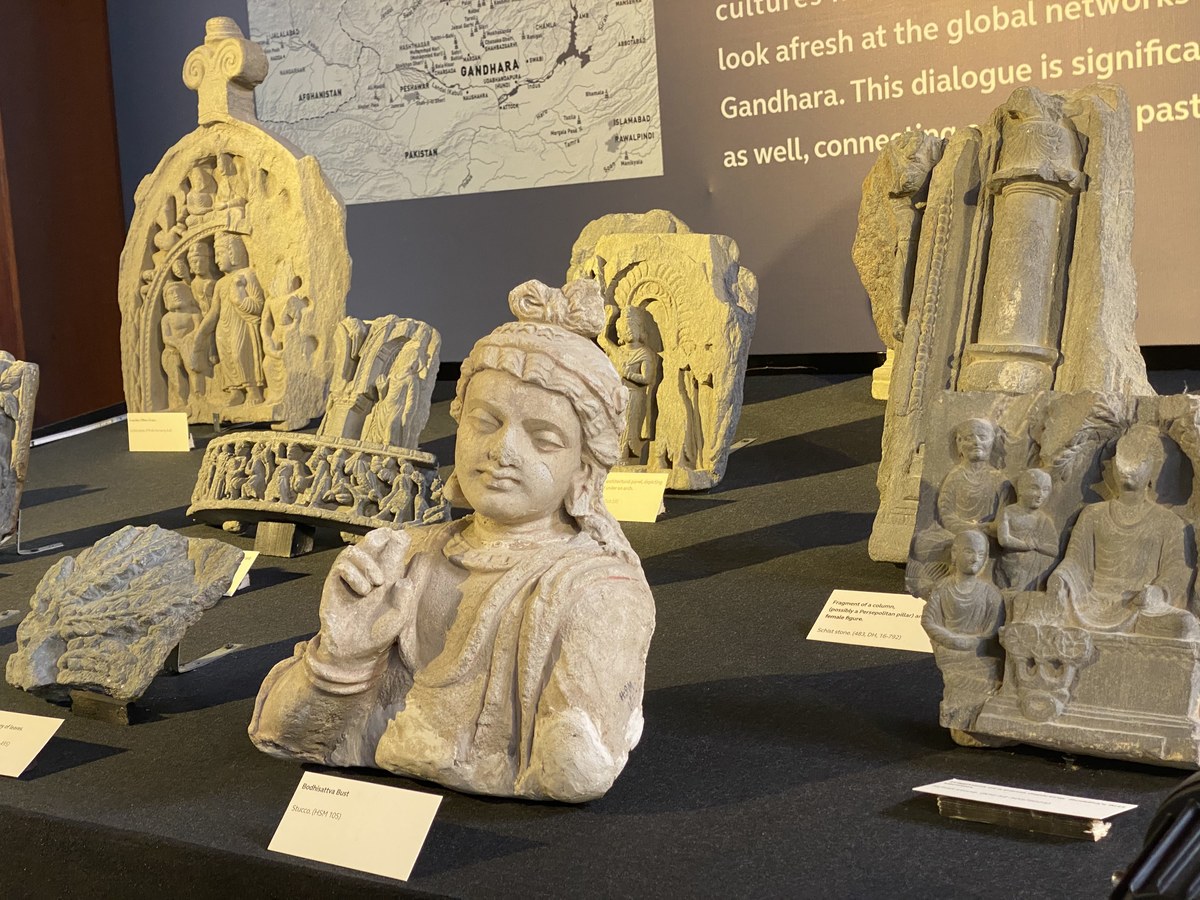


An assortment of recovered artifacts from the Gandhara period at the Gandhara Roots and Routes exhibit at the Taxila Museum in Taxila, Pakistan on October 13, 2021 (AN Photo)

The show is part of a larger Gandhara festival hosted by the museum where historians, researchers and artisans have been invited to discuss the area’s rich history, with a focus on how it served as a place where communities from different geographies and cultural backgrounds were crossing paths even centuries ago. 

None of the 35 objects displayed at the show have been seen before by the public, and all were discovered in Taxila and its surrounding areas.
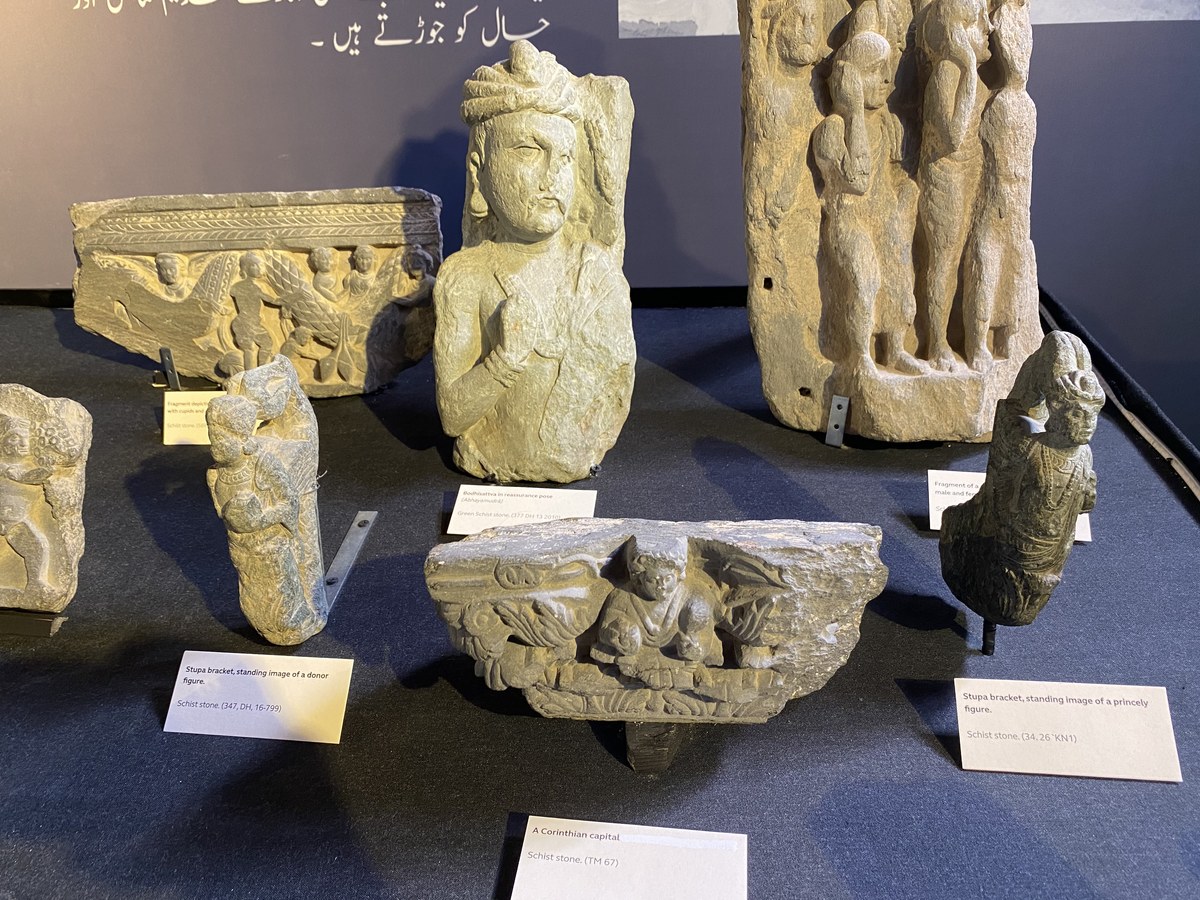


An assortment of recovered artifacts from the Gandhara period at the Gandhara Roots and Routes exhibit at the Taxila Museum in Taxila, Pakistan on October 13, 2021 (AN Photo)

“This exhibition shows we have been making global interactions and cultural exchanges for centuries,” Maliha Noorani, the curator of the Gandhara Roots and Routes exhibition, said.

“The curatorial lens of the show was to highlight intersectionality or live intercultural encounters that were happening in the ancient region of what is now present-day Pakistan,” the curator said. “That is what has been represented throughout the exhibition: how transmission of artistic production was happening. You can find Greco-Roman, East Asian and ancient Persian references.”
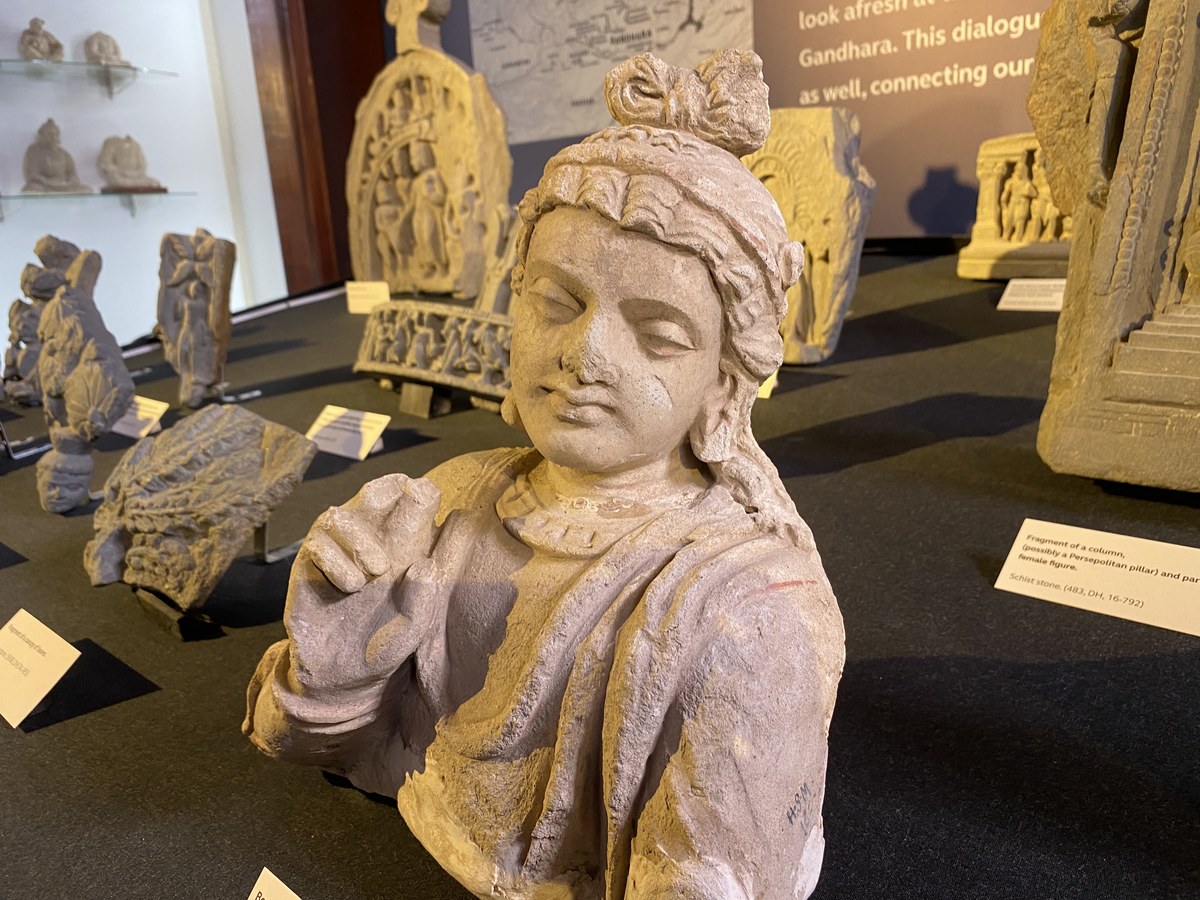


A bust of Bodhisattva, a person on the path to Buddhism, made in stucco at the Gandhara Roots and Routes exhibit at the Taxila Museum in Taxila, Pakistan on October 13, 2021 (AN Photo)

Taxila museum deputy director Mohummad Iqbal Khan told Arab News the exhibition was a demonstration of the dedicated work of archaeologists.

“We are a historical part of the world, but we are also a tourism hub for Pakistan and we want to show the modern-day softer image of Pakistan to the world and celebrates its diverse history,” he said.
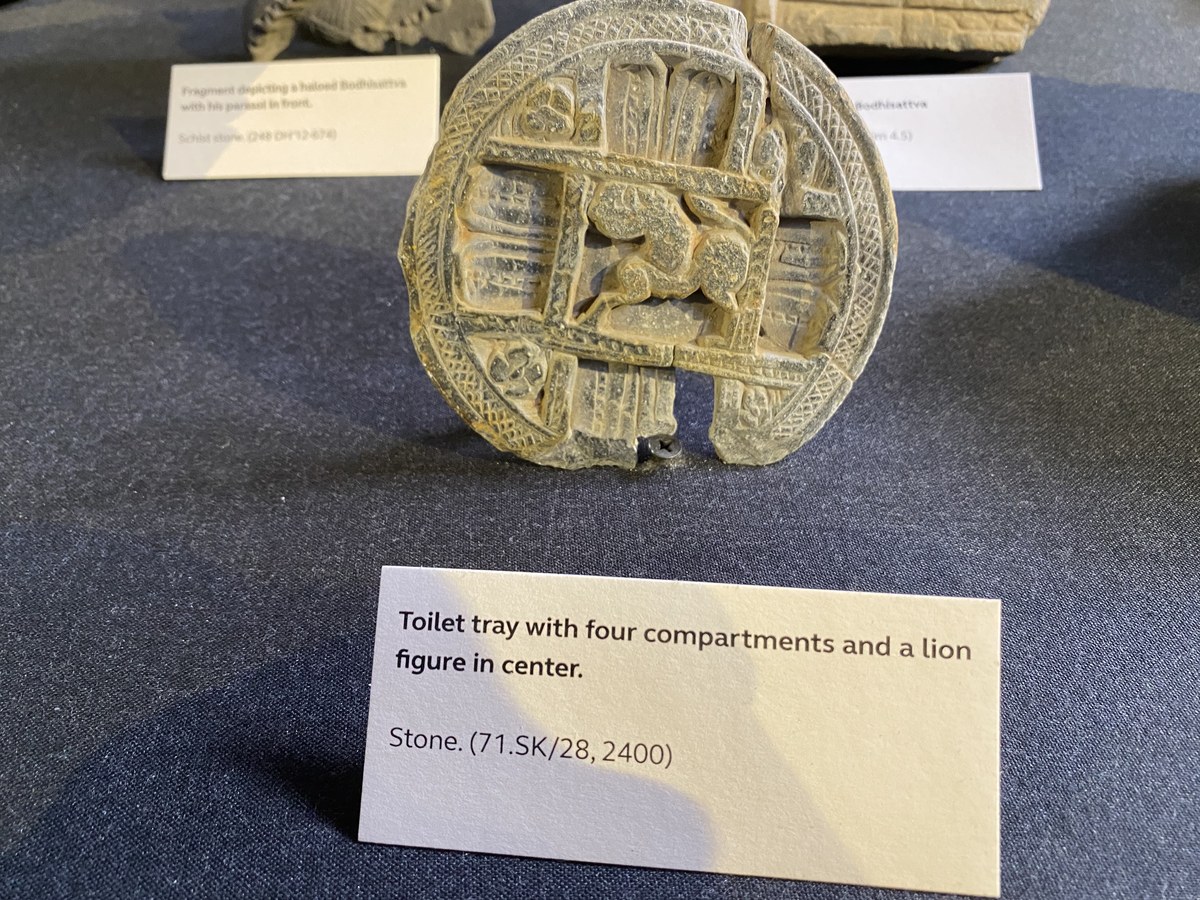


An ancient toilet tray at the Gandhara Roots and Routes exhibit at the Taxila Museum in Taxila, Pakistan on October 13, 2021 (AN Photo)

Noorani said she hoped that Pakistan would invest in its museum culture and recognize the value of such exhibits.
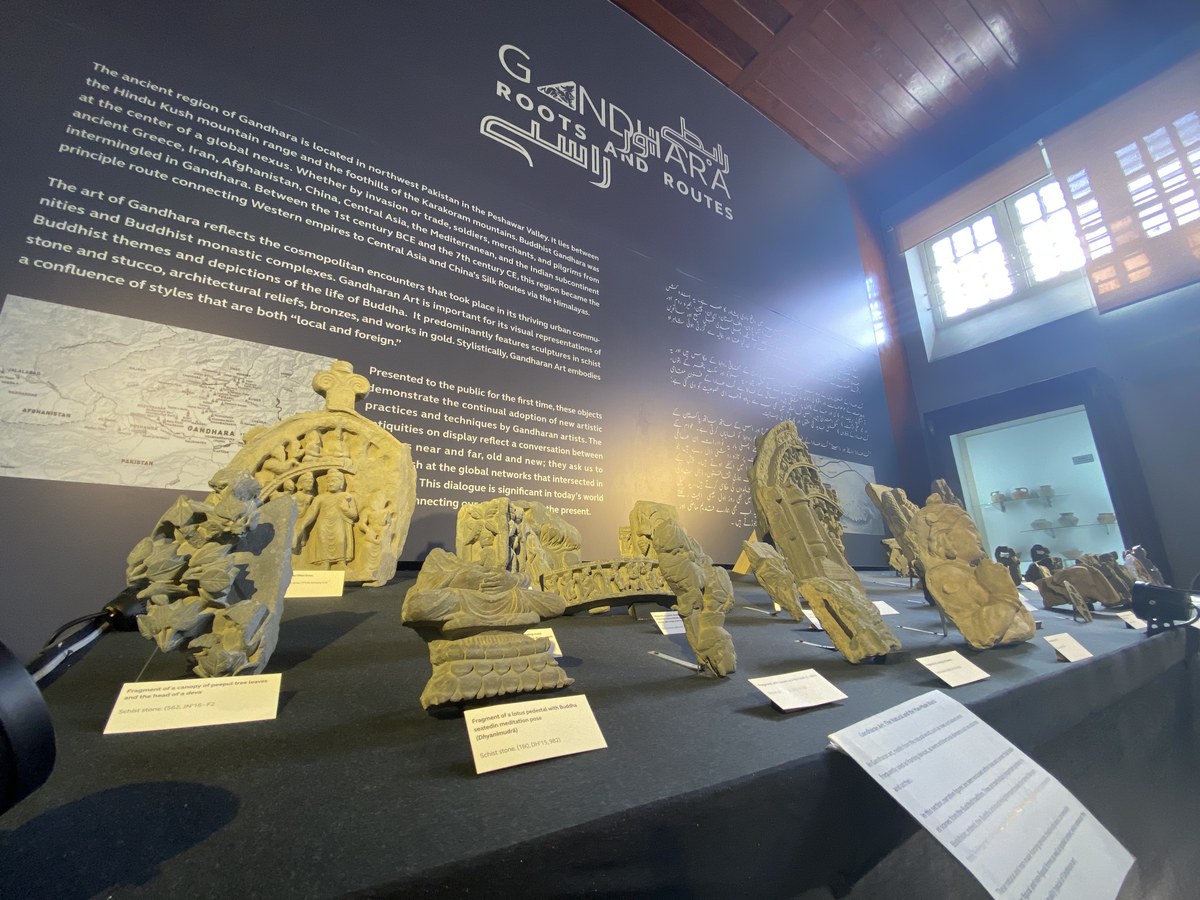


A view of the Gandhara Roots and Routes exhibit at the Taxila Museum in Taxila, Pakistan on October 13, 2021 (AN Photo)

“It is important to be curious about our history and to understand how ancient our region really is,” she said. “We don’t have a singular history; we have multiple histories. The more we educate ourselves and our children about the diverse background we come from, the more tolerant, open minded and global we will be on a local level.”


After Karachi mall fire kills 73, burned remains turn recovery into forensic nightmare

Updated 4 sec ago
Follow

After Karachi mall fire kills 73, burned remains turn recovery into forensic nightmare

  • Extreme heat, structural collapse and fragmented bodies slow identification, prolonging anguish for dozens of families
  • Limited disaster-forensics capacity leaves Pakistani authorities relying on DNA, bone analysis and mobile records

ISLAMABAD: Over a week after a catastrophic fire killed at least 73 people at Karachi’s Gul Plaza shopping complex, authorities are grappling with a grim reality: many victims are so badly burned that identifying them has become a forensic ordeal, leaving dozens of families trapped in agonizing uncertainty.

Officials say around 73 sets of human remains have been recovered from the site of the January 17 blaze, but only 23 victims have been formally identified. In many cases, intense heat inside the enclosed commercial building destroyed soft tissue and degraded DNA, reducing bodies to fragments that complicate both recovery and forensic confirmation.

“Unfortunately, in some cases only body remains were recovered, and those remains were in such a condition that when touched they were turning into powder,” said Daniyal Siyal, a spokesperson for the Karachi Metropolitan Corporation.

Globally, fires in densely packed, multi-story commercial buildings are among the most difficult disasters to investigate. Prolonged exposure to extreme temperatures can destroy DNA, collapse reinforced concrete floors and fuse human remains with debris. Even in countries with advanced disaster victim identification systems, such conditions often delay confirmation for weeks or months.

In Pakistan, where urban fires are frequent but forensic disaster response capacity remains limited, those challenges are compounded.

Gul Plaza housed more than 1,200 shops stacked vertically, with narrow stairwells, limited ventilation and heavy electrical loads. Rescue officials say the structure acted like a furnace, trapping heat and toxic gases long after flames were brought under control.

As a result, recovery operations quickly shifted from rescue to retrieval, and from retrieval to painstaking forensic work.

SCIENCE AS THE LAST HOPE

All recovered remains have been transferred to medico-legal facilities, where Karachi Police Surgeon Dr. Summaiya Syed is overseeing the identification process.

Only seven victims have been identified through facial recognition or identity documents recovered from pockets. For most families, science is now the only path to closure.

“The challenges that we are facing here are because of the heat damage that has been done to the body, to the remains,” Dr. Syed told Arab News. “In this instance, it is particularly challenging because the bodies are burnt to the extent that most of the DNA is unsalvageable.”

Forensic teams have collected samples from 45 deceased individuals and 54 reference samples from family members. But when DNA testing fails, a common outcome in prolonged high-temperature fires, investigators must rely on secondary methods.

“We hope that they are identifiable but if they aren’t by DNA, we have the anthropological measurements, anthropological data, CDR records and proof of presence to fall back on,” Dr. Syed said.

Those methods include bone analysis to estimate age and height, mobile phone call detail records placing individuals inside the building, and personal effects recovered from specific locations within the debris.

Earlier this week, a senior official involved in recovery efforts, speaking on condition of anonymity, said the process itself had further complicated identification.

According to the official, heavy excavators operated by untrained workers were used to clear debris, resulting in bags of remains that sometimes contained mismatched limbs. In some instances, the official said, remains counted as a single body weighed only three kilograms.

FAMILIES WAITING WITHOUT CLOSURE

Outside the destroyed plaza and at Karachi’s medico-legal facilities, families of the missing continue to wait after submitting DNA samples.

Rehman Khan, the uncle of 22-year-old victim Muhammad Arif, spent four days at the site of the inferno. He eventually joined rescue teams himself, helping pull nearly 30 sets of remains from the rubble.

He believed one of them was his nephew, but all were beyond recognition.

“Now for the past two or three days, we have been coming here in the morning and sitting here until evening,” Khan said.

“Now if we even get a body, that would be a very big thing. The chances of life itself have ended.”

Among those still unaccounted for is 18-year-old salesman Ibrar Akram, whose family says he died trying to help others escape.

“He was showing them the way,” his cousin Farhan Hafeez told Arab News.

Hafeez, who survived the blaze after escaping from his own shop in the building’s basement, said Akram helped at least four people find an exit before turning back inside.

“He went back inside and did not come back,” he said. “Today, it has been seven days since he went missing. What is the government doing?”

For Akram’s mother, Afsari Begum, the technical explanations offer no relief.

“I don’t want anything. I just want my Ibrar,” she said, her voice breaking down. 

Indeed, for families still waiting, the plea has narrowed to one request: dignity.

“Do not give us a body in pieces,” Hafeez said. “Give us our loved one whole, so that we at least know it is ours.”

A fact-finding committee appointed by the Sindh chief minister is investigating the cause of the fire, though its report has not yet been released. Authorities say facilities and resources are available to complete identification.

“We have facilities available here in Karachi, and we also have a DNA laboratory in Hyderabad. There is no issue regarding resources. All necessary resources are available to us,” Siyal said.
