KARACHI: A top Pakistani official has said a proposed $3.5 billion coastal development project in the port city of Karachi was part of the China-Pakistan Economic Corridor (CPEC), denying that the focus of the multibillion-dollar project was being shifted from Gwadar to Karachi.
Gwadar, in the southwestern province of Balochistan, is the crown jewel of China’s over $60 billion CPEC investment in Belt and Road Initiative projects in Pakistan. The plan was to turn Gwadar into a trans-shipment hub and megaport to be built alongside special economic zones from which export-focused industries would ship goods worldwide. A web of energy pipelines, roads and rail links would connect Gwadar to China’s western regions.
But growing insecurity and a spike in attacks by militants in Balochistan has recently rattled China, which has publicly demanded that Pakistan improve security for Chinese workers. Nine Chinese were killed this year in northwest Pakistan in an attack on a bus carrying them to a construction site. In a separate attack, a convoy of Chinese officials was targeted by a suicide bomber in Gwadar.
Thus, the announcement last month by Pakistan and China to include the Karachi Coastal Comprehensive Development Zone in the CPEC framework unleashed frantic speculation that the corridor project was being moved from the deep-sea port in the volatile Balochistan province.
“CPEC is not moving from Gwadar to Karachi,” Syed Ali Zaidi, the country’s maritime minister, told Arab News in an exclusive interview on Monday. “Rather, the corridor project is moving into Karachi in addition to Gwadar and is expanding its framework, which is great for us.”
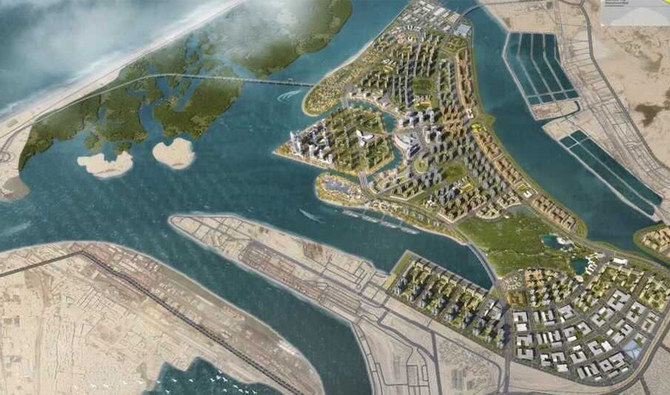
“It [CPEC] is going to develop a whole new district in Karachi which is going to be a state-of-the-art district equipped with technology and all modern infrastructure,” he said.
Elaborating on the financing plan for the project, he said the $3.5 billion Chinese investment was not a loan or a grant, but the project was a partnership between a Chinese state-owned enterprise and the Karachi Port Trust [KPT], which owned the land.
“$3.5 billion will be invested to develop infrastructure where the KPT and [the Chinese] investor both will make money,” Zaidi said. “Instead of a loan or a grant, we have decided to do a win-win project, which means that people who are investing will also make some returns.”
The maritime minister said the project would add four more berths to the targeted coastal area, providing greater depth to Pakistan’s expanding maritime sector and creating space for cruise ships to dock.
“We will build four berths may be for cruise ships and if we build for cruise ship there may be some hotels around it and this all has to be backed by real estate development,” he said. “But the real estate development is not the primary objective: primary objective [is] to fix our marine environment and, on the top of it, build state-of-the-art modern infrastructure.”
A state-of-the-art fishing port would also be built, Zaidi said, along with a world class fisheries export processing zone.
“A water treatment plant at the mouth of Lyari River would be built to improve marine ecosystem and reduce pollution in the Arabian sea,” the minister said.
He added that the coastal development plan would also benefit the poor slum of Machar Colony in the area, mostly inhabited by the Bengali and Burmese communities:
“We have decided to make 20,000 to 25,000 apartments in accordance with Prime Minister Imran Khan’s vision to promote low-cost housing to give respectable living [conditions] to our people.”


![]()

Pakistan denies Chinese economic corridor projects shifting from Gwadar to Karachi amid worsening security
Short Url
https://arab.news/mtsuq
Pakistan denies Chinese economic corridor projects shifting from Gwadar to Karachi amid worsening security
- Maritime minister says new $3.5 billion Karachi coastal development project was just an expansion of CPEC framework
- Spike in attacks by militants in Balochistan has rattled China, which has publicly demanded Pakistan improve security for Chinese workers
Latest updates


© 2026 SAUDI RESEARCH & PUBLISHING COMPANY, All Rights Reserved And subject to Terms of Use Agreement.