

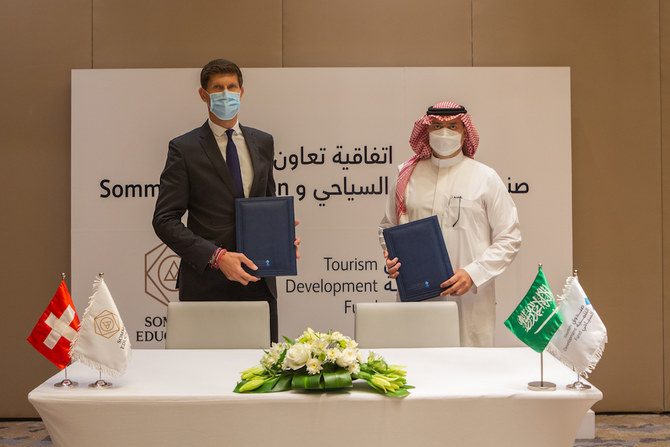



RIYADH: The Saudi Tourism Development Fund signed an agreement with one of the most prestigious hospitality institutes in the world, Sommet Education, to boost the Kingdom’s tourism sector.
Benoît-Etienne Domenget, CEO of Sommet Education, told Arab News that the partnership with TDF is highly aligned with Saudi Vision 2030 as tourism will play a vital role in the future for the Kingdom.
The partnership will help develop the fund’s employees and clients’ knowledge, skills, and competencies in tourism, hospitality, and entrepreneurship through dedicated programs, training courses, workshops, conferences, and consulting.
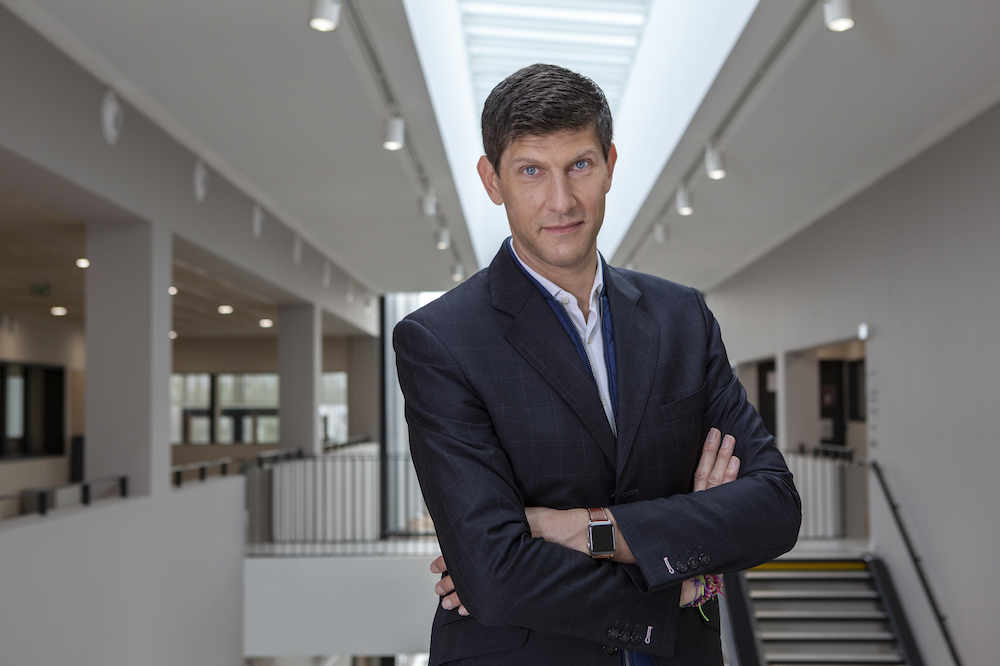
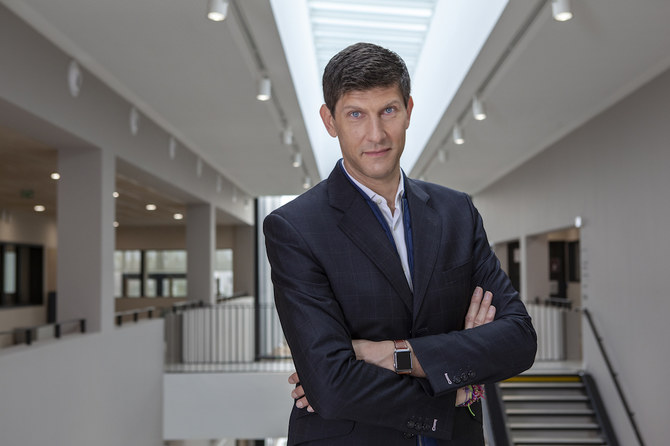
Benoît-Etienne Domenget, CEO of Sommet Education. (Thierry Arensma)
“The TDF initiative is all about lifelong learning education and continuous education ... We will train the executives of TDF and their young talents because specialized education is essential. This is the future of education,” Domenget said.
“Of course, you need a solid foundation, but you also need a solid lifelong learning education. Those who are going to invest in lifelong learning and continuous education will win the race to find the right talents. That is what will contribute to the future of tourism in the Kingdom.”
According to Domenget, Sommet Education is the broadest and the largest education company group in hospitality management globally. Sommet Education has five schools and is present in eight countries, including Switzerland, France, South Africa, and India. The Swiss-originated hospitality business schools, Glion Institute of Higher Education and Les Roches, along with the culinary and pastry arts school, École Ducasse, are also under the Sommet Education umbrella.
“We have 18 campuses and some others to come very soon. We have around 400 programs starting from vocational to foundation education, bachelor’s and master’s, MBA, specialized education, and lifelong learning. We are present in all the fields of hospitality management, training, and culinary arts education,” he said.
“We have more and more students coming from Saudi Arabia to our campuses in Switzerland. Today, we have around 150 Saudi students already in the bachelor’s and master’s programs. And that started nearly 20 years ago with the first student coming to our campuses.”
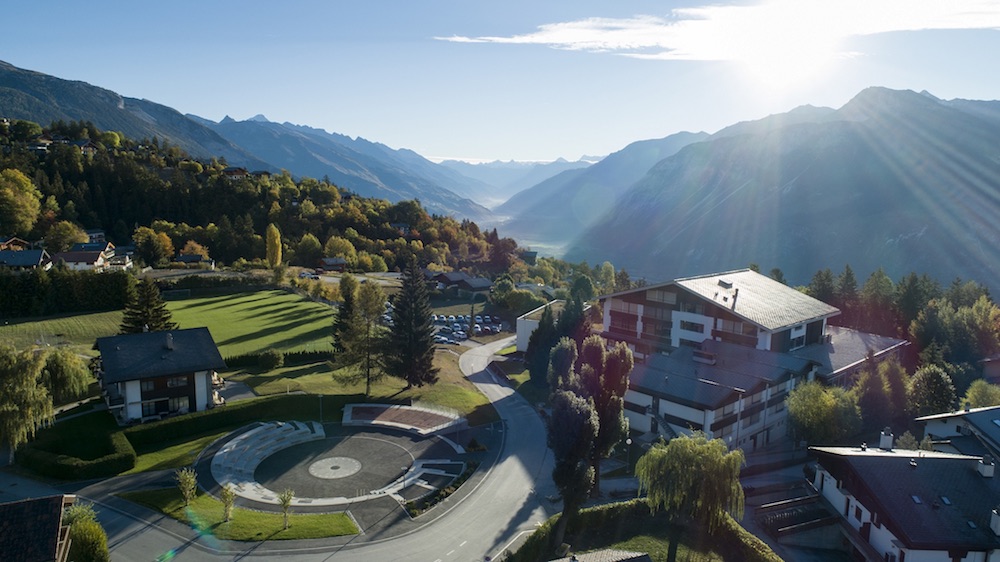
Les Roches Campus. (Sommet Education)
The Saudi Ministry of Education recognizes both the Glion and Les Roches Institutes.
“We are proud to be the only education group to have two institutions that are accredited by the ministry of education, which only attribute to the long-lasting relationship that we have in the Kingdom,” Domenget said.
During the signing ceremony, Qusai Al-Fakhri, CEO of TDF, said that the tourism sector is a key driver of Vision 2030.
“In order to facilitate its rapid growth, it is essential to have the right talent leading the way,” he said. “Through our partnership with Sommet Education, we look forward to enabling TDF’s valued clients and employees by providing them with the best-in-class training. They need to realize their tourism ambitions during this exciting phase in the Kingdom’s history.”
Domenget said TDF is a major player as it supports the tourism sector in the Kingdom with massive funds. They also support the development of small- and medium-sized enterprises along with private businesses.
“In that respect, we are starting our project with TDF to train their executives and the future leaders and that’s the first phase,” he said. “And obviously, we will extend that to the clients that TDF is investing in to support them in having the right skills to further develop the tourism sector. So, the main objective with TDF is to train professionals who are already active in the tourism industry in the next few years.”
Domenget highlighted that today the tourism sector’s GDP in Saudi Arabia is around 3 percent of the GDP and TDF aims to raise that to 10 percent and reach one million jobs by 2030.
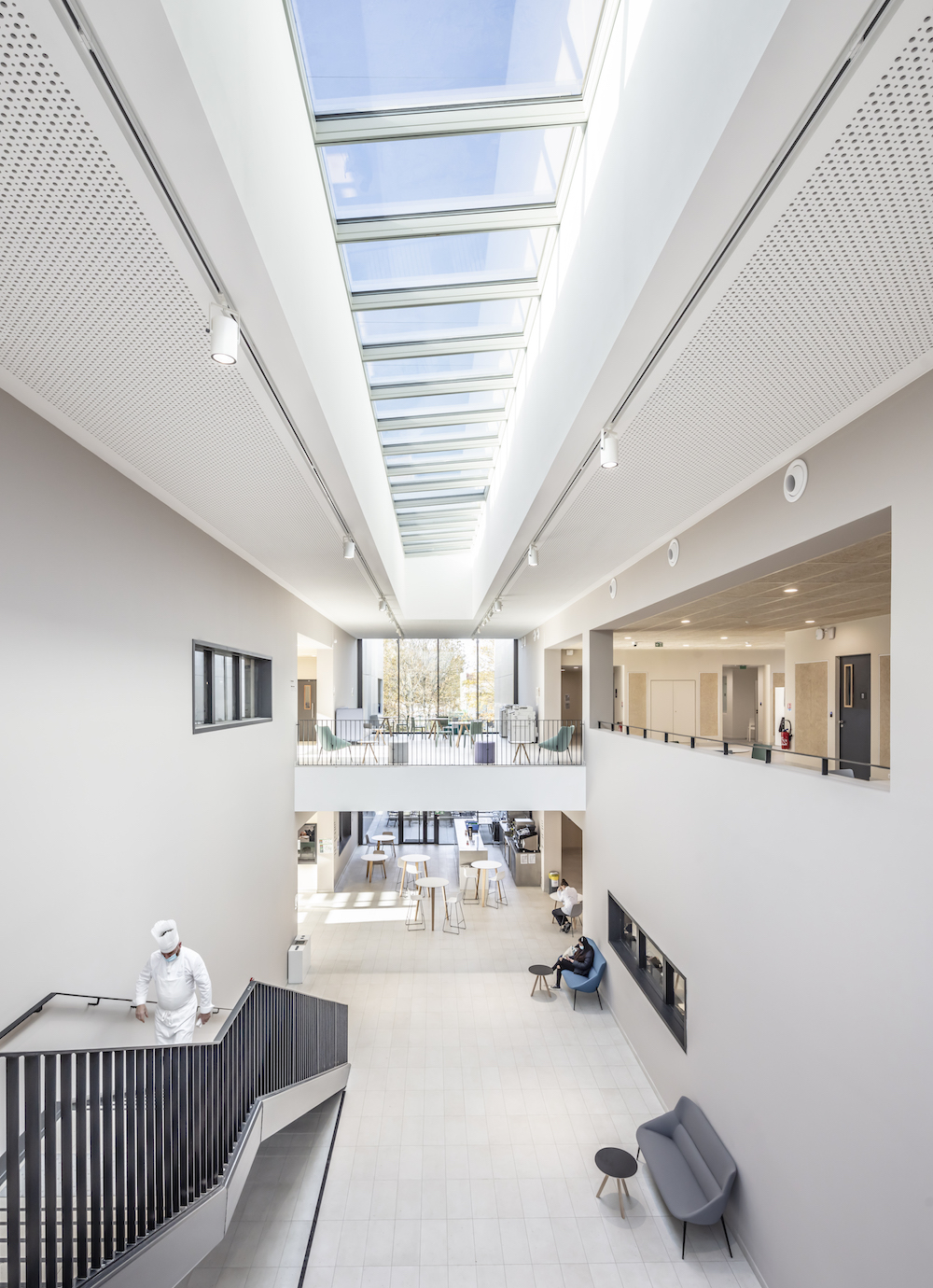
Ecole Ducasse Paris Campus. (Beogly Grazia)
“We are very proud in supporting TDF and Saudi Arabia Vision 2030 to help create a generation of talent which will groom future leaders of that industry,” he said.
Sommet Education has tailor-made special programs for TDF, ranging from one-week to nine-week intensive courses. Domenget pointed out that there will be face-to-face interactions with professionals as applicants come to Switzerland’s campuses.
According to Domenget, one of the biggest challenges facing the tourism sector is finding the right talents for tomorrow.
“I always say that creating a great hotel is not that complicated,” he said. “You need access to capital, a great location, good engineers, and great architects. But when you have the hotel, what is going to make the difference is the people working in it. And that is the most difficult challenge that every person working in the tourism and travel industry is facing: finding the right people.”
Domenget said the bond between Sommet Education and the Kingdom has grown throughout the years. They signed a memorandum of understanding last year with the Human Capital Development, the Ministry of Culture, and the Ministry of Tourism.
“We are also a solid partner with the UN World Tourism Organization, which recently opened its offices in Riyadh. So, many things are happening, and I am sure some other projects will come in the future,” he said.


