55 percent Pakistanis say want Afghan Taliban type of Islamic government at home — survey

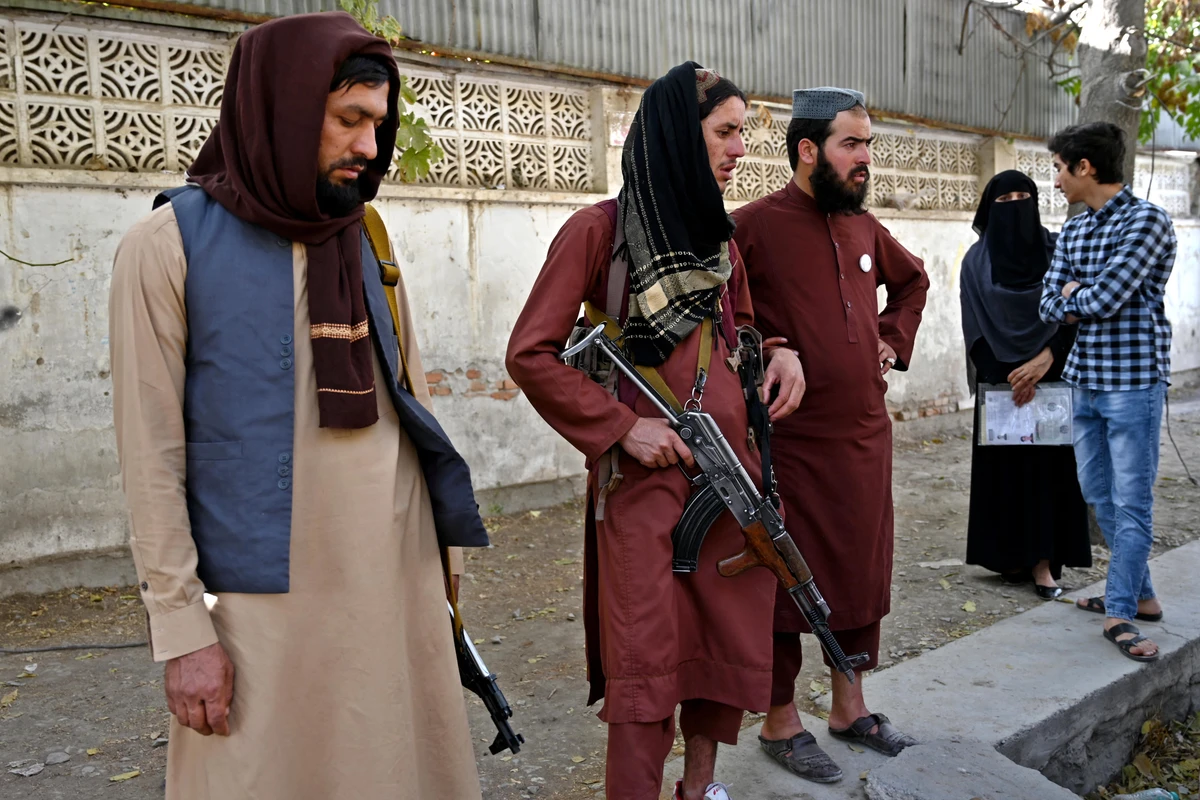
Taliban fighters stand guards as people wait with their documents after Taliban announced the reopening for passport applications, outside the passport office in Kabul on October 6, 2021. (AFP)
Short Url
Updated 08 October 2021
Follow

55 percent Pakistanis say want Afghan Taliban type of Islamic government at home — survey

  • 33 percent females and 31 percent males in Gallup survey were against a Taliban-style Islamic government
  • Survey was carried out among a sample of 1,418 people in all four provinces of the country

ISLAMABAD: Around 55 percent Pakistanis have said they wanted the kind of Islamic government in Pakistan that the Taliban had brought to Afghanistan, the results of a survey conducted by a leading Pakistani research firm showed on Thursday.

The study was carried out by Gallup & Gilani Pakistan (GGP), which is a local affiliate of Gallup International.

Taliban took over the Afghan capital of Kabul on August 15 and have since formed an interim government.
According to a statement by GGP, the survey was carried out among a sample of 1,418 men and women in urban and rural areas of all four provinces of the country, during August 13 and September 05, 2021.

The main question asked was: “Do you want the kind of Islamic government that the Taliban have brought to Afghanistan in Pakistan as well?”

In response to this question 55 percent respondents said yes, 31 percent said no while 14 percent said they did not know or did not respond.

According to the survey results, 33 percent females and 31 percent males were against a Taliban-style Islamic government.

Under the first Taliban rule between 1996 and 2001, women were banned from work and education. The group has said in recent weeks that women would be allowed to work and attend university but within the parameters of Islamic law. They also promised to form an inclusive government but key positions in their interim setup have gone to veteran players of the movement.



Pakistan deputy PM directs authorities to monitor food prices ahead of Ramadan 

Updated 27 January 2026
Follow

Pakistan deputy PM directs authorities to monitor food prices ahead of Ramadan 

  • Prices of essential food items surge during holy month of Ramadan due to hoarding, profiteering by traders
  • Deputy PM Ishaq Dar directs authorities to prevent artificial price hikes, exploitation of consumers in Ramadan

ISLAMABAD: Pakistan’s Deputy Prime Minister Ishaq Dar on Tuesday directed authorities to monitor prices of essential food items ahead of Ramadan to prevent artificial price hikes and consumers from getting exploited, his office said. 

Pakistani increasingly shop for essential food items during the holy month of Ramadan, as millions across the country fast from dawn till sunset. Prices of essential food items surge during the holy month every year as traders often indulge in hoarding and profiteering. 

Dar chaired a meeting to review the availability and prices of essential commodities across the country on Tuesday, his office said. 

“DPM/FM [foreign minister] directed federal & provincial authorities to continue close monitoring, particularly in view of the approaching month of Ramazan, to prevent any artificial price hike or exploitation of consumers by unscrupulous elements,” Dar’s office said in a statement.

A central moon sighting committee in Pakistan, the Ruet-e-Hilal Committee, determines when Ramadan begins. The Islamic month is expected to start this year after mid-February, around Feb. 17 or Feb. 18.

Pakistan’s government also announces subsidies for the masses during the holy month to lower the prices of essential food items. 

In 2024, the Shehbaz Sharif-led government announced a Ramadan package comprising a subsidy of $26.8 million (Rs7.5 billion) to lower the prices of essential items for over 30,96,00,000 families.