Pakistani artist’s installation to ‘live on’ in Dubai after 2020 Expo closes 

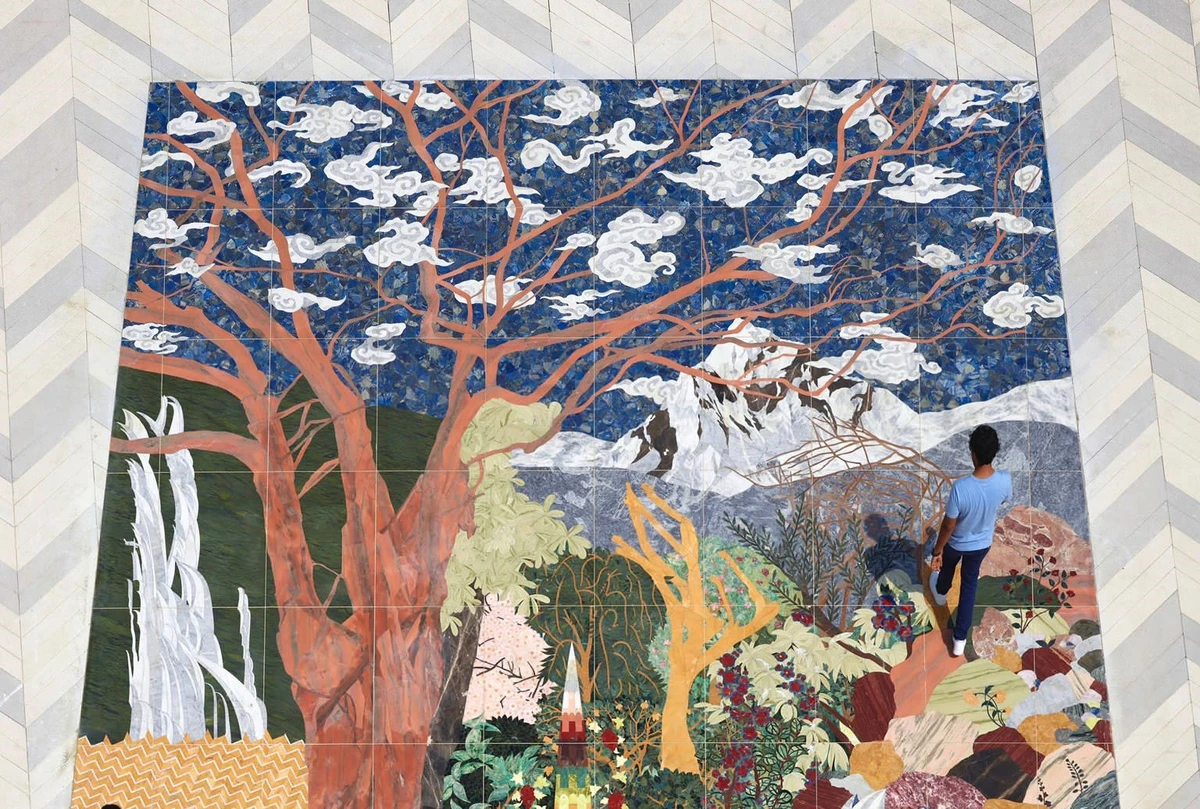
“Garden,” an installation by Pakistani artist Hamra Abbas, can be seen ahead of the Dubai Expo 2020 in the United Arab Emirates on September 30, 2021. (Photo courtesy: Hamra Abbas)
Short Url
Updated 08 October 2021
Follow

Pakistani artist’s installation to ‘live on’ in Dubai after 2020 Expo closes 

  • ‘Garden’ by Hamra Abbas is a floor sculpture that uses marble inlay technique, spans 33X30 feet and will be permanent fixture in Dubai 
  • It is part of the Expo’s Public Art Programme that aims to display connections UAE has made with "rest of the world”

RAWALPINDI: A massive floor sculpture by Pakistan’s Hamra Abbas displayed at the Expo 2020 Dubai will become a permanent fixture in Dubai, with the artist saying she was thrilled that the work would “live on” in the emirate even after the world fair closes in March. 

The Expo is the first world fair to be held in the Middle East, and Dubai, the region's tourism, trade and business hub, is hoping to boost its economy by attracting 25 million business and tourist visits to the exhibition, which has been built from scratch on 4.3 sq km (1.7 sq mile) of desert at a cost of around $6.8 billion.

Exhibitors from almost 200 countries are participating, with many countries and companies looking to the expo - the first major global event open to visitors since the coronavirus pandemic - to boost trade and investment.
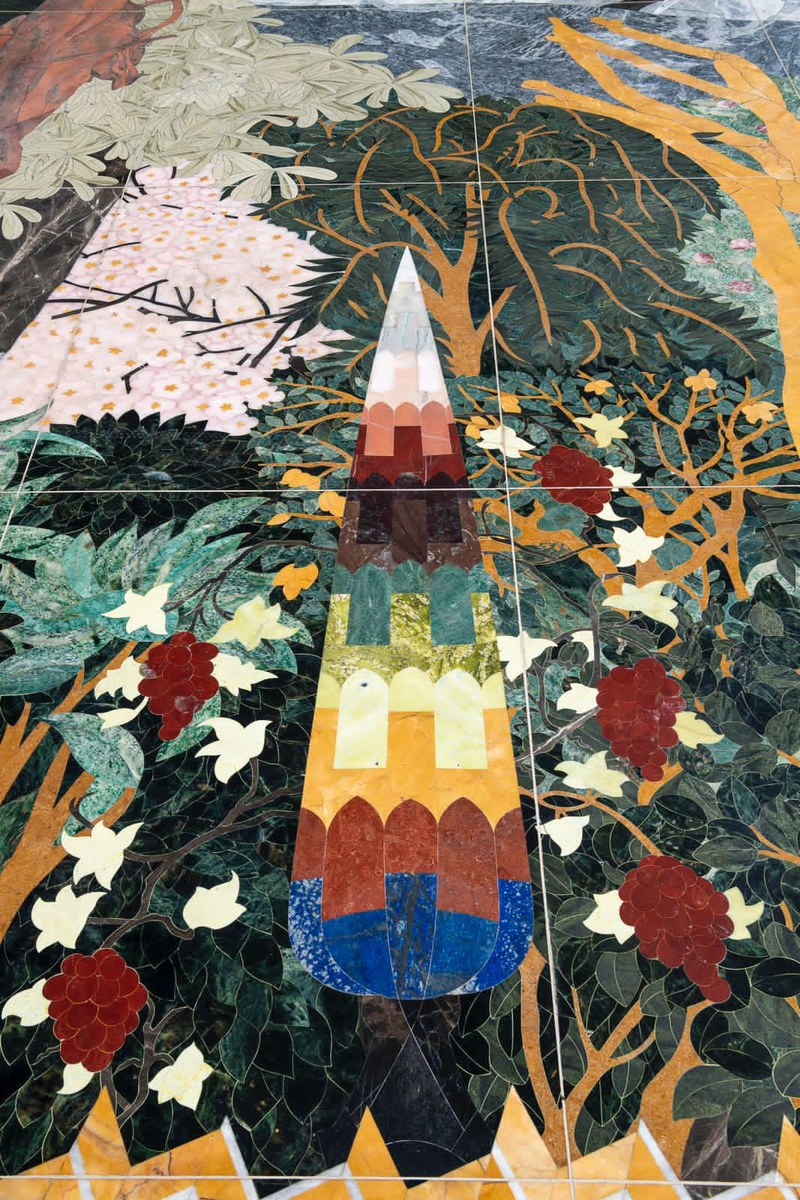


This picture, taken on October 2, 2021, shows Hamra Abbas’s sprawling artwork, “Garden,” at the Dubai Expo 2020, UAE. (Photo courtesy: Hamra Abbas)

For Pakistan’s Abbas, it is the first time she has participated in an international event of such magnitude. She told Arab News she was invited to be part of the fair's Public Art Program by the event’s visual arts curator, Tarek Abou El Fetouh, last year during his visit to Lahore, Abbas’s hometown.

“I hope that people feel immersed in the work and become part of it when they walk on it or interact with it on site,” Abbas said in a telephone interview. “I am so pleased that the work will continue to be available to the public and will live on even after the expo is over in March next year.”

The 33 by 30 feet piece has been made using a marble inlay technique indigenous to Lahore, and employs a combination of granite, calcite, serpentine, jasper and lapis lazuli stones. Abbas described the work as a marble sculpture that mixes in light-based works, printmaking and miniature painting.
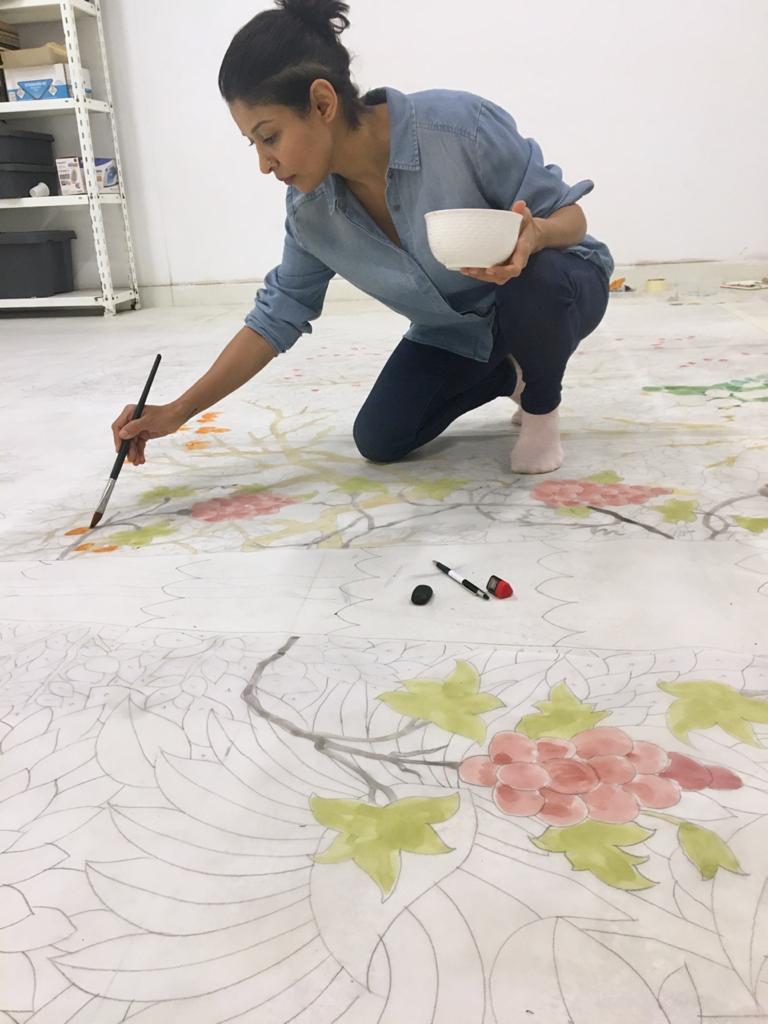


In this undated file photo, artist Hamra Abbas draws and maps out her floor sculpture “Garden” in Lahore, Pakistan. (Photo courtesy: Hamra Abbas)

The piece is part of the Expo’s Public Art Program that Dr Hayat Shamsuddin, senior vice-president for arts and culture at the Expo, told media aimed to incorporate the connections the UAE has made “with the rest of the world.”

“As part of Expo 2020, different countries from around the world will come together in one place, so we wanted the public art to be centred on a common thread that we, as humans, share,” curator El Fetouh told media. 

Abbas, a graduate of the National College of Arts in Lahore and the University of the Arts in Berlin, said her creation featured “the aesthetics of desire and paradise,” saying she drew inspiration from images of gardens found in Mughal manuscripts, landscape photography and personal photo archives.
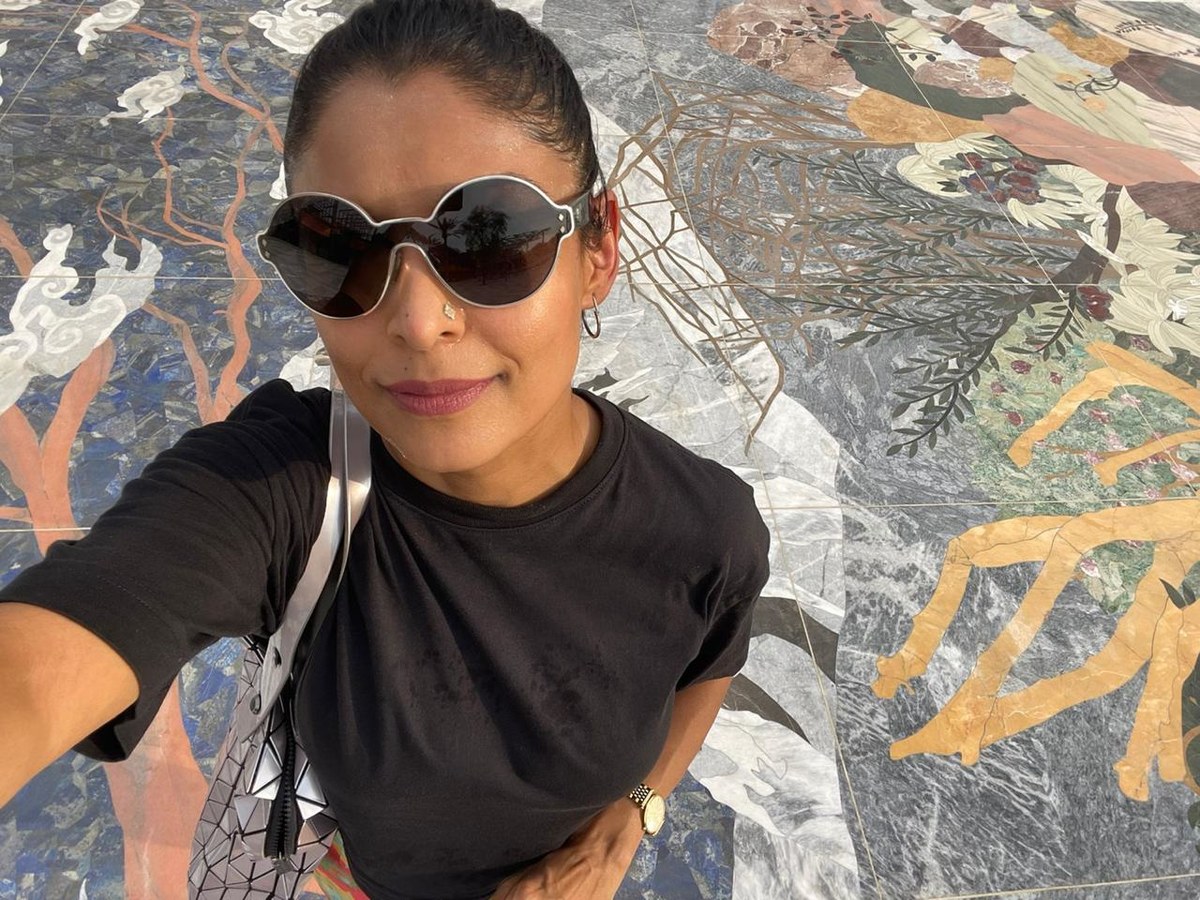


Artist Hamra Abbas snaps a selfie with her commissioned artwork ahead of Dubai Expo 2020 in the United Arab Emirates on September 30, 2021. (Photo courtesy: Hamra Abbas)

“The work is built on universalized readings of a garden as a utopia or paradise that is found in many traditions around the world,” Abbas said. 

The piece took almost a year to complete and a whole team worked for several weeks to fully install it in its designated place at the Expo.

“The response to the piece has been overwhelming,” she said. “The response from friends and the art community in Pakistan was really incredible.”
ADB, Pakistan sign over $300 million agreements to undertake climate resilience initiatives

Updated 30 December 2025
Follow

ADB, Pakistan sign over $300 million agreements to undertake climate resilience initiatives

  • Pakistan ranks among nations most vulnerable to climate change and has seen erratic changes in weather patterns
  • The projects in Sindh and Punjab will restore nature-based coastal defenses and enhance agricultural productivity

ISLAMABAD: The Pakistani government and the Asian Development Bank (ADB) have signed more than $300 million agreements to undertake two major climate resilience initiatives, Pakistan’s Press Information Department (PID) said on Tuesday.

The projects include the Sindh Coastal Resilience Sector Project (SCRP), valued at Rs50.5 billion ($180.5 million), and the Punjab Climate-Resilient and Low-Carbon Agriculture Mechanization Project (PCRLCAMP), totaling Rs34.7 billion ($124 million).

Pakistan ranks among nations most vulnerable to climate change and has seen erratic changes in its weather patterns. In 2022, monsoon floods killed over 1,700 people, displaced another 33 million and caused over $30 billion losses, while another 1,037 people were killed in floods this year.

The South Asian country is ramping up climate resilience efforts, with support from the ADB and World Bank, and investing in climate-resilient infrastructure, particularly in vulnerable areas.

“Both sides expressed their commitment to effectively utilize the financing for successful and timely completion of the two initiatives,” the PID said in a statement.

The Sindh Coastal Resilience Project (SCRP) will promote integrated water resources and flood risk management, restore nature-based coastal defenses, and strengthen institutional and community capacity for strategic action planning, directly benefiting over 3.8 million people in Thatta, Sujawal, and Badin districts, according to ADB.

The Punjab project will enhance agricultural productivity and climate resilience across 30 districts, improving small farmers’ access to climate-smart machinery, introducing circular agriculture practices to reduce residue burning, establishing testing and training facilities, and empowering 15,000 women through skills development and livelihood diversification.

Earlier this month, the ADB also approved $381 million in financing for Pakistan’s Punjab province to modernize agriculture and strengthen education and health services, including concessional loans and grants for farm mechanization, Science, Technology, Engineering and Mathematics (STEM) education, and nursing sector reforms.