Global airline pandemic losses to hit $201bn in 2020-2022, IATA says

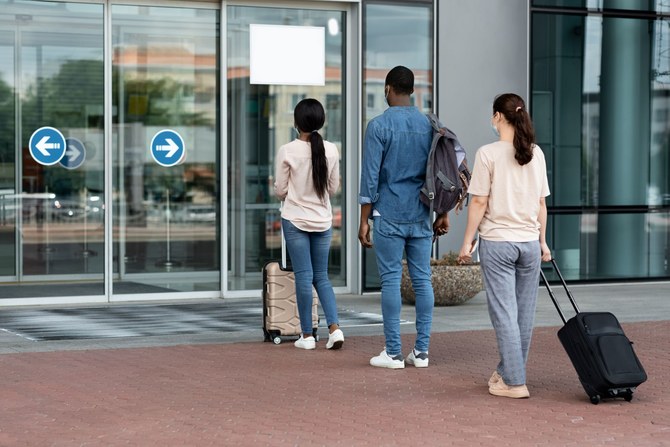
Image: (Shutterstock)
Short Url
Updated 04 October 2021
Follow

Global airline pandemic losses to hit $201bn in 2020-2022, IATA says

RIYADH:  Total airline industry losses from 2020 to 2022 are expected to reach $201 billion despite a post-pandemic improvement, according to the International Air Transport Association .

Net losses are expected to come in at $11.6 billion in 2022 after a $51.8 billion loss in 2021, IATA said in its latest outlook for airline industry financial performance, showing improved results amid the continuing COVID-19 crisis.

Demand is expected to stand at 40 percent of 2019 levels for 2021, rising to 61 percent in 2022.

A $2.3 billion charges increase during this crisis is outrageous. We all want to put COVID-19 behind us. But placing the financial burden of a crisis of apocalyptic proportions on the backs of your customers, just because you can, is a commercial strategy that only a monopoly could dream up. At an absolute minimum, cost reduction—not charges increases—must be top of the agenda for every airport and ANSP. It is for their customer airlines

Willie Walsh, IATA’s director general

Total passenger numbers are expected to reach 2.3 billion in 2021, and will grow to 3.4 billion in 2022 — significantly below the 4.5 billion travelers of 2019.

Robust demand for air cargo is expected to continue, with 2021 demand at 7.9 percent above 2019 levels, growing to 13.2 percent above 2019 levels for 2022.

The air cargo business is performing well, and domestic travel will be near pre-crisis levels in 2022, IATA said.

Infrastructure cost

Meanwhile, the association warned the planned increases in charges by airports and air navigation service providers will stall recovery in air travel and damage international connectivity. 

Confirmed airport and ANSP charges increases have already reached $2.3 billion. Further increases could be tenfold this number if proposals already tabled by airports and ANSPs are granted. 

“A $2.3 billion charges increase during this crisis is outrageous. We all want to put COVID-19 behind us. But placing the financial burden of a crisis of apocalyptic proportions on the backs of your customers, just because you can, is a commercial strategy that only a monopoly could dream up. At an absolute minimum, cost reduction—not charges increases—must be top of the agenda for every airport and ANSP. It is for their customer airlines,” said Willie Walsh, IATA’s director general.

“Infrastructure shareholders, governmental or private, have benefited from stable returns pre-crisis. They must now play their part in the recovery. It is unacceptable behavior to benefit from your customers during good times and stick it to them in bad times,” he said.

Emissions

IATA’s 77th annual general meeting approved a resolution for the global air transport industry to achieve net-zero carbon emissions by 2050. This commitment will align with the Paris Agreement goal for global warming not to exceed 1.5 C. 
“The world’s airlines have taken a momentous decision to ensure that flying is sustainable. The post-COVID-19 reconnect will be on a clear path toward net zero,” Walsh said.

“With the collective efforts of the entire value chain and supportive government policies, aviation will achieve net zero emissions by 2050,” he added. 

“We have a plan. The scale of the industry in 2050 will require the mitigation of 1.8 gigatons of carbon. A potential scenario is that 65 percent of this will be abated through sustainable aviation fuels. We would expect new propulsion technology, such as hydrogen, to take care of another 13 percent. And efficiency improvements will account for a further 3 percent. The remainder could be dealt with through carbon capture and storage (11 percent) and offsets (8 percent).” 


Saudi Arabia’s pop-up retail boom is just getting started

Updated 18 sec ago
Follow

Saudi Arabia’s pop-up retail boom is just getting started

  • Positive outlook, operators and experts tell Arab News
  • Sector is forecast to contribute 35% to GDP by 2030

RIYADH: Short-term retail concepts are gathering pace across Saudi Arabia’s consumer market, with over 1.5 million small and medium enterprises operating in the Kingdom.

It is forecast they will increase their contribution to the country’s gross domestic product from 20 percent to 35 percent by the end of this decade.

The pop-up scene and experiential retail market, which is present in the food and beverages sector and has extended to the fashion and accessory space, has an estimated value of $1.2 billion across the GCC, according to Ken Research.

As this niche sector of retail booms, Ken Research points to Saudi Arabia as one of the top three key markets driving growth.

While pop-ups have long been used internationally as a social media marketing concept, their growing presence in the Kingdom can be traced back to a larger shift in the retail ecosystem as a whole.

For many entrepreneurs, pop-ups offer a way to leverage their brand’s creative identity, reach new customers, and build a presence through the trend without the financial constraints of a permanent retail store.

The niche trend offers tenancy flexibility, allows companies to bypass cyclical nature of economies, provides them with price flexibility — proving to be a malleable entryway for businesses. 

The rise of flash business retail concepts also reflects broader changes in the Kingdom’s entrepreneurial landscape, as SMEs continue to expand under the economic diversification goals of Vision 2030.

About 38 percent of active commercial registrations by the end of Q2 2025 were youth owned, signaling an emphasis on trendy approaches to retail, according to Monshaat, the Kingdom’s Small and Medium Enterprises General Authority.

Additionally, around 25,000 new commercial registrations were issued in the wholesale and retail sector in the fourth quarter of 2025.

In the fashion and accessory sectors, for example, the pivot to the ephemeral retail model offers a unique customer experience.

It is driving demand through limited edition pop-ups that play on aesthetics and interactive tactical commerce, all while maintaining limited risk and increased support for smaller enterprises to leverage accessible spaces.

A particular destination that has made space for pop-ups is Riyadh’s Solitaire mall, on its roof.

The outdoor venue hosts booths of diverse sectors, all bringing creative and hands-on retail experiences that are maximizing temporary spaces through the power of brand direction and social media.

As founder of one of the largest pop-ups taking space on the roof, Aya Alhalek, founder of SNIM, known as the first outlet for local attire brands in the Kingdom, spoke to Arab News on the rise of pop-up culture, its importance in the retail space, and the benefits of its growing relevance.

Alhalek said: “We choose pop-ups because there’s always a demand for them, because it brings together different designers and different brands, providing the customer with diverse options whether it’s a British brand or an Indian brand, they are combined in one pop-up.”

“I think this trend is here to stay.”

SNIM pop-up in Riyadh. AN Photo/Basmah Albasrawi

Companies such as SNIM, which prioritize local brand presence throughout the Kingdom, say the format has become an important entry point for emerging brands looking to gain exposure and that the concept is here to stay due to the customer experience and profitability.

Pop-ups are not constrained by the dynamic change of weather in the Kingdom, but rather encouraged to alter temporary installation experiences accordingly and depending on the city, Alhalek said.

“We always have either indoor or outdoor options, and so they differ greatly in terms of winter or summer pop-ups but we adjust accordingly and keep them going but Riyadh is a global hub,” she said.

She added that “the limited time, space and social media marketing of pop-ups helps keep these going.”

Riyadh, in particular, has been a priority due to its ability to attract diverse and international customers to the SNIM pop-ups, which helps platform local brands on a global scale, Alhalek added.

On the preference to lean into pop-up style retail alongside online availability as opposed to brick-and-mortar locations, Rasha AlWazeenani, founder of Nayya Jewellery, told Arab News: “Pop-ups usually bring together a mix of different brands, not just jewelry.”

“Someone might visit to shop for an abaya or another product and end up discovering our pieces along the way. That element of unexpected discovery has introduced our brand to many customers who may not have initially come specifically for jewelry.”

Pop-ups nurture interactive customer experiences which are increasingly relevant to shoppers and the temporary feature of a venture creates a sense of urgency, AlWazeenani said.

“They provide visibility, allow direct interaction with customers, and create an opportunity for people to experience the craftsmanship and details of the pieces up close,” she said.

“The temporary formatting of pop-ups also allows brands to create urgency around limited collections or seasonal launches, which can drive higher customer engagement.”

Nayya Jellewery pop-up in Solitaire Riyadh. Supplied

Analysts also view the pop-up scene as an opportunity for company growth amid the uptick in online shopping and the Kingdom’s expanding economy, the largest in the Arab world.

Mahmoud Mazi, general manager of the retail sector at the Small and Medium Enterprises General Authority, told Arab News the “growth of e-commerce has expanded purchasing channels.”

And this has been “prompting many SMEs to adopt more flexible strategies such as testing markets more quickly or combining a digital presence with physical retail spaces.”

Developers are leaning towards more flexible retail models for various factors and increasingly in major cities, Mazi said.

“Seasonal events are encouraging some property owners and developers to adopt more flexible leasing models, such as short-term rentals or retail kiosks,” Mazi said.

He added that the “growth of experiential and interactive retail has made combining entertainment, dining and cultural activities, with flexible leasable spaces and temporary retail concepts an “attractive operational tool for SMEs.”

The rise and evolution of pop-ups in the Kingdom invariably allows for scaling, evolution, and concept-testing within the retail industry.

The Kingdom’s retail sector continues to expand and the pop-up experiential trend has broadened to focus on lifestyle and entertainment concepts within mixed developments.

This was “redefining market dynamics, including tenant mix and the design of commercial spaces,” Mazi said.