Afghan girls’ football team asks UK government for asylum

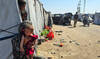
Members of the Afghan junior women’s football team have asked the UK government for asylum. (File/AFP)
Short Url
Updated 02 October 2021
Follow

Afghan girls’ football team asks UK government for asylum

  • Senior women’s team was granted asylum in Australia 

LONDON: Members of the Afghan junior women’s football team have asked the UK government for asylum.

They have been staying in a Lahore hotel since fleeing from the Taliban and will need to leave Pakistan once their emergency visas expire on Oct.12.

The 35 girls, who are aged 13-19, plus 94 coaches and family members, have been financially supported by the ROKiT Foundation, and offered assistance by figures in the UK, including Conservative MP Tom Tugendhat and the owner of Premier League side Leeds United, Andrea Radrizzani.

They cannot return to their homes as they face persecution from the Taliban.

One of the girls, called Narges, told Sky News: “The only thing all of us know is that we don’t want to go back to Afghanistan again. If you can accept us we would be really happy that we can live in the UK and have the UK as a host country for us.

“The only thing we want from your government and your humanitarian institutions is to find a host country for us in order to help us to be happy again and be alive again, to make a new life and be good football players in the future.”

The UK has pledged to house 20,000 Afghans in the next few years, following the withdrawal of coalition forces, and the collapse of the Afghan government earlier this year.

Tugendhat said: “I’ve had … a series of conversations with various members of the Cabinet about these girls and this group and I know that there’s a lot of support. What we need to do now is just get it over the line, make sure that these individuals are recognized as part of the government’s commitment.”

The senior women’s team was granted asylum in Australia, but the junior team faced an ordeal leaving Afghanistan after the chaotic way the capital fell to the Taliban, having to hide and then facing issues crossing the border with Pakistan.

Narges said: “The Taliban were violent. They threatened us: ‘We don’t know who you are but if you cannot pass the border we will kill all of you here.’ It was so hard for us to leave the place where you were born and you grew up. Still there isn’t any country to accept us as refugees. We don’t know after these days what would happen to us and what we can do.”

The girls said that, above all else, they just wanted to study and be allowed to play football.

“We were playing football in a backward country like Afghanistan, a country where they don’t believe in women, they have to stay at home,” Narges said. “In such a harsh situation we were playing football we love. We really love football. It means freedom for us. When we are together, we feel we are alive.”

Siu-Anne Marie Gill, CEO of ROKiT Foundation, said: “These girls, who have tremendous courage ... can enrich a community. We would love to have the UK government offer them a visa. They will be taken back to the border if we can’t find a host country to take them on.”


Britain needs to step up defense spending faster, says Starmer

Britain's Prime Minister Keir Starmer takes part in a panel discussion in Munich, Germany. (AP file photo)
Updated 5 sec ago
Follow

Britain needs to step up defense spending faster, says Starmer

  • Britain’s budget watchdog, the Office for Budget Responsibility, said last year that raising defense spending to 3 percent of the GDP would cost an additional £17.3 billion a year ($24 billion) in 2029-30

LONDON: Britain should step up and accelerate its ​defense spending, Prime Minister Keir Starmer said on Monday, following a report that the government was considering bringing forward its target to spend 3 percent of economic output on defense.
Britain, which has warned of the risks posed by Russia, said in February 2025 that it would lift annual defense spending to 2.5 percent of the GDP by 2027 and aim for 3 percent in the next Parliament, which is expected to begin after an ‌election due in ‌2029.
The BBC reported that the government was ​now ‌exploring ways to ​reach the 3 percent target by 2029. It said no decision had been taken but the government recognized current plans would not cover rising defense costs.

HIGHLIGHT

The BBC reported that the government is ​now ‌exploring ways to ​reach the 3 percent target by 2029.

Asked whether he would bring the target forward to 2029, Starmer echoed comments he made at the Munich Security Conference, where he said Europe had united to support Ukraine with the supply of weapons and munitions and to strengthen military readiness.
“We need to step up. That means on ‌defense spending, we need to go faster,” ‌Starmer told reporters on Monday. “We’ve obviously made commitments ​already in relation to that, but ‌it goes beyond just how much you spend.”
Latest NATO estimates show ‌that Britain spent 2.3 percent of the GDP on defense in 2024, above the alliance’s 2 percent guideline. But like other European countries, it has faced US pressure to spend more to protect the continent. Struggling with high debt and spending commitments, the government last ‌year cut its international aid budget to fund the hike in defense spending to 2.5 percent of GDP but is yet to publish an investment plan with spending priorities, something that has frustrated the defense industry.
Britain’s budget watchdog, the Office for Budget Responsibility, said last year that raising defense spending to 3 percent of the GDP would cost an additional £17.3 billion a year ($24 billion) in 2029-30.
Finance Minister Rachel Reeves has struggled to stay on track with her plans to repair the public finances. The BBC said the Finance Ministry was believed to be cautious about the new defense spending proposals.
A government spokesperson said Britain was “delivering ​the largest sustained increase in defense ​spending since the Cold War.”