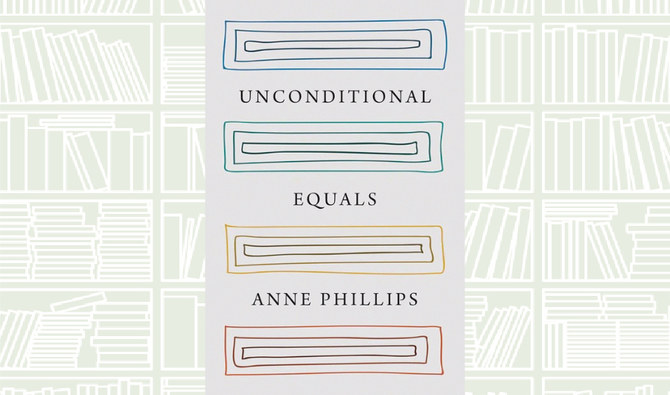
What We Are Reading Today: Unconditional Equals by Anne Phillips

Short Url
Updated 27 September 2021
Follow

What We Are Reading Today: Unconditional Equals by Anne Phillips

For centuries, ringing declarations about all men being created equal appealed to a shared human nature as the reason to consider ourselves equals. But appeals to natural equality invited gradations of natural difference, and the ambiguity at the heart of “nature” enabled generations to write of people as equal by nature while barely noticing the exclusion of those marked as inferior by their gender, race, or class. Despite what we commonly tell ourselves, these exclusions and gradations continue today.

In Unconditional Equals, political philosopher Anne Phillips challenges attempts to justify equality by reference to a shared human nature, arguing that justification turns into conditions and ends up as exclusion. Rejecting the logic of justification, she calls instead for a genuinely unconditional equality.


What We Are Reading Today: Long Problems

Photo/Supplied
Updated 06 March 2026
Follow

What We Are Reading Today: Long Problems

  • In this pathbreaking book, Thomas Hale examines the politics of climate change and other “long problems”

Author: Thomas Hale

Climate change and its consequences unfold over many generations. Past emissions affect our climate today, just as our actions shape the climate of tomorrow, while the effects of global warming will last thousands of years.

Yet the priorities of the present dominate our climate policy and the politics surrounding it. Even the social science that attempts to frame the problem does not theorize time effectively. In this pathbreaking book, Thomas Hale examines the politics of climate change and other “long problems.”

He shows why we find it hard to act before a problem’s effects are felt, why our future interests carry little weight in current debates, and why our institutions struggle to balance durability and adaptability.