

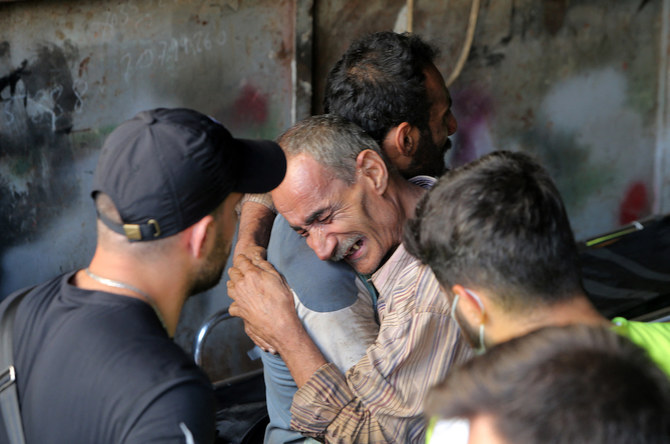

DUBAI: In May, the world’s television screens were filled with images from the Gaza Strip of tower blocks collapsing, rocket fire erupting from densely populated areas, and ambulances, sirens blaring, ferrying the dead and the wounded to hospitals as Israeli fighter jets roared overhead.
More than 250 Palestinians died in the 10 days of fighting, which also left 13 dead in Israel. Four months on, the violence has subsided but its effects linger.
One of the little-noticed consequences of the May 2021 escalation is the impact on the mental health and well-being of Gaza’s 2 million people, as 47.5 percent of them are under 18 years of age. According to UNICEF, nine out of 10 children in the territory now suffer from mental trauma as a result of the conflict.
Despite a tenuous ceasefire, the specter of renewed violence persists. Most recently, on Sept. 12, Israeli jets again struck Gaza after two rocket attacks on southern Israel in less than 24 hours.
“Our teams on the ground observed an increase in cases of acute anxiety among children,” Imene Trabelsi, spokesperson for the International Committee of the Red Cross (ICRC), told Arab News from Beirut.
“We believe that supporting people’s mental health, what we call ‘less visible scars’ during times of crisis, can be as lifesaving as stitching together wounds and providing food and water.”
Trabelsi said that generally one in five people is estimated to suffer from mental-health problems after a conflict has ended.
The Arab Youth Survey of 2020 found that nearly a third of all young people living in 15 countries in the Middle East know at least one person suffering from some form of mental illness.
Until recently, mental health was not a priority in the Middle East. Psychiatric issues were often taboo and largely dealt with in the family. “It is a relatively new area for international aid groups but now we are realizing how important it is for the wellbeing of a population to recover after a period of conflict,” Trabelsi said.
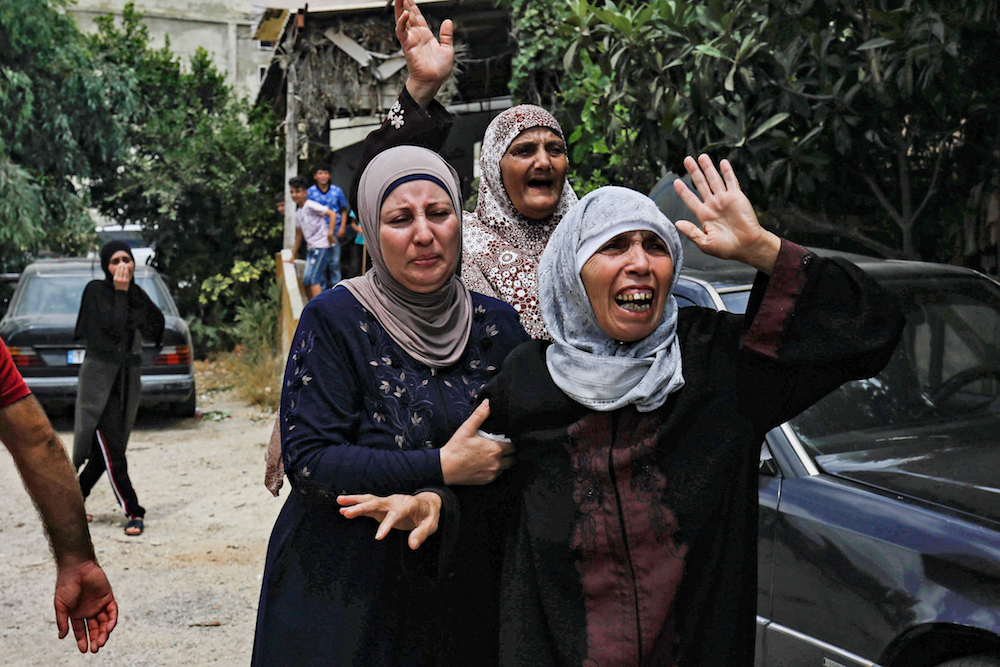
Women react on August 18, 2021, during the funeral of four members of the Shteiteh family in the village of Al-Daouseh in Lebaon's Akkar region, killed in a fuel tank explosion. (AFP/File Photo)
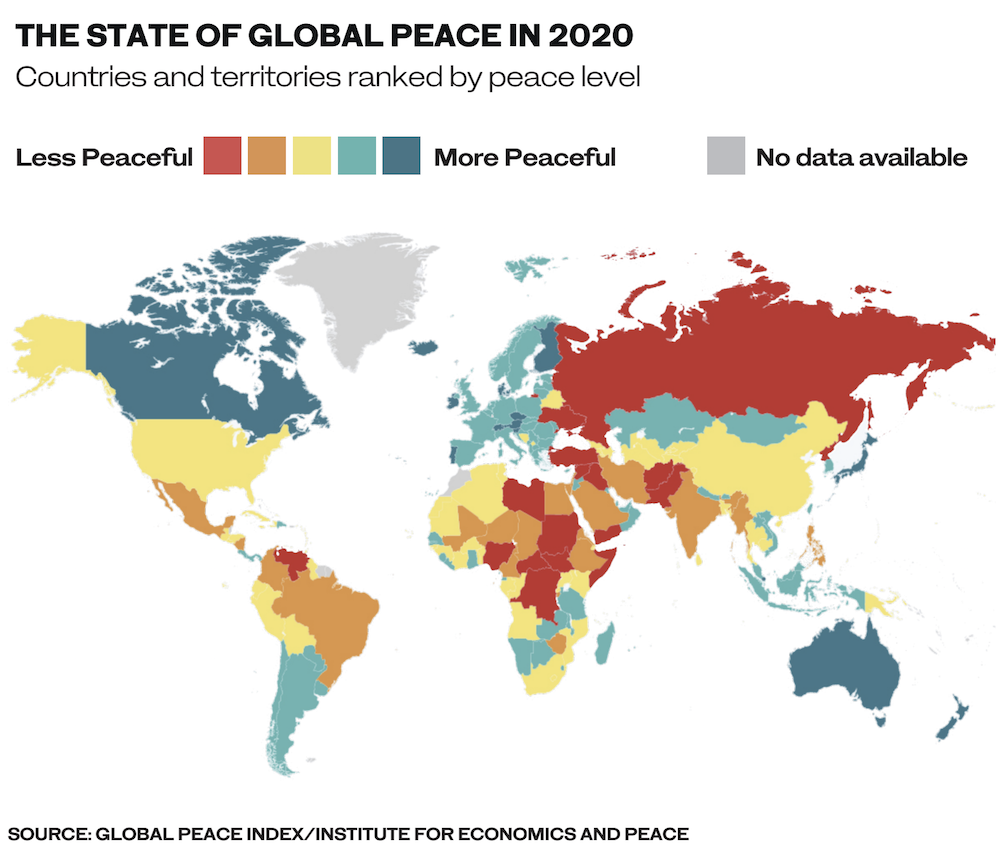
It is not just in Gaza. Almost every day images and stories of violence, poverty, loss, and bereavement dominate the region’s news. In Libya, Syria, Iran, Iraq, Houthi-held Yemen, and Lebanon, millions of people have been suffering through long periods of economic privation.
For instance, in Iraq, a 2018 Save the Children survey found that 43 percent of children in Mosul, the erstwhile capital of the self-declared caliphate of Daesh, reported feeling grief “always or a lot of the time.”
“The tragedy is that persecution, oppression, conflict, and aggression are almost now the norm in these countries,” Dr. Summer Fakhro, a psychologist at The Lighthouse Arabia, a clinic in Dubai, told Arab News.
Post-traumatic stress disorder (PTSD) is common, she said.
“There is a functionality and adaptation that has developed to be able to live with unbearable circumstances,” Fakhro said. “However, these populations bear the burden of complex trauma, which means the trauma is not limited to symptoms of PTSD and endures over several phases of life.”
The effects can be long-lasting on all aspects of life, leading to mood disturbance and, in extreme cases, personality change, she said.
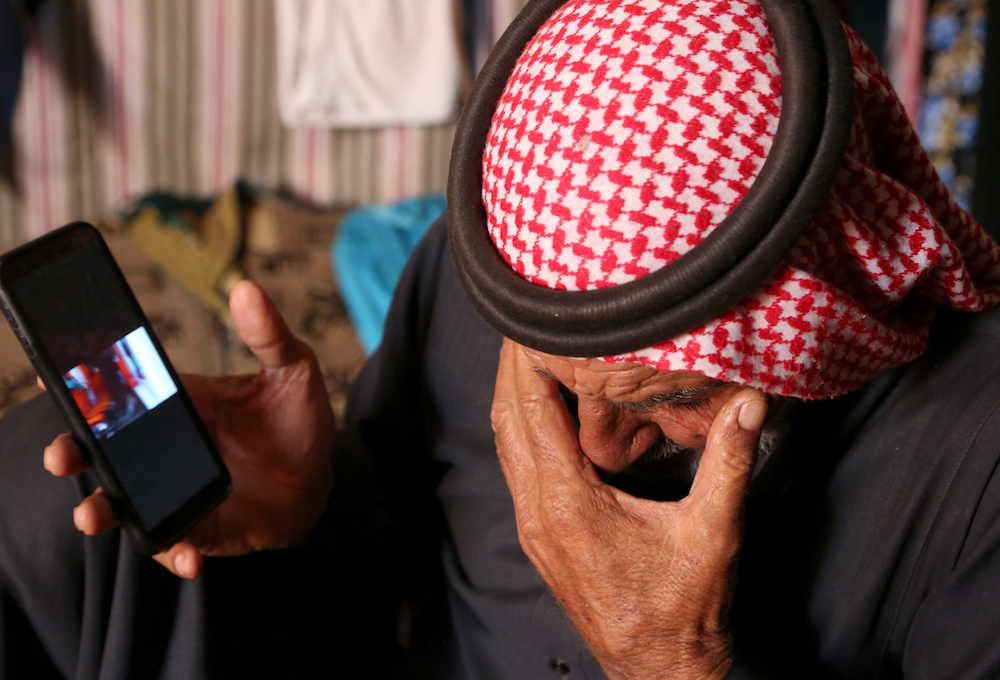
Abderrazaq Khatoun, reacts as he shows on a mobile telephone a video taken on the day when rescuers searched for survivors after an air raid that killed seven of his sons, inside a tent in an encampment in the village of Harbanoush, in the northern countryside of Syria's northwestern province of Idlib, on March 11, 2021. (AFP/File Photo)
The situation in Lebanon is a case in point. A perfect storm of crises — the deadly Beirut Port explosion in August 2020 was followed by an economic collapse along with national fuel and medicine shortages — have affected the wellbeing of its people. The effects are even felt by the many Lebanese who have left the country.
“It does not get any easier,” 25-year-old Marwa Darazi, who left Lebanon to move to the UAE in January this year, told Arab News.
Currently a PR professional in Dubai, she said: “The explosion finds its way out of the back of your mind and into your conversation or thoughts at least once a day. It is part of who I am. Sometimes I recall it to feel grateful. Sometimes I recall it to support the idea that everything happens for a reason.”
Several psychologists Arab News spoke with after the Beirut explosions said they themselves also suffered from PTSD and struggled to deal with the multiple calls from survivors they received.
“There can be a general sense of helplessness in these populations,” Fakhro said. Aside from her work in Dubai, she is a co-founder of Elaa Beirut, a Lebanese charity that provides mental health and other kinds of support to populations in times of struggle and conflict.
Fakhro pointed to the prevalence of “learned helplessness,” a condition whereby people feel like they have no control over what happens, and therefore, tend to simply give up and accept their fate.
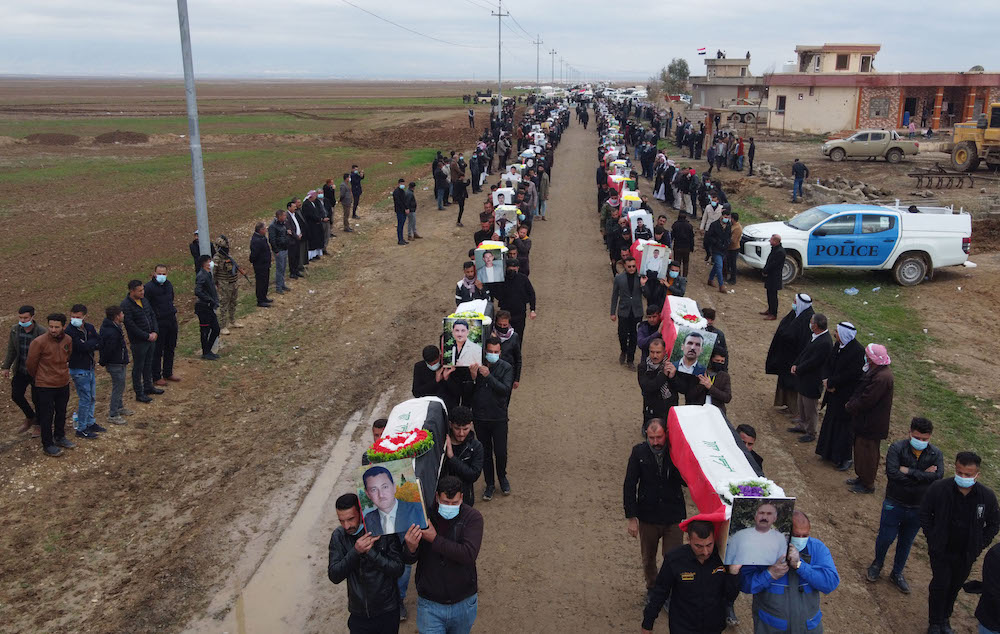
An aerial picture shows mourners carrying coffins wrapped in the Iraqi flag in a procession during a mass funeral for Yazidi victims of Daesh in the northern Iraqi village of Kojo in Sinjar district, on February 6, 2021. (AFP/File Photo)
“As humans who face suffering, we will initially protest and fight back and use every resource to resist,” Fakhro said.
“We want to preserve our original state and way of being. However, if every effort you make fails because of the relentlessness of the conflict and issues, we eventually wear out and develop learned helplessness, a state where we feel nothing that we do can change our state or fate.
“We lose our ‘self-efficacy,’ which is our belief that we can confidently cope with demands and struggles. We lose agency to act and cope.”
Fakhro said “dissociation” is a major mental-health concern in unstable parts of the Middle East.
This is when most people who experience severe trauma during conflict and unrest learn unconsciously to dissociate — “fragmenting their consciousness to numb the pain in their psyche and body. They can be in the worst of situations and be very detached and almost impervious because they have built these walls to protect themselves.”
According to the ICRC, people living in conflict-affected areas are three times more likely than the general population to suffer from conditions such as depression, anxiety, and PTSD.
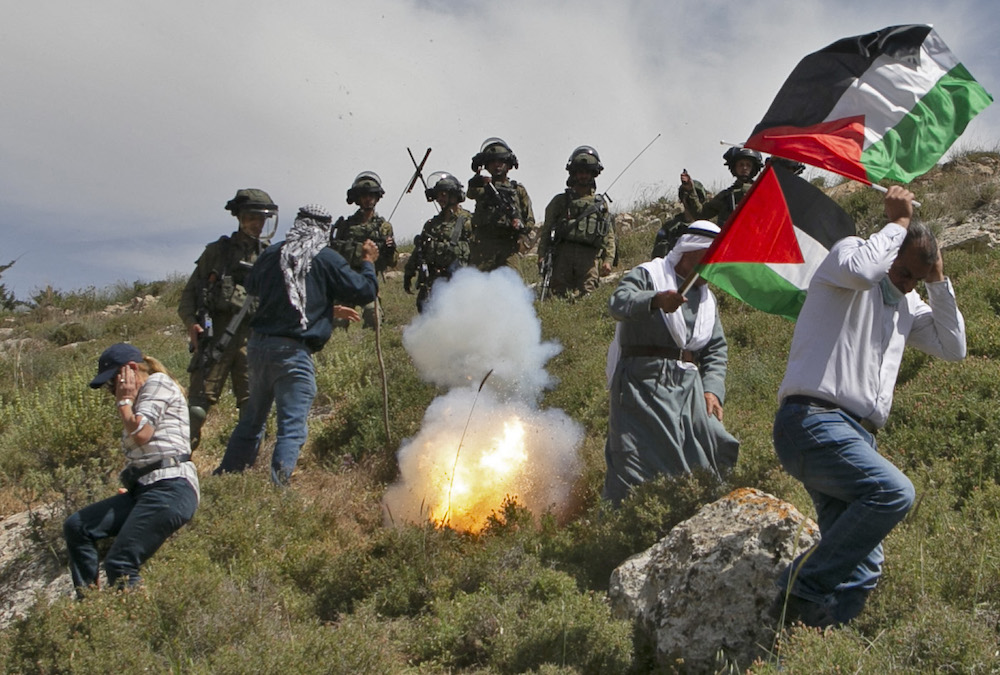
Palestinian protesters run from tear gas fired by Israeli security forces during a demonstration against the establishment of Israeli outposts on their lands, in Beit Dajan, east of Nablus in the occupied West Bank, on April 16, 2021. (AFP/File Photo)
For the past several years, organizations such as ICRC have put increased importance on treating mental wellbeing in conflict zones in addition to their regular assistance during times of crisis.
From 2018 to 2019, the ICRC helped build the capacity of mental health professionals working for the Syrian Arab Red Crescent by providing training and technical supervision. Currently, the ICRC operates a psychological and mental services program for patients with physical disabilities at a rehabilitation center in Aleppo.
In November 2020, the ICRC set up a mental health support unit in a field hospital in northeast Syria’s Al-Hol Camp, which has a growing population of displaced people.
The service offers individual sessions and family sessions, depending on need. Workers provide psycho-educational activities for children and adapt activities to strengthen the self-esteem and self-confidence of children.
“The massive mental health needs of people affected by humanitarian emergencies In the Middle East are far from being fully addressed,” Trabelsi told Arab News.
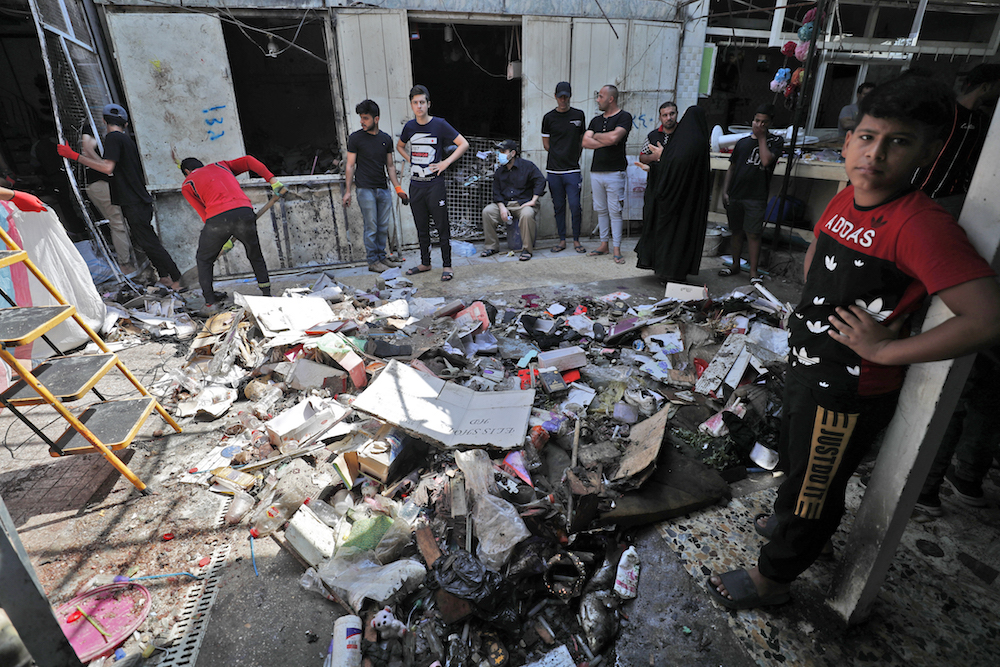
Iraqis inspect the site of the explosion in a popular market in the Shiite-majority Sadr City neighbourhood, east of the capital Baghdad on July 20, 2021. (AFP/File Photo)
“This lack of treatment also increases stigma, exclusion, and discrimination. It is doubly important for people living and affected by violence to receive the right help, to be able to recover from these less visible scars generated by the conflict. This will also have an impact on rebuilding communities and the social fabric.”
In Lebanon, the ICRC set up a dedicated hotline to address mental trauma in the wake of the Beirut explosions. A total of 188 patients continue to receive mental health support and physiotherapy sessions.
“Sometimes it is a conversation starter. Sometimes I tear up looking through pictures and videos and remembering my family and the event,” Darazi, the Lebanese expatriate in Dubai, told Arab News, referring to the blast.
“In fact, it feels like yesterday. There is no way it has been over a year since the blast happened. My scars have not healed.”


