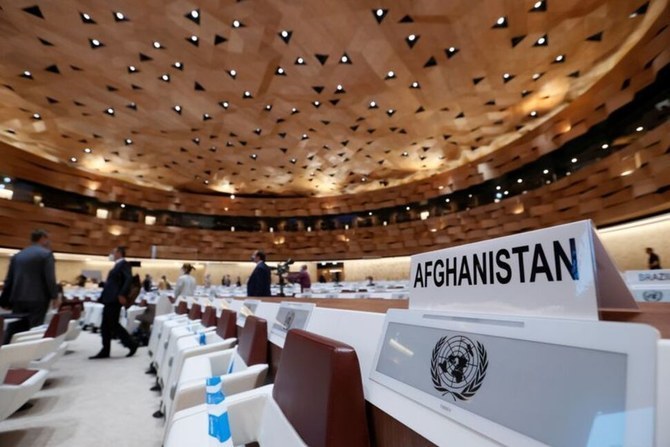
UNITED NATIONS: The United States on Friday further paved the way for aid to flow to Afghanistan despite US sanctions on the Taliban, who seized control of the country last month, issuing general licenses amid concern that Washington’s punitive measures could compound an unfolding humanitarian crisis.
The US Treasury Department said it issued two general licenses, one allowing the US government, NGOs and certain international organizations, including the United Nations, to engage in transactions with the Taliban or Haqqani Network — both under sanctions — that are necessary to provide humanitarian assistance.
The second license authorizes certain transactions related to the export and re-export of food, medicine and other items.
“Treasury is committed to facilitating the flow of humanitarian assistance to the people of Afghanistan and other activities that support their basic human needs,” Andrea Gacki, director of the US Treasury’s Office of Foreign Assets Control, said in the statement.
She added that Washington will continue to work with financial institutions, NGOs and international organizations to ease the flow of agricultural goods, medicine and other resources while upholding sanctions on the Taliban, Haqqani Network and others.
The United Nations said that at the start of the year more than 18 million people — about half of Afghanistan’s population — require aid amid the second drought in four years.
UN Secretary-General Antonio Guterres said last week that Afghanistan is on “the verge of a dramatic humanitarian disaster” and has decided to engage the Taliban in order to help the country’s people.
US President Joe Biden’s administration has said it is committed to allowing humanitarian work in Afghanistan to continue despite Washington listing the Taliban as a Specially Designated Global Terrorist group.
The sanctions freeze any US assets of the Islamist militant group and bar Americans from dealing with them, including the contribution of funds, goods or services.
Reuters reported last month that Washington issued a license authorizing the US government and its partners to continue to facilitate humanitarian aid in Afghanistan.
Friday’s move expands on that specific license, allowing international organizations and NGOs to pay taxes, fees, import duties or permits, licenses or other necessary transactions for assistance to reach the people of Afghanistan.
The licenses allow NGOs and foreign financial institutions to continue humanitarian assistance such as the delivery of food, shelter, medicine and medical services, including COVID-19 assistance, a Treasury spokesperson said.
“We have not reduced sanctions pressure on Taliban leaders or the significant restrictions on their access to the international financial system,” the spokesperson said.
A Taliban offensive as foreign forces withdrew from Afghanistan after a 20-year war culminated in the capture of the capital Kabul on Aug. 15, two decades after they were driven from power by a US-led campaign in the wake of the Sept. 11 attacks on the United States.


![]()


US grants licenses for more aid flow to Afghanistan despite sanctions
Short Url
https://arab.news/cb6se
US grants licenses for more aid flow to Afghanistan despite sanctions
- The US Treasury Department said it issued two general licenses
- Washington will continue to work with financial institutions, NGOs and international organizations


Spanish PM vows justice, defends rail safety after deadly accidents
- The back-to-back disasters in January shocked the country and raised doubts about the safety of train travel in Spain
MADRID: Spanish Prime Minister Pedro Sanchez vowed Wednesday that justice would be done following two train accidents that claimed 47 lives last month, and insisted the country’s rail system “is safe.”
The back-to-back disasters in January shocked the country and raised doubts about the safety of train travel in Spain, which boasts the world’s second-largest high-speed network after China.
“The entire state is doing — and will continue to do — everything possible to support the injured and the victims’ families, clarify the causes of the accident, and, if necessary, ensure justice is done,” Sanchez told parliament.
Spain’s rail system “is not perfect, but it is safe,” the Socialist premier added, vowing to take all necessary measures to prevent similar tragedies in the future.
Shock hit the rail sector after a collision between two high-speed trains in the southern region of Andalusia on January 18 resulted in the death of 46 people — one of Europe’s deadliest such disasters this century.
Two days later, a commuter train in the Barcelona region plowed into the rubble of a collapsed wall, killing the driver and injuring dozens.
The government reached a deal with railway unions on Monday to invest 1.8 billion euros ($2.1 billion) to improve maintenance, create 3,650 jobs, and strengthen public rail safety.
The agreement prompted unions to call off a three-day strike that had begun on Monday to demand greater safety for their profession.
The back-to-back disasters in January shocked the country and raised doubts about the safety of train travel in Spain, which boasts the world’s second-largest high-speed network after China.
“The entire state is doing — and will continue to do — everything possible to support the injured and the victims’ families, clarify the causes of the accident, and, if necessary, ensure justice is done,” Sanchez told parliament.
Spain’s rail system “is not perfect, but it is safe,” the Socialist premier added, vowing to take all necessary measures to prevent similar tragedies in the future.
Shock hit the rail sector after a collision between two high-speed trains in the southern region of Andalusia on January 18 resulted in the death of 46 people — one of Europe’s deadliest such disasters this century.
Two days later, a commuter train in the Barcelona region plowed into the rubble of a collapsed wall, killing the driver and injuring dozens.
The government reached a deal with railway unions on Monday to invest 1.8 billion euros ($2.1 billion) to improve maintenance, create 3,650 jobs, and strengthen public rail safety.
The agreement prompted unions to call off a three-day strike that had begun on Monday to demand greater safety for their profession.
Latest updates


Recommended


© 2026 SAUDI RESEARCH & PUBLISHING COMPANY, All Rights Reserved And subject to Terms of Use Agreement.