

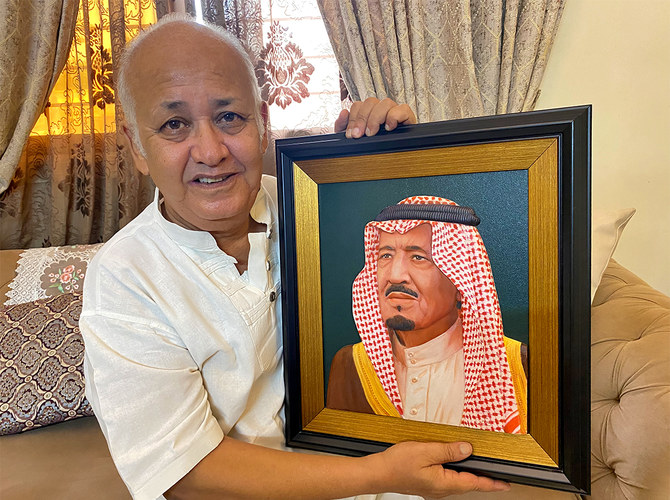

KARACHI: It was February 1974. A Pakistani teenager Khalil Najmi was glued to his black and white television set in Karachi when he saw King Faisal bin Abdul Aziz at the Islamic Summit in Lahore and decided to sketch his portrait.
The young Pakistani was mesmerized by the charismatic Saudi leader and felt the urge to know more about the kingdom and its royal family. His interest in the Arab country increased in subsequent years, making him work on the medallion portraits of its leaders including King Salman bin Abdul Aziz and Crown Prince Mohammed bin Salman.
“My father was in Merchant Navy and brought me a portrait of King Faisal,” he told Arab News. “I was deeply moved by the inscription under the image that labeled him as the Custodian of the Two Holy Mosques since that is not how kings usually describe their role.”
Najmi had an artistic bent since the beginning and used to engrave images on chalks and erasers during school days. He said that King Faisal’s appearance in Lahore was a “turning point” in his life since it made him realize that he wanted to make portraits of high-profile leaders.
As he continued with his creative endeavors, he started carving out images from wood and other objects.
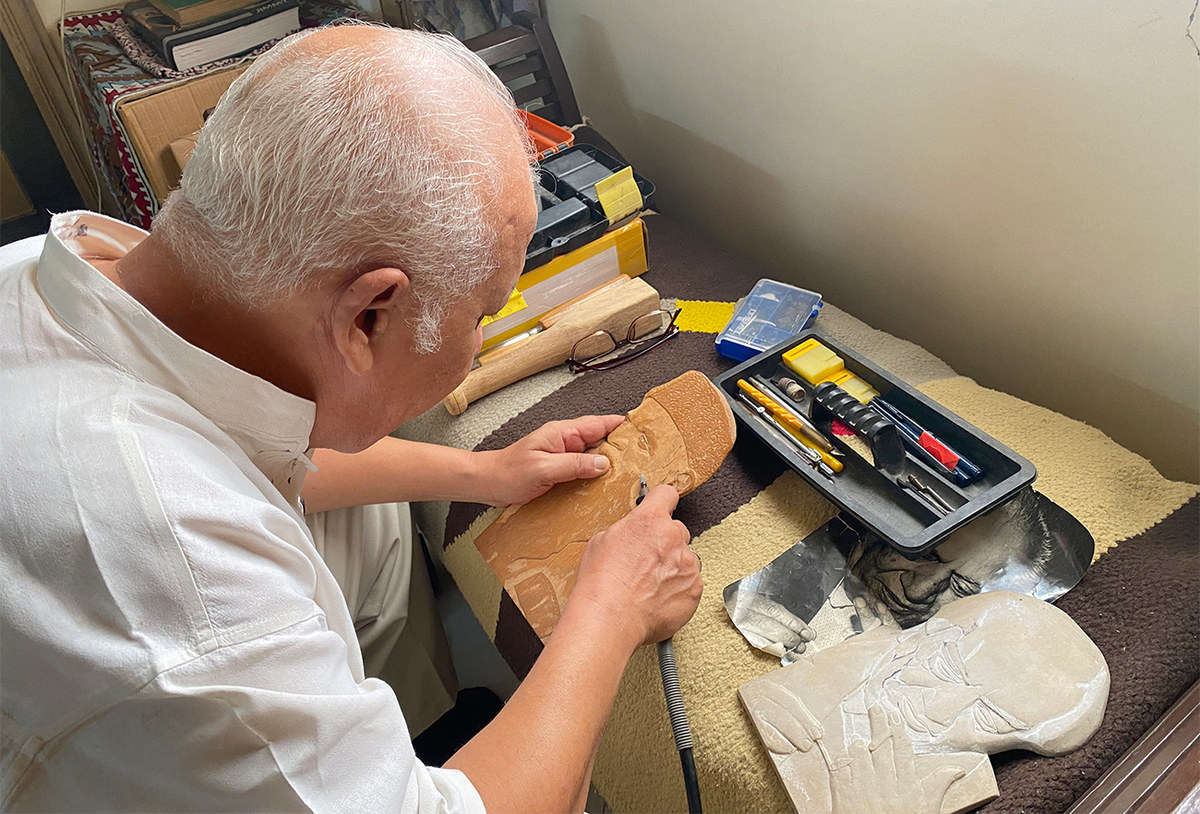
Pakistani artist Khalil Najmi is creating wooden image of the famous philanthropist Abdul Sattar Edhi at his residence in Karachi, Pakistan, on September 21, 2021. (AN Photo)
“When I began carving portraits of heads of states in 2012, I made the image of King Abdullah bin Abdul Aziz on wood,” he said. “In 2016, I completed the portraits of King Salman and Crown Prince Mohammed bin Salman.”
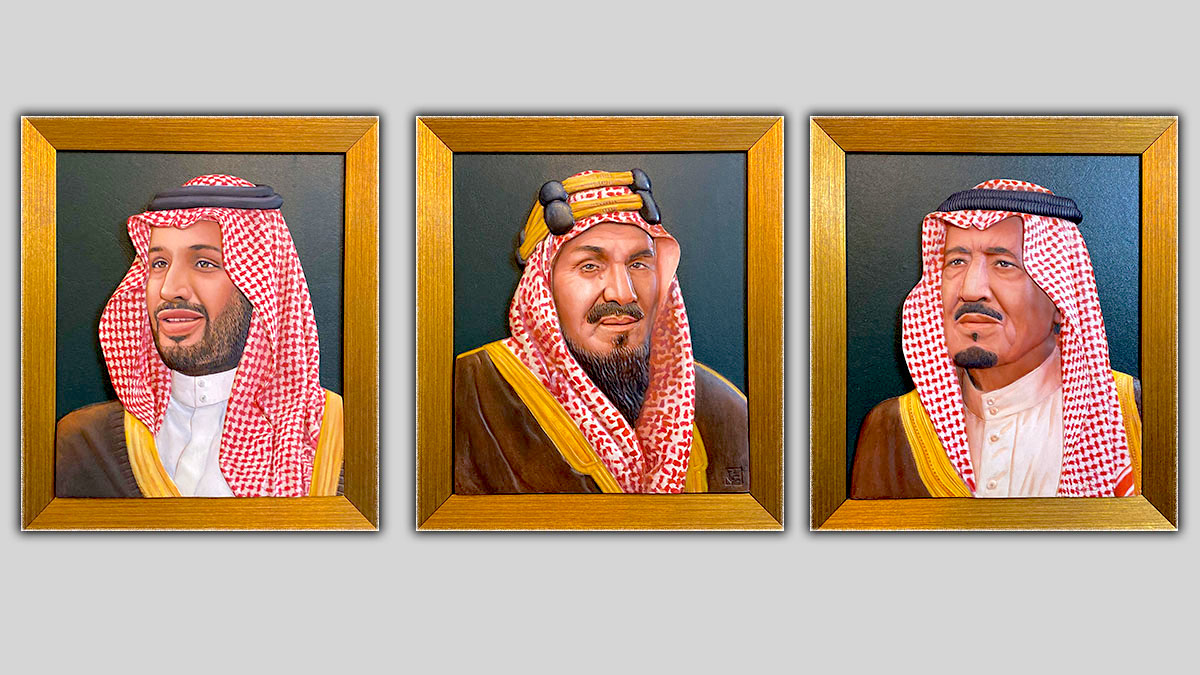
Portraits of Saudi Crown Prince Mohammed bin Salman (left), King Abdul Aziz bin Abdul Rehman Al Saud (center) and King Salman bin Abdul Aziz (right) can be seen at the residence of Khalil Najmi in Karachi, Pakistan, on September 21, 2021. (AN Photo)
The Pakistani artist maintained he was not creating “simple pieces of art,” adding that the nature of his job required “years of dedication, concentration and hard work.”
“I began my work on the current set of portraits in 2016 and completed nine of them which include three sets in three different mediums. The medallion portraits are for those who cannot see but want to imagine what their leaders look like.”
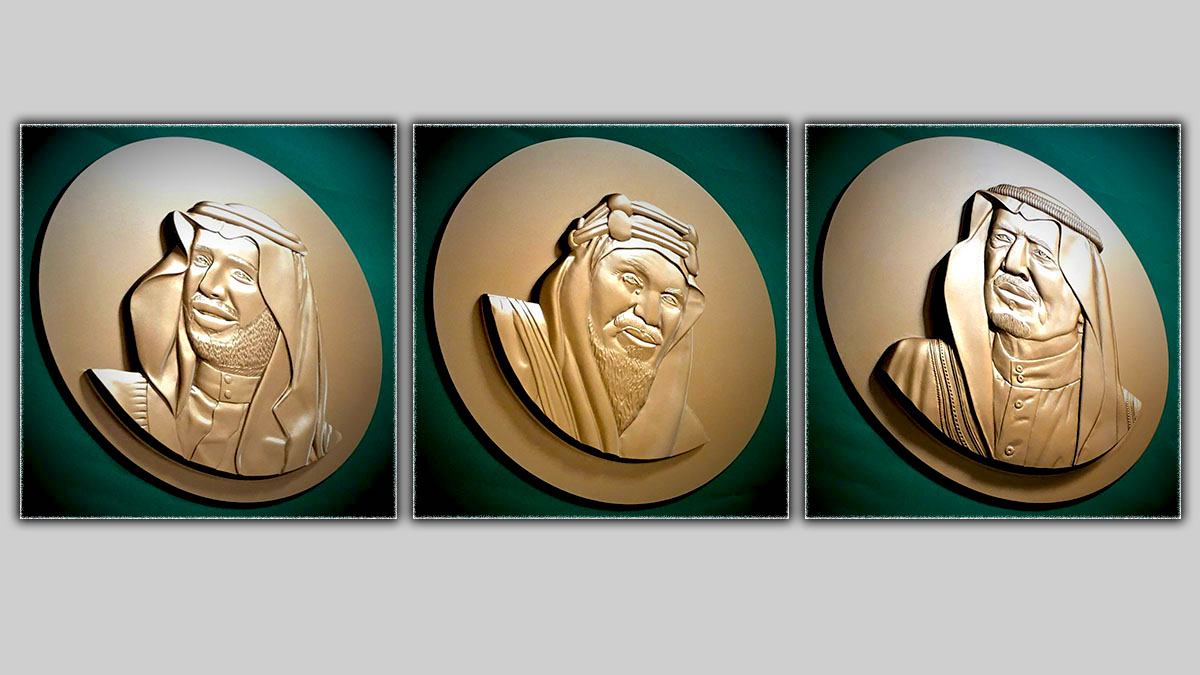
Medallion portraits of Saudi Crown Prince Mohammed bin Salman (left), King Abdul Aziz bin Abdul Rehman Al Saud (center) and King Salman bin Abdul Aziz (right) are displayed at the residence of Khalil Najmi in Karachi, Pakistan, on September 21, 2021. (AN Photo)
Elaborating his point further, he said he had once met a visually impaired man in Karachi who expressed his desire to see Pakistan’s founding father Muhammad Ali Jinnah.
“I put his hands on my medallion portrait of Jinnah and he gently ran his fingers on it as if he was trying to create the image in his mind,” he said. “After a while, this man started crying uncontrollably and repeatedly thanked me for helping him feel how Jinnah must have looked like.”
Najmi’s work includes portraits of Sheikh Zayed bin Sultan Al Nahyan, Sheikh Khalifa bin Zayed, Sheikh Mohammad bin Rashid and Sultan Qaboos bin Said of Oman. He is currently working on the portrait of Sheikh Mohammad bin Zayed of the United Arab Emirates.
“One of my hand-carved portraits of Bahrain’s King Hamad bin Isa Al Khalifa of was acquired by the office of Pakistan’s army chief General Qamar Javed Bajwa and was presented to the Middle Eastern leader in January this year,” he said.
Asked about his ultimate dream as an acclaimed artist, he said he wanted to present the portraits of Saudi leaders to Crown Prince Mohammed Bin Salman.
“I have produced these portraits with great love for the Saudi royal family,” he said. “I hope he can graciously grant me the honor to personally present them to him as a souvenir.”
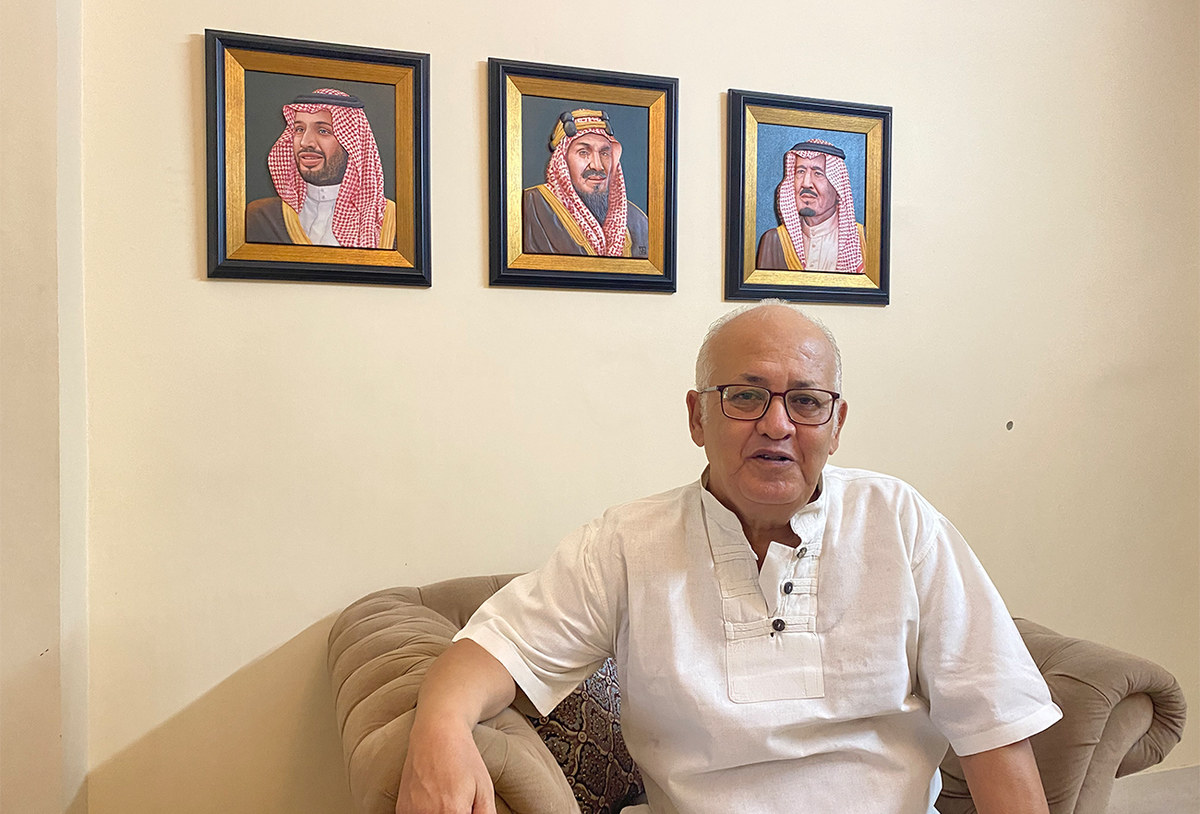
Pakistani artist Khalil Najmi poses for a picture at his residence in Karachi, Pakistan, on September 21, 2021. (AN Photo)


