ABOARD THE GEO BARENTS: Two vessels rescued around 190 Europe-bound migrants, including women and children, off the coast of Libya, charities operating the vessels said Monday.
The rescues came amid a spike in attempted crossings of the Mediterranean Sea.
More than 24,000 migrants have been intercepted and returned to Libya by the country’s coast guard so far this year, according to the UN migration agency. That’s more than double the number from 2020, when about 11,890 migrants were brought back to shore in the conflict-ridden country.
More than a thousand more are believed to have drowned in just the first half of the year, according to the agency’s figures.
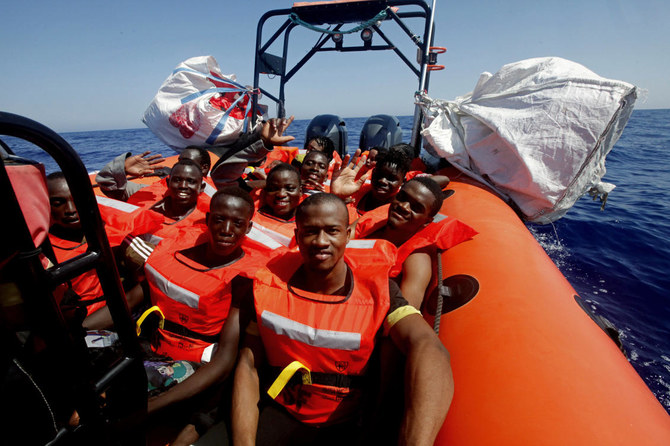
Migrants waved to rescuers from a flimsy rubber dinghy at midday Monday before they were given life vests and transferred onboard the Geo Barents, a rescue vessel operated by the charity Doctors without Borders. They numbered 54 in total, according to Barbara Deck, the organization’s project coordinator.
Among them were two dozen minors, six women and a 6-week-old baby, who was among the first to disembark, crying, after being carefully placed in a large orange life vest. The migrants’ original vessel had been packed, with no shade and barely room for all onboard to sit down.
The migrants were not immediately available for comment. They were rushed for medical inspection by workers for the aid agency known by its French name as Medecins Sans Frontieres. Some appeared exhausted and smiled in relief after their rescue, with a few dancing and singing. Among them were migrants from African countries including Ivory Coast, Cameron, Mali, Somalia and Burkina Faso, according to Deck.
It was unclear why this year has seen so many crossings but mid to late summer is typically a peak time for attempts on the Central Mediterranean route because of good weather. Rescues along this route have become routine during the warmer months. Economic hardship, sometimes exacerbated by the coronavirus pandemic, is a driver for many of the migrants.
Earlier in the day, the Geo Barents also rescued six men in a small fiberglass boat, three of them from Libya, two from Tunisia and one from Morocco. The men had been trying down the rescue ship, according to MSF staff.
The migrants told rescuers that the dinghy’s engine had stopped working, according to Mattijs Melsen, deputy search and rescue leader with MSF.
“The boat was not designated for such a voyage,” he said.
The Ocean Viking, also working in the same area off Libya, rescued around 130 Europe-bound migrants over the past three days, said Claire Juchat, a communications officer for the SOS Mediterranee charity, which operates the vessel.
The migrants, including 44 children and 12 women, were on four separate boats, Juchat said. There were two migrants with critical health conditions whom the Italian coast guard evacuated along with four family members early Monday, she said.
The remaining migrants will stay onboard the two vessels until their missions are completed, then they will be taken to Europe.
Libya has for years been a hub for African and Middle Eastern migrants fleeing war and poverty in their countries and hoping for a better life in Europe. The oil-rich country plunged into chaos following a NATO-backed uprising that toppled and killed longtime autocrat Muammar Qaddafi in 2011.
Traffickers have exploited the chaos and often pack desperate families into ill-equipped small boats that stall and founder along the perilous Central Mediterranean route. Thousands have drowned along the way. Some Libyan militiamen have been implicated in widespread abuses of migrants, including torture and abduction for ransom.


![]()

Ships rescue 190 Europe-bound migrants off Libya
Short Url
https://arab.news/26jbc
Ships rescue 190 Europe-bound migrants off Libya
- The rescues came amid a spike in attempted crossings of the Mediterranean Sea
- Over 24,000 migrants have been intercepted and returned to Libya by the country’s coast guard so far this year, according to the UN migration agency


Latest updates





© 2026 SAUDI RESEARCH & PUBLISHING COMPANY, All Rights Reserved And subject to Terms of Use Agreement.