

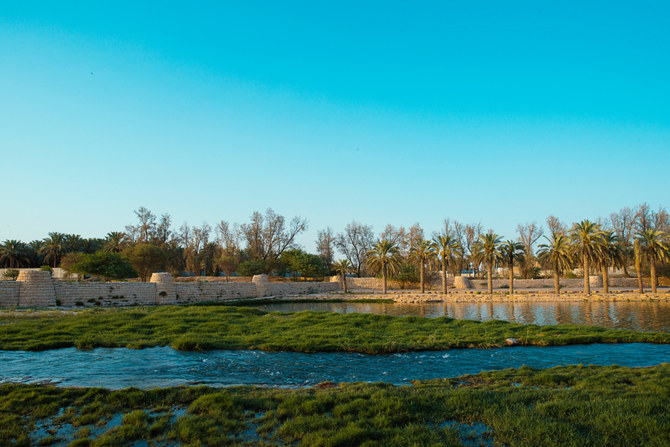

DUBAI: Environmental sustainability has been hot-wired into the structure of the Diriyah Gate Development Authority (DGDA) from the very beginning, making it a true blend of historic tradition, high technology and modern investment theory.
The mission statement of the $50.6 billion project is: “To create a world-class destination for visitors and locals alike within the Kingdom of Saudi Arabia that is renowned for being resilient to climate change, promotes cultural heritage, ensures thriving vibrant and healthy communities, provides a high quality of life, and promotes equity.”
ESG — environmental, social and governance factors — have been adopted across the Vision 2030 range of projects, of which Diriyah is one of the most prominent.
But the task of accommodating millions of visitors wanting modern comfort and convenience in a setting as faithful as possible to its roots in 18th-century Najd was a challenge the architects and designers of Diriyah took into account from the outset.
“Drawing on the Kingdom’s rich past, the masterplan will reflect the Najdi architecture of 300 years past, newly adapted for 21st-century living. With its mud brick walls, locally sourced materials, historic palm groves and farms coupled with an array of world-class cultural, entertainment, retail, hospitality, educational, office and residential areas — this is the perfect amalgamation and a powerhouse of Saudi culture and commerce,” DGDA told Arab News.
Among the measures incorporated into designs are the extensive use of native plant species, “drip irrigation” techniques to reduce water consumption, and the use of recycled waste water for all Diriyah projects at build-out.
There is also a state-of-the-art sewage plant and stormwater infrastructure to avoid flooding during extreme weather.
There will be an abundance of greenery in the project on completion, with parks and open areas set among the environmentally sound buildings and community facilities, giving what the experts call “improved outdoor thermal comfort,” even at the height of the Riyadh summer.
“Through the application of the vernacular architectural style across the development, the community will embody a contextualized approach to both social and environmental sustainability, resonating with the anthropological history of the site while passively responding to the local climatic conditions,” DGDA said.
The site and plans for the development were inspected and approved in 2020 by the National Center for Environmental Compliance, the Kingdom’s environmental watchdog. “The environmental authority recognized and praised DGDA on the efforts for environmental compliance and applying best standards to all our projects,” the center said.
In addition, environmental impact assessments have been conducted on the projects and on the associated Wadi Safar master plans, and have been approved as complying with the highest environmental standards.
An environmental monitoring consultant was appointed to ensure the project adheres to the environmental rules, and that on-site contractors also observe best practice.
The whole project has been designed with environmental standards at the top of the agenda, while seeking to preserve the best of traditional design.
“Through the inward-looking design, tending toward building around central courtyards, the extreme climate experienced in the region is tempered by a cooler, shaded and enclosed internal environment,” DGDA said.
DGDA’s environmental and sustainability initiatives surpass environmental compliance, by embedding international best practices, innovative technologies, and sustainability certification targets in all our projects. We aim to enhance our environmental performance and sustainability credentials at the community and building levels,” it said.

keywords


