


‘Fortune smiles’: Jobless Pakistani turns millionaire in UAE draw, plans new life back home

The TV set and hosts of Mahzooz, a weekly live draw in Dubai, United Arab Emirates that offers players an opportunity to win tens of millions of dirhams. (Photo courtesy: Mahzooz)
Short Url
Updated 12 September 2021
Follow

‘Fortune smiles’: Jobless Pakistani turns millionaire in UAE draw, plans new life back home

  • Raja Wajahat won 1 million dirhams in the weekly Mahzooz lottery just minutes before his birthday
  • He lost his job two months earlier and was desperately looking for work

DUBAI: When Raja Wajahat was about to cut his birthday cake in Dubai, a relative called him to share the news that changed his life: a 1 million dirham ($272,000) win in a UAE lucky draw.

A former account manager at a logistics company in Dubai, Wajahat lost his job two months earlier and was desperately looking for work until the Aug. 28 win in the weekly Mahzooz lottery.

“I was partying with my friends, and I kept disconnecting a call I had been receiving from a relative but when he didn’t stop calling, I answered and he said five out of the six numbers of a ticket we had bought together had matched,” the 31-year-old told Arab News on Saturday.
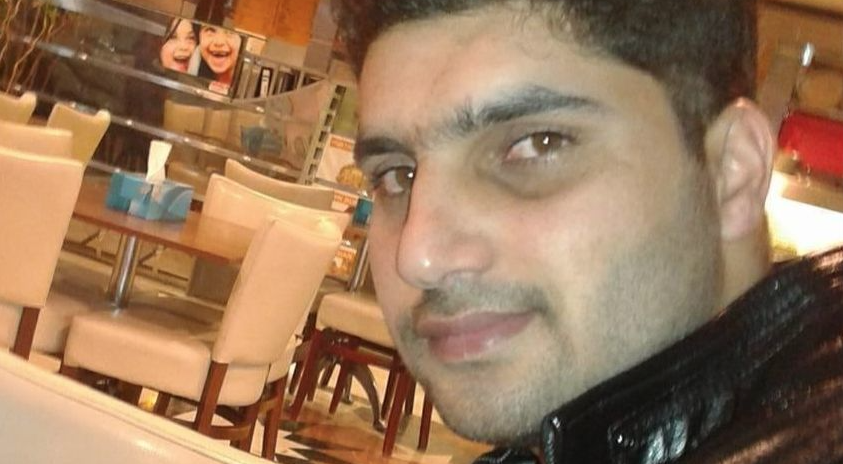


Raja Wajahat, a Pakistani expat in the United Arab Emirates, won 1 million dirhams ($272,000) in a Dubai-based lucky draw on August 28, 2021. (Photo courtesy: Social media)

With the five lucky numbers, Mahzooz announced him the 14th millionaire of its 40th weekly draw, in which he has been participating for the past two years.

“I participate in Mahzooz every week and never miss the live draw,” Wajahat said. “I got goosebumps when I saw the winning numbers on the screen,” Wajahat said. “I cross checked them with my numbers, but I couldn’t believe my eyes.”

This was his first ever lotto win.

“You never know when fortune is going to smile at you,” Wajahat said, as he has already received the money and spilt it with the relative with whom he had bought the ticket

He said he is planning to build a house in Islamabad and open a supermarket in his hometown Bagh in Azad Kashmir.
“Much of them money will go there,” he said, adding that the remaining amount will help him set up a restaurant in Dubai, where he has been living for the past seven years.

“I was anxious about my future and desperately searching for a job,” he said. “But look at me now. I turned into a fortunate man in a matter of minutes.”



Islamabad steps up vehicle checks to boost security as 166,000 cars get electronic tags

Updated 4 sec ago
Follow

Islamabad steps up vehicle checks to boost security as 166,000 cars get electronic tags

  • Authorities say over 3,000 vehicles registered in past 24 hours as enforcement intensifies
  • Extended service hours introduced to push full compliance with digital monitoring system

ISLAMABAD: Authorities in the Pakistani capital have intensified enforcement against vehicles without mandatory electronic tags with more than 166,000 cars now registered, according to data released on Sunday evening, as Islamabad moves to strengthen security and digital monitoring at key entry and exit points.

The Islamabad Capital Territory (ICT) administration introduced the electronic tagging system late last year as part of a broader effort to regulate traffic, improve record-keeping and enhance surveillance in a city that hosts the country’s main government institutions, foreign missions and diplomatic enclaves.

Under the system, vehicles are fitted with electronic tags that can be read automatically by scanners installed at checkpoints across the capital, allowing authorities to identify unregistered vehicles without manual inspections. Vehicles already equipped with a motorway tag, or m-tag, are exempt from the requirement.

“A total of 166,888 vehicles have successfully been issued M-Tags so far, including 3,130 vehicles in the last 24 hours,” the ICT administration said, according to the Excise Department.

Officials said readers installed at checkpoints across Islamabad are fully operational and are being used to stop vehicles still without tags, as enforcement teams carry out checks across the city.

To facilitate compliance, authorities have expanded installation facilities and extended operating hours. The Excise Department said m-tag installation is currently available at 17 booth locations, while select centers have begun operating beyond normal working hours.

According to Director General Excise Irfan Memon, m-tag centers at 26 Number Chungi and 18 Meel are providing services round the clock, while counters at Kachnar Park and F-9 Park remain open until midnight to accommodate motorists unable to visit during daytime hours.

Officials said the combination of enforcement and facilitation was aimed at achieving full compliance with minimal disruption, adding that operations would continue until all vehicles operating in the capital are brought into the system.

The enforcement drive builds on a wider push by the federal government to integrate traffic management, emergency response and security monitoring through technology-driven “safe city” initiatives. Last month, Interior Minister Mohsin Naqvi reviewed Islamabad’s surveillance infrastructure and said reforms in monitoring systems and the effective use of technology were the “need of the hour.”

Authorities have urged motorists to obtain electronic tags promptly to avoid delays and penalties at checkpoints as enforcement continues across the capital.