LONDON: Facebook Inc. launched its first smart glasses on Thursday in a step toward its aim of offering true augmented-reality spectacles.
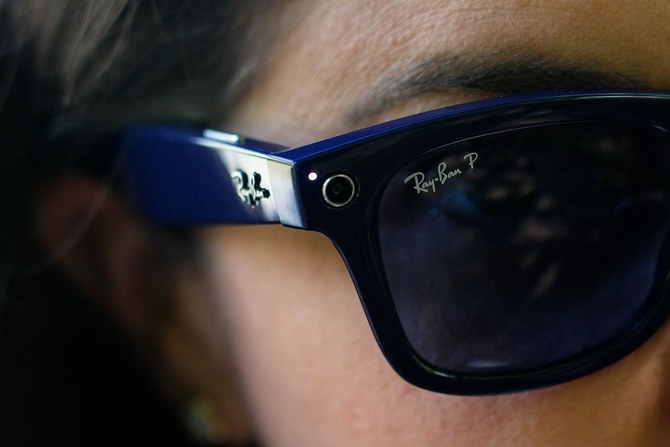
The glasses, which were created in partnership with Ray-Ban maker Essilor Luxottica, allow wearers to listen to music, take calls or capture photos and short videos and share them across Facebook’s services using a companion app. Facebook said the glasses line, called “Ray-Ban Stories,” would start at $299.
The social media giant, which reported revenue of about $86 billion in 2020, makes most of its money from advertising but has invested heavily in virtual and augmented reality, developing hardware such as its Oculus VR headsets and working on wristband technologies to support augmented reality glasses.
Facebook’s chief scientist said last year the company was five to 10 years away from being able to bring to market “true” AR glasses, which would superimpose virtual objects onto the wearer’s view of the real world.
Major tech firms including Amazon.com Inc, Alphabet Inc’s Google, Microsoft Corp, Apple Inc. and Snap Inc. have raced to develop various smart glasses products, but early offerings like Google Glass proved difficult to sell to consumers put off by high price points and design issues.
Snap, which unveiled its smart Spectacles in 2016, this year launched AR glasses but they are not for sale and are offered only to AR creators. Snap’s CEO, Evan Spiegel, said in 2019 that he expected it would be a decade before consumers widely adopted AR smart glasses.
Facebook’s CEO, Mark Zuckerberg, recently announced the company was setting up a team to work on building the metaverse, a shared virtual environment which it is betting will be the successor to the mobile Internet.
“We’ve believed for a long time that glasses are going to be an important part of building the next computing platform,” said Zuckerberg in a video posted on his Facebook page on Thursday.
Facebook, which has been criticized over its handling of user data, said it would not access the media used by its smart-glasses customers without their consent.
The company also said it would not use the content of the photos or videos captured using the glasses and stored in the Facebook View app for personalizing ads, and said the glasses would be an “ads-free experience.”
The glasses include an optional virtual assistant so photos and videos can be captured hands-free through voice commands. Facebook said an LED light on the glasses would show when the camera is on, to make other people aware when a wearer is taking a photo or video.
It published a guide outlining how to use the glasses responsibly, for example turning them off in private spaces like public bathrooms and not using them for illegal actions like harassment or capturing sensitive information such as PIN codes.


![]()

Facebook unveils its first smart glasses
Short Url
https://arab.news/ztuur
Facebook unveils its first smart glasses
- Facebook launches its first smart glasses in partnership with Ray-Ban
- The glasses allow wearers to listen to music, take calls or capture photos and short videos and share them across Facebook’s services using a companion app


Latest updates


Recommended


© 2026 SAUDI RESEARCH & PUBLISHING COMPANY, All Rights Reserved And subject to Terms of Use Agreement.