
RIYADH: El Salvador is betting that this week’s pioneering adoption of bitcoin will spur its economy, especially one of its most crucial sources of revenue: Money sent home by Salvadorans in the US.
A fervent proponent of the cryptocurrency, President Nayib Bukele has asked the more than 2 million Salvadorans who live overseas to send their remittances in bitcoin, arguing it will be cheaper than transferring dollars. He also says it will stimulate foreign investment.
“It will be a great benefit for our people,” he has written on Twitter.
The US dollar, however, will remain the country’s main currency and no one will be forced to pay in bitcoin.
The government is using a digital wallet app called Chivo that can be used for payments and remittances in bitcoin and Bukele has promised that Salvadoran citizens who download it and sign up will receive $30 worth of bitcoins in credit.
Regulation
Britains Financial Conduct Authority called on Monday for powers to govern the online promotion of crypto assets to combat a flood of “problematic content” which it said has no value.
With some crypto assets using social media influencers and other celebrities to promote so-called tokens, Britain’s Finance Ministry has already consulted on the need to regulate them.
The rapid growth of crypto assets has created a new and complex market for regulators around the world to police, with some acting to curb the activities of players in the sector.
The FCA in June banned Binance from undertaking any regulated activity in Britain, saying the global crypto exchange is not capable of being supervised properly. Binance has said it fully complies with the FCA’s requirements.
Warning
The Venezuelan crypto watchdog, Sunacrip, and the intelligence police have issued a warning to the general public about cryptocurrency scams.
The organizations also made a series of recommendations to avoid being scammed by crypto Ponzi schemes that include the national cryptocurrency, Petro, and advised users to always keep their account passwords safe.
This was the government’s response to several crypto-related scams that have taken place in the country in the past few days.
New player
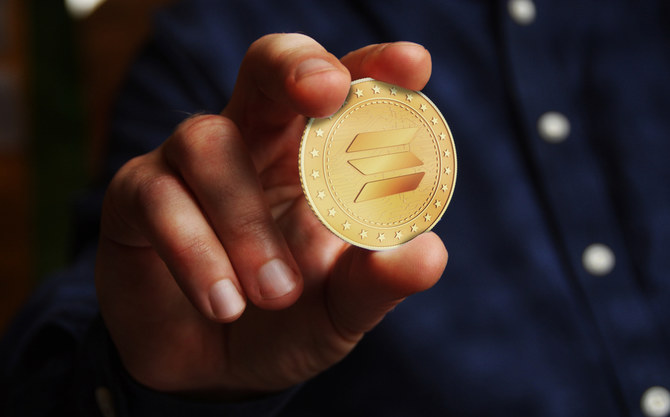
Solana’s network-linked cryptocurrency has jumped to seventh place among the world’s top 10 virtual currencies amid optimism that the blockchain could be a long-term competitor to Ethereum. It has tripled in value in three weeks, with its market capitalization exceeding $41 billion, according to CoinGecko.
Bitcoin, the leading international cryptocurrency, traded higher on Monday, rising by 2.84 percent to $51,679.28 at 6:02 p.m. Riyadh time while Ether traded at $3,939.23 up 0.46 percent, according to data from CoinDesk.
Crypto & oil
Several oil producers and bitcoin miners met last week in Texas to talk about possibilities of onsite mining that Texas energy producers could bring for them.
More than 200 investors attended the meeting at a vehicle warehouse in Houston to talk about an alliance that would allow oil producers to conduct more efficient management of their resources, while miners could benefit from direct energy sources that would otherwise be wasted.
Oil wells that are not too large to build pipelines in their operations usually burn the pockets of natural gas that are there, so bitcoin mining could provide a better solution.
This natural gas could be used to generate power that would fuel smaller mining operations in each well, as this arrangement would bring benefits to both miners and producers and would also be good for the environment.
Parker Lewis, one of the meeting’s organizers, told CNBC he was confident in the success of the get-together.
“I just knew Houston would be prime to explode because of the energy connection to mining if we organized a good meeting,” he said.
One of the main goals of the Texas oilmen is to attract many bitcoin mining entrepreneurs who are still looking to relocate their operations after being expelled from China.