SRMG launches Manga Arabia Kids

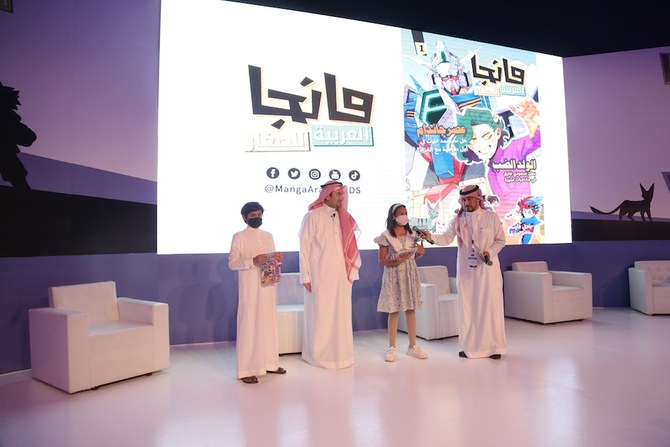
Children receive the first edition of "Manga Arabia Kids" at a launch event in Riyadh. (SRMG)
Short Url
Updated 06 September 2021
Follow

SRMG launches Manga Arabia Kids

  • First edition of the magazine, curated for 10-15 year-olds, launched at a ceremony in Riyadh
  • Magazine aims to encourage reading and boost the Arabic language

RIYADH: Saudi Research & Media Group (SRMG) launched on Sunday a Manga magazine for children, which draws inspiration from the region.

“Manga Arabia Kids” shares Arab culture through the style of Japanese animation, incorporating Arabic slang, local graphics, and captivating storytelling. 

The first edition of the magazine, curated for 10-15 year-olds, was launched at a ceremony in Riyadh.

A panel of speakers inaugurated the first edition, including Dr. Essam Bukhary, the editor-in-chief of Manga Arabia, and the magazine’s writer and editor Odai Karsoo.

“Manga Arabia Kids” aims to cultivate a love for literature and storytelling among youths and also provide a resource that encourages readers to continue using the Arabic language.

“It is an ambitious project for children and older age groups as well,” Maha Al-Majnooni, one of the magazine’s producers, who also illustrates and writes the stories, said. “We aim to promote the culture of reading and also enable imagination to build the future.”

The ceremony began by welcoming the first two children to receive the magazine. 

Bukhary then outlined the main objectives of “Manga Arabia Kids,” which includes encouraging reading among children. 

“We want to promote reading as a hobby within society for younger generations in Saudi Arabia,” Bukhary said. “Statistics indicate that a Saudi reads an average of 46 minutes per week.”

He said he hoped the launch of the magazine that interests the youth will grow a generation of individuals that have a passion for literature. 

The magazine aims to create a closer link between children and the use of the Arabic language. The panel stressed the importance of cultivating resources that promote and support the ability of children to express themselves in Arabic. 

Bukhary said: “Now we are facing generations that do not speak the Arabic language, some people have asked me ‘why not provide the Manga in English?’ I said ‘no’, we want it to be linked to the Arabic language, because the Arabic language is a cultural vessel that builds and strengthens this generation.”

The comic will help build a Saudi Arabian entertainment industry system through Manga, Bukhary said, adding that the industry in Japan is worth $5.5 billion annually. 

He said producing the comics would invest in Arab and Saudi talent. Manga Arabia has a diverse team of Saudi illustrators, writers, and producers that bring the manga to life.

He also hopes the magazine will create future generations of ambitious and goal-driven individuals. 

“We measure our success, not in a day, two days, or a month. We are talking about the next 30 or 40 years,” Bukhary said. “Our goal is to strive to make this generation relate to its language, culture and identity, looking forward to the future and achieving the goal of 2030. 

“My dream is that we will see students from Japan, from the Middle East and the West come to study how our sons and daughters made the Saudi dream.”

Bukhary ended with his address with a heartfelt message.

“When I studied in Japan, I learned a very beautiful principle,” he said. “A successful leader is the one who prepares a new generation of leaders who will surpass him. In order to succeed globally we must support each other and future generations.”

The 244-page inaugural issue debuts comic-stars like “Bissa”, “Gundam” and  the Saudi superhero “Al Wallad Al Dabb.”

Jomana Al-Rashid, CEO of SRMG, said: “The launch of “Manga Arabia Kids” magazine marks the first phase in the Manga Arabia project; a promising step in our group's transformation, growth and expansion strategy. 

“We continue to strive towards empowering the Arab creative content industries, spreading the culture of reading and writing fiction, while stimulating the imagination and creativity of young Arab generations to better shape the future.”


To infinity and beyond: Grendizer’s 50 years of inspiring Arabs

Updated 27 December 2025
Follow

To infinity and beyond: Grendizer’s 50 years of inspiring Arabs

  • ⁠ ⁠50 years after its creation, the Grendizer anime series continues to capture Arab imagination
  • ⁠ ⁠⁠Arab News Japan speaks to creator Go Nagai, Middle Eastern fans and retells the story behind the UFO Robot tasked with protecting our planet

LONDON: Few cultural imports have crossed borders as unexpectedly, or as powerfully, as Grendizer, the Japanese giant robot that half a century ago became a childhood hero across the Arab world, nowhere more so than in Saudi Arabia.

Created in Japan in the mid-1970s by manga artist Go Nagai, Grendizer was part of the “mecha” tradition of giant robots. The genre was shaped by Japan’s experience during the Second World War, and explored themes of invasion, resistance and loss through the medium of science fiction.

But while the series enjoyed moderate success in Japan, its true legacy was established thousands of kilometers away in the Middle East.

By the early 1980s, “Grendizer” had spread across the Middle East, inspiring fandoms in Saudi Arabia, Kuwait, Iraq and beyond. (Supplied)

The anime “UFO Robot Grendizer” arrived on television in the region in 1979, dubbed into Arabic and initially broadcast in Lebanon during the Lebanese civil war. The story it told of the heroic Duke Fleed, a displaced prince whose planet had been destroyed by alien invaders, struck a chord with children growing up amid regional conflict and occupation by Israel.

Its themes of defending one’s homeland, standing up to aggression and protecting the innocent were painfully relevant in the region, transforming the series from mere entertainment into a kind of emotional refuge.

Much of the show’s impact came from its successful Arabization. The powerful Arabic dubbing and emotionally charged voice-acting, especially by Lebanese actor Jihad El-Atrash as Duke Fleed, lent the show a moral gravity unmatched by other cartoons of the era.

While the series enjoyed moderate success in Japan, its true legacy was established thousands of kilometers away in the Middle East. (Supplied)

The theme song for the series, performed by Sami Clark, became an anthem that the Lebanese singer continued to perform at concerts and festivals right up until his death in 2022.

By the early 1980s, “Grendizer” had spread across the Middle East, inspiring fandoms in Saudi Arabia, Kuwait, Iraq and beyond. For many, it was not only their first exposure to anime, it also delivered lessons on values such as justice and honor.

Grendizer was so influential in the region that it became the subject of scholarly research, which in addition to recognizing the ways in which the plight of the show’s characters resonated with the audience in the Middle East, also linked the show’s popularity to generational memories of displacement, particularly the Palestinian Nakba.

By the early 1980s, “Grendizer” had spread across the Middle East, inspiring fandoms in Saudi Arabia, Kuwait, Iraq and beyond. (Supplied)

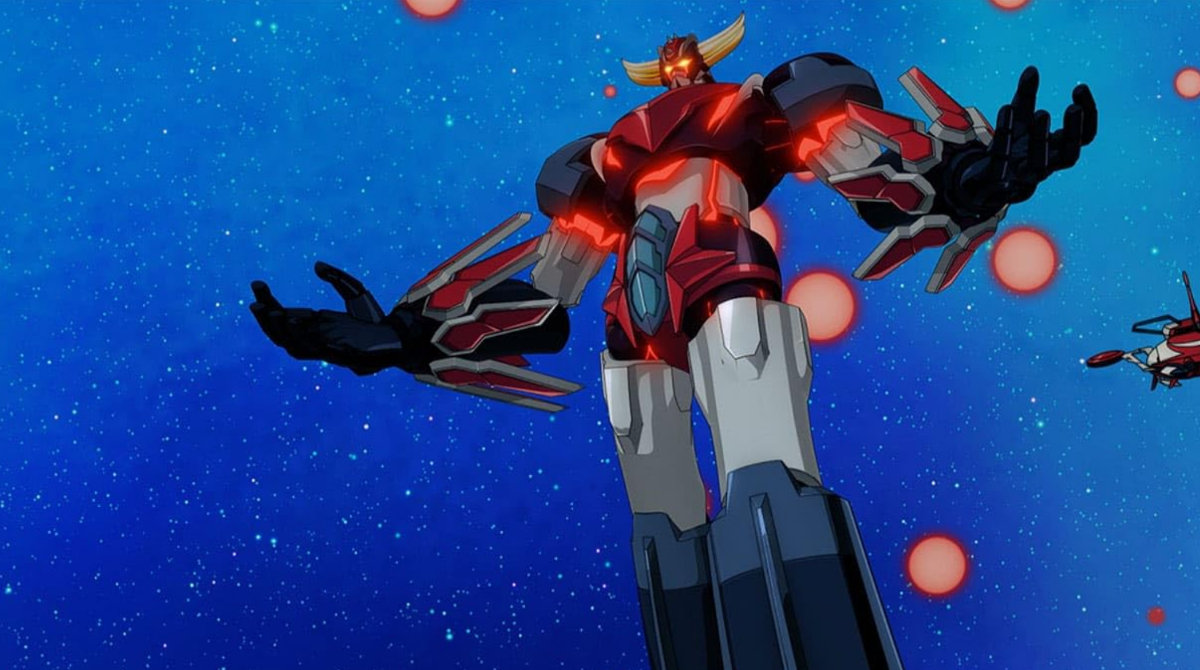
Half a century later, “Grendizer” remains culturally alive and relevant in the region. In Saudi Arabia, which embraced the original version of the show wholeheartedly, Manga Productions is now introducing a new generation of fans to a modernized version of the character, through a video game, The Feast of The Wolves, which is available in Arabic and eight other languages on platforms including PlayStation, Xbox and Nintendo Switch, and a new Arabic-language anime series, “Grendizer U,” which was broadcast last year.

Fifty years after the debut of the show, “Grendizer” is back — although to a generation of fans of the original series, their shelves still full of merchandise and memorabilia, it never really went away.


Grendizer at 50
The anime that conquered Arab hearts and minds
Enter
keywords