An ardent US ally, Kosovo, has agreed to take in Afghanistan evacuees who fail to clear initial rounds of screening and host them for up to a year, a US official said Saturday, in an intended fix to one of the security problems of the frantic US evacuation from the Kabul airport.
The US plan is likely to face objections from refugee advocates, who already complain of a lack of public disclosure and uncertain legal jurisdiction in the Biden administration’s use of overseas screening sites. Those quickly set-up overseas transit sites are still operating near or at full speed to verify eligibility and look for security issues among thousands of Afghans and smaller numbers of Americans flown out of Taliban-held Afghanistan between Aug. 15 and Aug. 31.
The US official spoke to the Associated Press on condition of anonymity to discuss the plan. It was the first disclosure of what the US intends to do with Afghans or other evacuees who have failed to clear initial rounds of screening or whose cases otherwise require more processing.
The US Embassy in Kosovo in a statement later Saturday stressed that the arrangement did not mean Kosovo was taking evacuees who had been deemed ineligible for admission to the United States. “Some applicants are still in the process of obtaining needed documents and providing all the information required to qualify under USlaw for immediate entry,” the embassy statement said.
The Biden administration had resisted months of urging from some refugee organizations and veterans groups to bring former Afghan allies or others most vulnerable to targeting by the Taliban to American territory for security screening and other processing.
Several other countries for a time balked at temporarily hosting the United States’ Afghan evacuees, for fear of getting stuck with the Americans’ security problems. That all presented major obstacles in US preparations for evacuation of vulnerable Afghans, even before Kabul fell to the Taliban on Aug. 15.
The Taliban’s lightning conquest of Afghanistan set off the chaotic US-military airlift out of the Kabul airport.
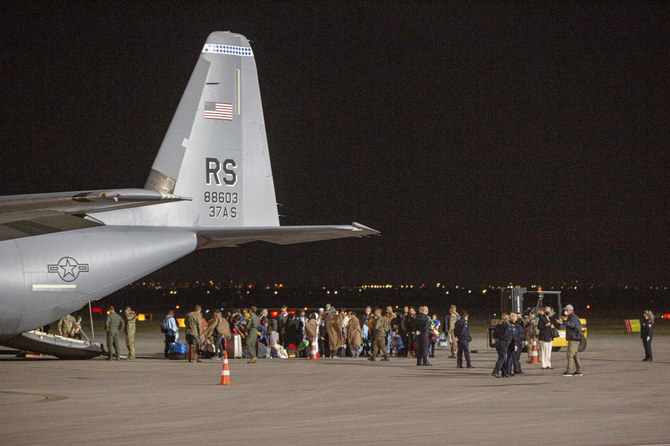
The administration within days of the Taliban takeover mobilized thousands of US troops, diplomats, law enforcement agents, border and transportation workers, volunteers and others for screening, processing and caring for evacuees at more than a half-dozen US naval stations, airfields and army bases in Europe and Asia. Officials and volunteers handed stuffed animals and toys to arriving children at many of the transit sites, and set up play areas.
The aim of the mobilization was to get deserving evacuees through to the United States as quickly as possible, and stop possible security risks among evacuees, and other evacuees who failed to qualify for relocation to the United States, before they touched foot on US soil.
Refugee groups criticize the Biden administration evacuation effort as too late, and too little planned. The hastiness of the airlifts after Kabul fell has led to a minority of people among the evacuees getting thousands of miles from the Kabul airport before Americans detected problems, including some evacuees with security issues.
In one instance, a red flag popped up on an evacuee’s case as he was mid-flight between two of the overseas transit sites, another US official said, speaking on condition of anonymity to discuss the processing. In a comparatively small number of cases, the US transit sites overseas also are dealing with other evacuees who require further investigation, or who lie or destroy their identification in hopes of qualifying for immigration, that US official said.
Some who managed to get through crushing crowds and US and Taliban controls at the airport got put on planes and made it to transit sites, without any apparent eligibility for US relocation as an at-risk Afghan, the official said.
Most Afghan evacuees are clearing processing in a matter of days at large transit sites that US government employees set up quickly at military bases in Qatar, Germany and Italy, along with smaller sites elsewhere. Those evacuees then fly through Philadelphia or Washington Dulles airports for resettling in the United States.
Other US officials have said they expect most or all Afghans whose cases may initially raise red flags or questions to pass further screening.
Eligible Afghans include those who worked for the US government, or women’s advocates, journalists or others vulnerable because of their role in Afghan civil society.
The US official who disclosed the Kosovo plan said the transit centers “provide a safe place for diverse groups ... to complete their paperwork while we conduct security screenings before they continue to their final destination in the United States or in another country.”
The US will use a military camp, Bondsteel, that houses the US army near the Kosovo capital for the further screening and processing of evacuees intended for resettlement in the United States, the US official said. A site down the road that formerly housed road crews is to temporarily house evacuees bound for other NATO countries, under NATO’s management and care.
Germany and Italy each have set time limits of no more than two weeks for US processing of any one evacuee on their soil.
Kosovo considers itself a close ally of the United States since the US spearheaded a 1999 NATO air campaign against Serbian forces brutalizing Kosovo civilians. The two Afghan evacuee sites sit along a highway named after President Joe Biden’s late son, Beau Biden, who helped train local judges and prosecutors after the Kosovo war.
Kosovo leaders have agreed to one-year stays for the evacuees, with a possibility of extensions. Kosovo’s prime minister and other officials turned out at the airport to welcome the first Afghan evacuees.
The majority of Kosovo’s people are Muslim, like Afghans, although Kosovo’s constitution establishes it as a secular state. Kosovo has a substantial minority of Orthodox Christian Serbs.
Refugee organizations say the US hasn’t been open or efficient in its treatment of evacuees at overseas transit centers.
“There’s just a staggering lack of transparency from the administration about what is happening, who is there ... who to contact if there are issues” for evacuees at the sites, said Adam Bates, an attorney with the International Refugee Assistance Project, one of the main US refugee working with with Afghans seeking escape from the Taliban.
He spoke before the Biden administration disclosed its plans for the Kosovo site.


![]()

US: Afghan evacuees who fail initial screening Kosovo-bound
Short Url
https://arab.news/mhpr9
US: Afghan evacuees who fail initial screening Kosovo-bound
- The US will use a military camp, Bondsteel, that houses the US army near Pristina for the further screening and processing of evacuees
- Kosovo considers itself a close ally of the United States since the US spearheaded a 1999 NATO air campaign against Serbian forces


Latest updates


Recommended


© 2026 SAUDI RESEARCH & PUBLISHING COMPANY, All Rights Reserved And subject to Terms of Use Agreement.