



MAKKAH: A Saudi expert has acquired a collection of rare photos of Saudi Arabia that shed light on older eras and historical events in the Kingdom.
Omar Murshid, an expert in digital exhibitions, acquired his collection through special auctions featuring photographs taken by foreign employees who worked in Saudi Arabia decades ago.
He “traveled back in time” more than 40 years after acquiring the photographs from the personal archive of US journalist Najib Najjar, who was a frequent visitor to the Kingdom, especially its capital Riyadh, in 1974.
Najib’s archives depict Saudi history and were featured for the first time in newspapers.

Murshid told Arab News that the first photo he had showed the late Saudi King Faisal bin Abdul Aziz Al-Saud leaving the old Riyadh governorate building, and behind him the governor of Riyadh region at the time, now King Salman.
The second photo was of the old governorate building with the details of its facade from a local architectural perspective, showing the cavalry and guards lining up at its entrance.
HIGHLIGHT
The first photo showed the late Saudi King Faisal bin Abdul Aziz Al-Saud leaving the old Riyadh governorate building, and behind him the governor of Riyadh region at the time, now King Salman.
The third photo showed the cavalry and guards lining up near Al-Safat Square and Al-Adl Square in the historical region, with its famous clock, in preparation for welcoming a head of state visiting Riyadh.
The fourth picture showed the head of the National Guard at the time, the late King Abdullah bin Abdul Aziz Al-Saud, while receiving a number of employees of the National Guard.
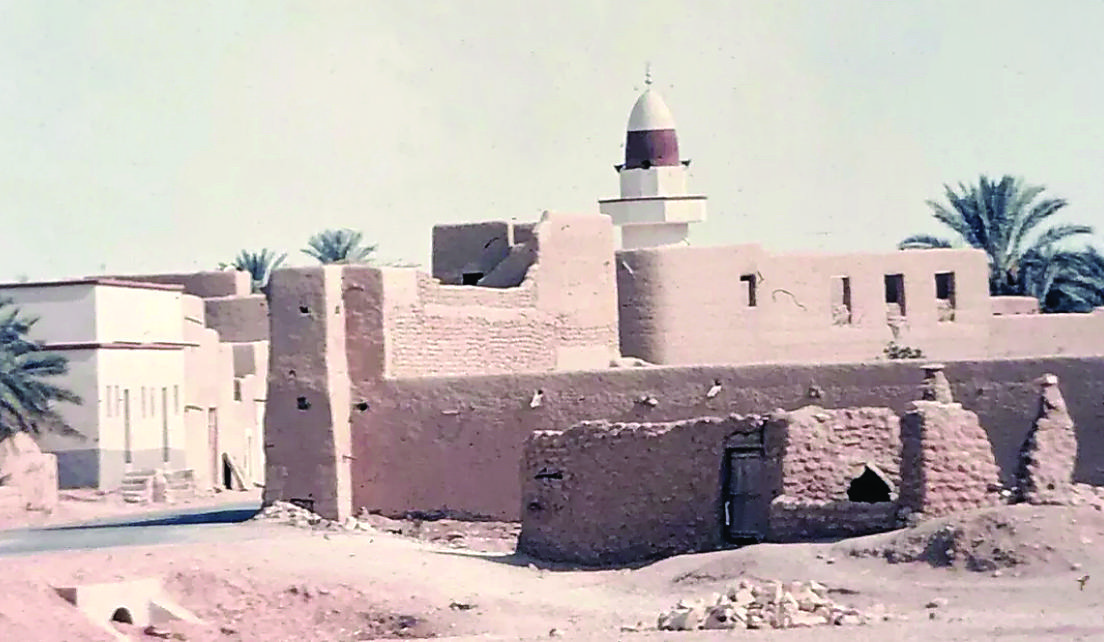
Finally, a fifth photo showed King Faisal bin Abdul Aziz Al-Saud, the princes, and a group of citizens while performing the Al-Ardeh traditional dance of Najd, during national celebrations at Al-Malaz Stadium.
Murshid said that he was unable to determine the type of cameras used at the time, however he was able to get the photos through an American journalist who worked with official US delegations at the time.
He said that cameras were among the most important of human inventions, initiating a revolution in transmitting events and information, and documenting them. Murshid said that cameras had developed rapidly due to the digital revolution.

Omar Najib’s archives depict Saudi history and were featured for the first time in newspapers
“We are talking about the nature of technology and the time pace distinguished by the spread of photography through slide films. Then we present a detailed description of a number of selected photos and conclude by explaining how we transform them into digital photos,” he said.
He talked about the beginning of the use of slides, issued in 1935 by the Eastman Kodak Company. This consisted of positive photos of 25 mm Kodachrome film — fixed with rectangular cardboard or plastic for protection — in 2 x 2 inch (5 x 5 cm) squares; the most widespread form of slide photographs.

Murshid said that a viewer could see slide content in many forms, either by looking at them under spotlights or on a screen by using a projector, the most widespread method during the 1960s and 1970s.
“Their usage was extended in public life to include commercial activities, advertisements, and artistic exhibitions, museums, universities and research centers,” he said.
Murshid pointed to the importance of these slides in recording history, whether showing the human aspect, the architectural side through buildings, historical landmarks, the artistic and aesthetic side, or the civilizational side that depicted lifestyles of a particular era.
On the importance of slides from an artistic and historical perspective, he said: “The artistic perception of slides reminds me of oil paintings which distinguished the arts of previous ages before the invention of the camera. For each photo expresses the moment of capturing the photo to feature a story with lot of details of the lifestyle, architectural designs, the people’s wardrobe, their habits and traditions, in addition to the tools and technologies widespread and used at the time.”
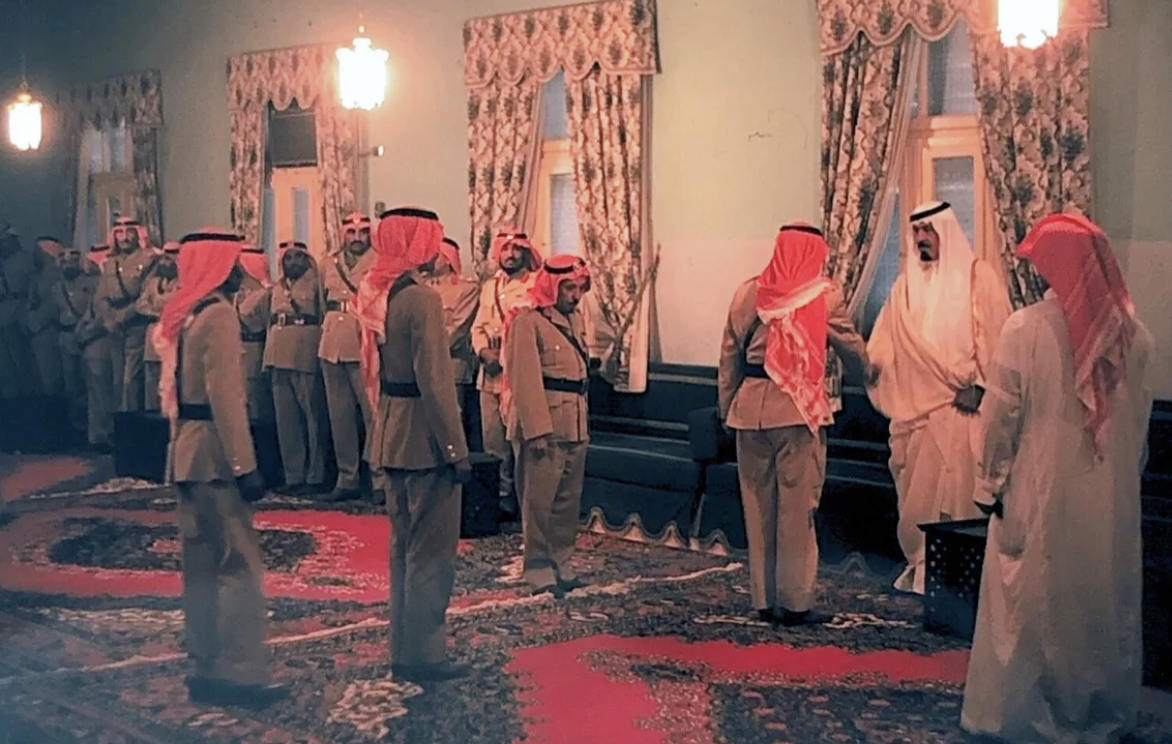
Head of the National Guard at the time, late King Abdullah, while receiving members of the National Guard. (Photos/Omar Murshid)
“From a historical perspective they are considered as material evidence that embodies human civilization and links it to the past, describe events in the form of a photo, records historical landmarks and architectural designs of buildings that might develop or change over time so that their photo would be the best witness of them,” he said.
That was why slides showing useful content were seen as priceless treasures by libraries specialized in the field, and also by research centers and museums, he said.
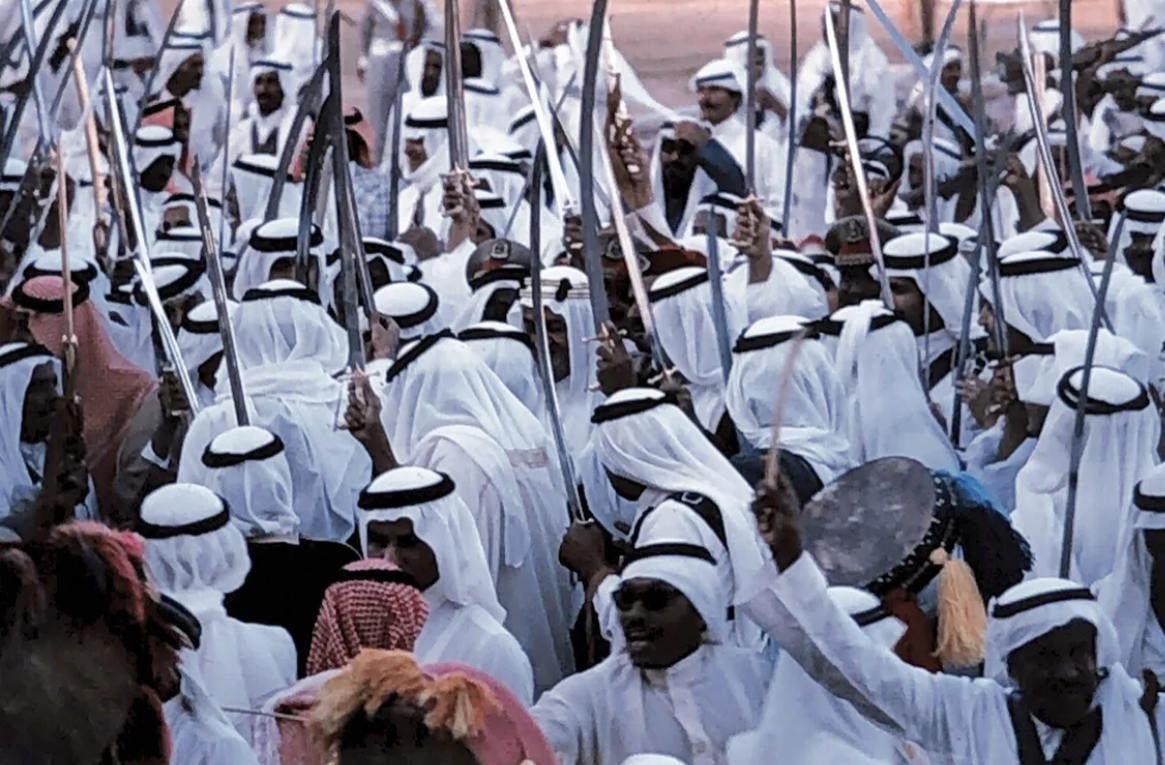
King Faisal (center), members of the royal family, and a group of citizens while performing the Al-Ardah traditional dance of Najd, during national celebrations at Al-Malaz stadium in Riyadh. (Photo/Omar Murshid)
The sources of such slides were numerous, Murshid said. However, acquiring them was not an easy task for many reasons. The most important reason was the disappearance of this technology and its rare use, in addition to the damage that might affect some old slides due to bad storage, the huge stores of these slides, and the difficulty of sorting them and identifying the people, places or period of the photos.
This was why they were offered for sale through intermediaries at low prices. The deal was done on big collections of slides, and the buyer had to work on sorting them and try to identify the people and places in them.


