

Despite Jason Momoa, contrived thriller ‘Sweet Girl’ leaves a bad taste

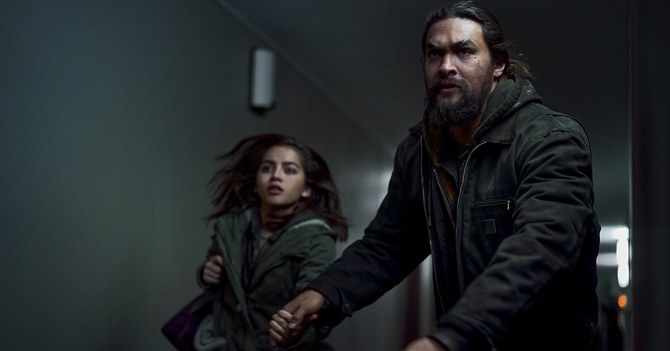
The film stars Jason Momoa. (Supplied)
Short Url
Updated 27 August 2021
Follow

Despite Jason Momoa, contrived thriller ‘Sweet Girl’ leaves a bad taste

  • Momoa is miscast as an everyman up against professional killers

LONDON: Netflix continues to stuff its movie slate with the biggest stars Hollywood has to offer. Jason Momoa is the latest to get a headlining gig with “Sweet Girl,” an action thriller that sees Momoa’s everyman, Ray Cooper, devastated by the loss of his wife, and galvanized by that loss to hold the head of a greedy pharmaceutical company to account for pulling life-saving drugs off the market.

Painting Ray as an everyman (or, at least, casting Momoa to play him) is the film’s first misstep. Momoa, in everything he does or says — even when he’s doing or saying nothing,  is in no way ordinary. You don’t see him on screen and think, “Oh yeah. He’s just like me.”

When Ray and his daughter Rachel (Isabela Merced) wind up on the run from hired mercenaries keen to keep a lid on the Big Pharma story, Ray must use his wits and cunning to stay one step ahead of the trained killers. Trouble is that he’s Jason Momoa. You know? Jason Momoa. Which means that you’d back him in a fight against most people.

To be fair, Momoa manages to make Ray seem about as ordinary as he’s allowed to, and gets the occasional chance to flex his acting muscles instead of his actual ones. He and Merced display nice chemistry during the quieter moments of their flight, but all too soon, it’s back to fighting, and realistically it’s hard to imagine any of the movie’s nameless goons getting the better of the man who played Aquaman and Khal Drogo.
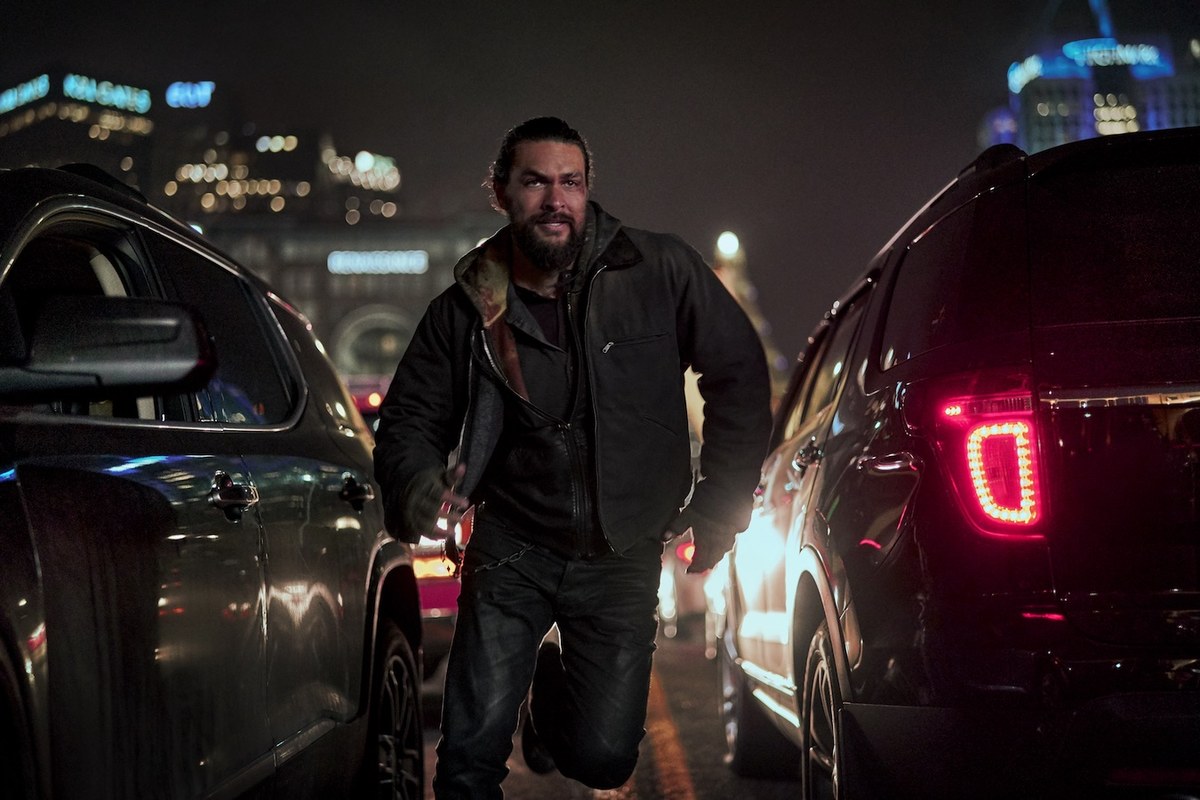


“Sweet Girl” is directed by Brian Mendoza. (Supplied)

Sadly, even these paltry attempts by director Brian Mendoza to make “Sweet Girl” believable are blown out of the water by a final-act plot twist that probably seemed very clever on paper – but that actually serves only to highlight the attempt to bolster a tenuous idea for a movie with a ‘shocking’ reveal.

Presumably, that twist was supposed to encourage viewers to go back and watch the movie again after the credits roll. They won’t want to. Once is more than enough.


Review: ‘Sorry, Baby’ by Eva Victor

Eva Victor appears in Sorry, Baby by Eva Victor, an official selection of the 2025 Sundance Film Festival. (Supplied)
Updated 27 December 2025
Follow

Review: ‘Sorry, Baby’ by Eva Victor

  • Victor makes a deliberate narrative choice; we never witness the violence of what happens to her character

There is a bravery in “Sorry, Baby” that comes not from what the film shows, but from what it withholds. 

Written, directed by, and starring Eva Victor, it is one of the most talked-about indie films of the year, winning the Waldo Salt Screenwriting Award at Sundance and gathering momentum with nominations, including nods at the Golden Globes and Gotham Awards. 

The film is both incisive and tender in its exploration of trauma, friendship, and the long, winding road toward healing. It follows Agnes, a young professor of literature trying to pick up the pieces after a disturbing incident in grad school. 

Victor makes a deliberate narrative choice; we never witness the violence of what happens to her character. The story centers on Agnes’ perspective in her own words, even as she struggles to name it at various points in the film. 

There is a generosity to Victor’s storytelling and a refusal to reduce the narrative to trauma alone. Instead we witness the breadth of human experience, from heartbreak and loneliness to joy and the sustaining power of friendship. These themes are supported by dialogue and camerawork that incorporates silences and stillness as much as the power of words and movement. 

The film captures the messy, beautiful ways people care for one another. Supporting performances — particularly by “Mickey 17” actor Naomi Ackie who plays the best friend Lydia — and encounters with strangers and a kitten, reinforce the story’s celebration of solidarity and community. 

“Sorry, Baby” reminds us that human resilience is rarely entirely solitary; it is nurtured through acts of care, intimacy and tenderness.

A pivotal scene between Agnes and her friend’s newborn inspires the film’s title. A single, reassuring line gently speaks a pure and simple truth: “I know you’re scared … but you’re OK.” 

It is a reminder that in the end, no matter how dark life gets, it goes on, and so does the human capacity to love.