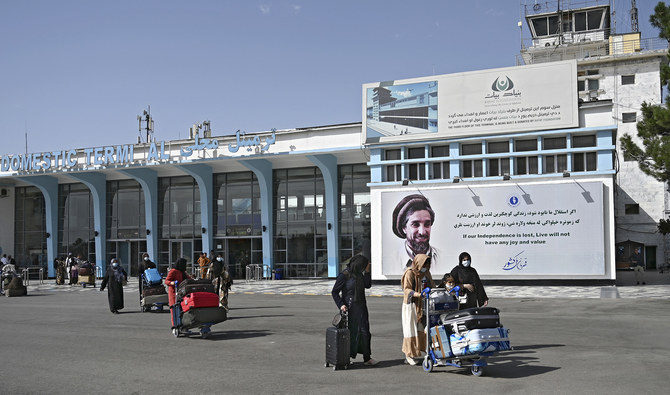
KARACHI: A spokesperson for Pakistan International Airlines (PIA) said on Wednesday the national carrier’s operations to Kabul had been “temporarily” suspended as the new Afghan Taliban regime was restricting its nationals from leaving the country.
The United States and its allies have evacuated more than 70,000 people, including their citizens, NATO personnel and Afghans at risk, since August 14, the day before the Taliban swept into the capital, Kabul. Pakistan, which has refused to admit Afghan refugees, has so far helped evacuate almost 1,500 people, most of them diplomats and staff at international organizations and media outlets working in Afghanistan.
The Taliban have said all foreign evacuations must be completed by August 31 and asked the United States to stop urging talented Afghans to leave, while also trying to persuade people camped at Kabul airport to go home, assuring them they had nothing to fear.
“We have requests from international agencies to transport their support staff, mostly of Afghanistan nationality, however, the new Afghan [Taliban] regime is not allowing nationals to travel at this point,” PIA spokesperson Abdullah Khan told Arab News, adding that the airline would resume operations once the restrictions were relaxed.
“Almost all aspiring Pakistani nationals have reached Pakistan either by air or through road,” Khan said. “The PIA has evacuated 1460 people, including Pakistanis and nationals of different countries.”
“We guarantee their [Afghans] security,” Taliban spokesman Zabihullah Mujahid told a news conference here on Tuesday, saying it was “time for people to work for their country.”
He said Afghans crowding the airport in the hope of boarding flights had nothing to fear and should go home.
The BBC quoted Mujahid as saying Afghans would no longer be allowed to travel to the airport in Kabul.
The BBC and other media outlets also reported Afghans trying to get to Kabul airport on Tuesday and Wednesday were being stopped at checkpoints.
Despite the Taliban’s vows that they would not retaliate, they have been searching for people who worked with the US or NATO in “targeted door-to-door visits,” according to a UN document reviewed by multiple sources. Journalists have also been targeted, according to the UN and media reports.
But Mujahid said those who worked with the US or other countries would be safe in Afghanistan: “We have forgotten everything in the past.”
“There is no list,” he added, of Afghans who worked with Western troops. “We are not following anybody.”


![]()

PIA says Kabul operation on hold over Taliban restriction on Afghans leaving
Short Url
https://arab.news/bfjnz
PIA says Kabul operation on hold over Taliban restriction on Afghans leaving
- It is “time for people to work for their country,” Taliban spokesman Zabihullah Mujahid told reporters on Tuesday
- Pakistan has refused to admit Afghan refugees, so far helped evacuate almost 1,500 people from Afghanistan
Latest updates





© 2026 SAUDI RESEARCH & PUBLISHING COMPANY, All Rights Reserved And subject to Terms of Use Agreement.