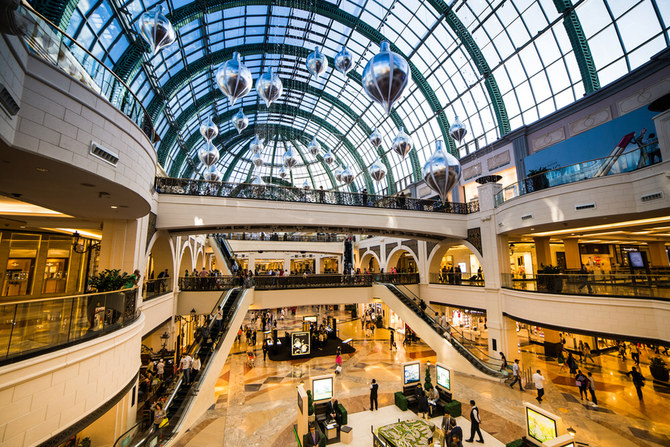
MAF Revenue falls in H1 as pandemic bites

Short Url
Updated 07 April 2022
Follow

MAF Revenue falls in H1 as pandemic bites

  • Revenue fell by 10 percent to AED 15.6 billion
  • MAF says confidence has returned in recent months as pre-pandemic activities resume

Majid Al Futtaim, the shopping malls, communities, retail and leisure group with a presence across the Middle East, Africa, and Central Asia, felt the impact of the pandemic as revenue fell by 10 percent to AED 15.6 billion, it revealed in its financial results for the first six months of the year. 

The Group said it has remained resilient and focused on adapting to customer needs despite the pandemic’s continued impact on its operating environment, reporting EBITDA of AED 1.6 billion, an increase of 2 percent and net profit after tax amounted to AED 662 million and total equity saw a marginal increase. This the group said was primarily due to the relative stabilisation in the market, resulting in steady asset valuations.

Alain Bejjani, Chief Executive Officer of Majid Al Futtaim - Holding, said: “Despite the prolonged impact of the COVID-19 pandemic, Majid Al Futtaim has delivered a robust performance over the first half of the year, driven by prudent financial management and a diversified portfolio."

He added that the company's strong financial position has enabled it to remain resilient to that pressure and agile in how it responded to the situation. 

As the pandemic wanes in key markets across the globe, Bejjani, said confidence has returned in recent months and pre-pandemic activities were seeing a resumption.

“Over the first half of the year, we have seen encouraging signs of recovery across our markets, as consumers gain confidence. In addition to the increased activity across our physical assets, the acceleration of pre-pandemic trends – particularly as they pertain to digital capabilities – continues to gather pace," Bejjani added.

The group added that investment in sustainable growth opportunities would continue, saying it was on track to deliver on both its commitment to become Net Positive in water and energy by 2040 as well as its pledge to phase out single-use plastic across its operations by 2025.


King Abdulaziz Airport among world’s busiest after record-breaking 2025

Updated 02 January 2026
Follow

King Abdulaziz Airport among world’s busiest after record-breaking 2025

RIYADH: King Abdulaziz International Airport has achieved a new historical milestone, reaching 53.4 million passengers in a single year.

This is the highest number ever recorded at a Saudi airport since the beginning of air travel in the Kingdom, placing it among the world’s mega airports in terms of passenger traffic, according to the Saudi Press Agency.

The airport handled a total of 310,000 flights and 60.4 million bags, representing a 12 percent increase compared to 2024. It also handled 9.57 million Zamzam water containers and 2,968 cargo flights. 

This achievement reflects the airport’s qualitative transformation and its position as a regional hub and national gateway connecting the Kingdom to the world. It also highlights its role in facilitating the movement of visitors and pilgrims, promoting tourism in line with the goals of Vision 2030, diversifying the economy, and providing a distinguished travel experience. 

For his part, CEO of Jeddah Airports Co. Mazen Johar, affirmed that reaching 53.4 million passengers confirms the airport’s high operational readiness and represents a pivotal milestone for moving to the next phase, in preparation for doubling this number, God willing, in the coming years. 

He pointed out that this national achievement would not have been possible without the grace of God Almighty, followed by the directives of the wise leadership and the continuous follow-up from the minister of transport and logistics, the president of the General Authority of Civil Aviation, and the CEO of Airports Holding Co. 

He explained that King Abdulaziz International Airport is strengthening its position as a major aviation hub in the region through expansions, increased capacity, and improved services, supporting the objectives of the aviation program and aligning with the goals of the Kingdom’s Vision 2030. 

The CEO of Jeddah Airports Co. expressed his gratitude to the partners in success from various government and private sectors for their fruitful cooperation through a collaborative work system that contributed to providing the best services.