
KARACHI: Marina Syed first started thinking about learning to ride a motorbike in 2014 when she regularly had to stand on deserted Karachi street corners after work, waiting to catch buses or rickshaws to her house more than an hour away.
Eventually, she would almost always have to call her brother to pick her up, all the while nervous about being out alone in a city that in 2014 was ranked the sixth highest in the world for crime rates.
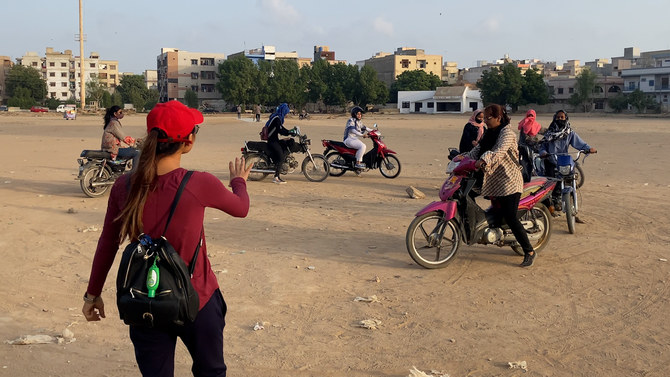
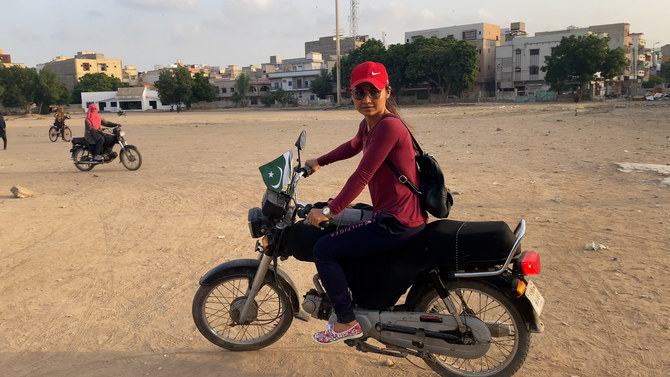
Marina Syed, who founded Rowdy Riders in 2017, trains women to ride motorbikes in Karachi, Pakistan, on August 10, 2021. (AN photo)
Social norms and safety concerns limit women’s mobility across Pakistan, where general commuting and travel activity is estimated to be 80 percent dominated by men, according to a 2016 London School of Economics study on gender inequality in transportation.
And given that Karachi has one of the worst transportation systems in the world, Syed knew that it was up to her, and only her, to figure out how to cover long distances in the teeming port city.
In a conservative nation where women are conspicuously absent in public spaces, and the sight of a woman on a bike is a rarity, the journey to becoming an expert bike rider and trainer has not been an easy one.
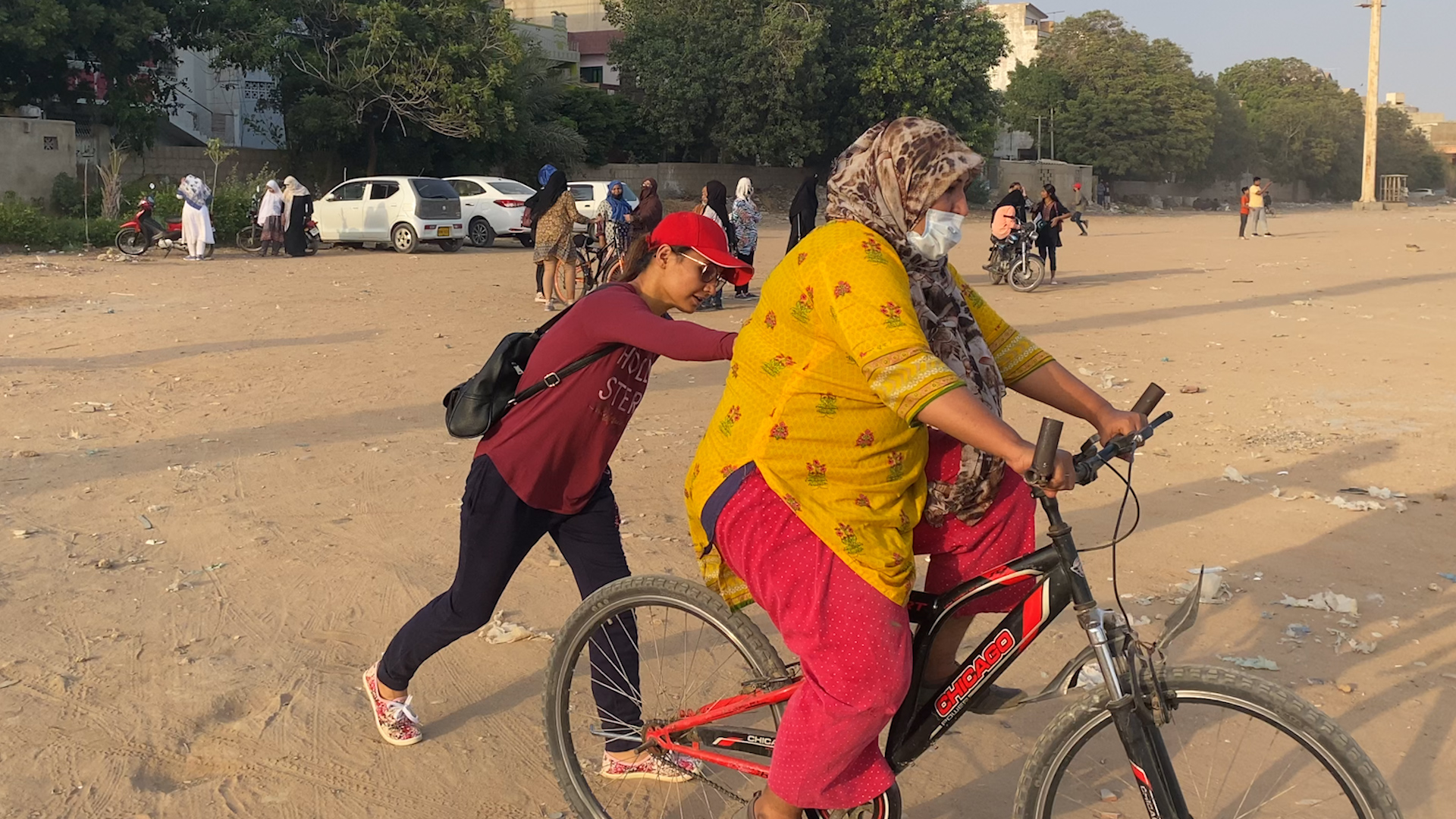
Marina Syed, who founded Rowdy Riders in 2017, helps a woman balance on bicycle in Karachi, Pakistan, on August 10, 2021. (AN Photo)
From fighting opposition from her Afghan-origin family members to braving stigma on the male-dominated roads of Pakistan’s largest city, today, Syed doesn’t just ride herself, she also runs Rowdy Riders, a biking school and a community of women riders in Karachi.
“When my family heard about this [desire to learn to ride a bike], there was a lot of social shunning as relatives complained to my parents,” Syed told Arab News. “‘She’s a girl, how can she do this in our society?’ they would say.”
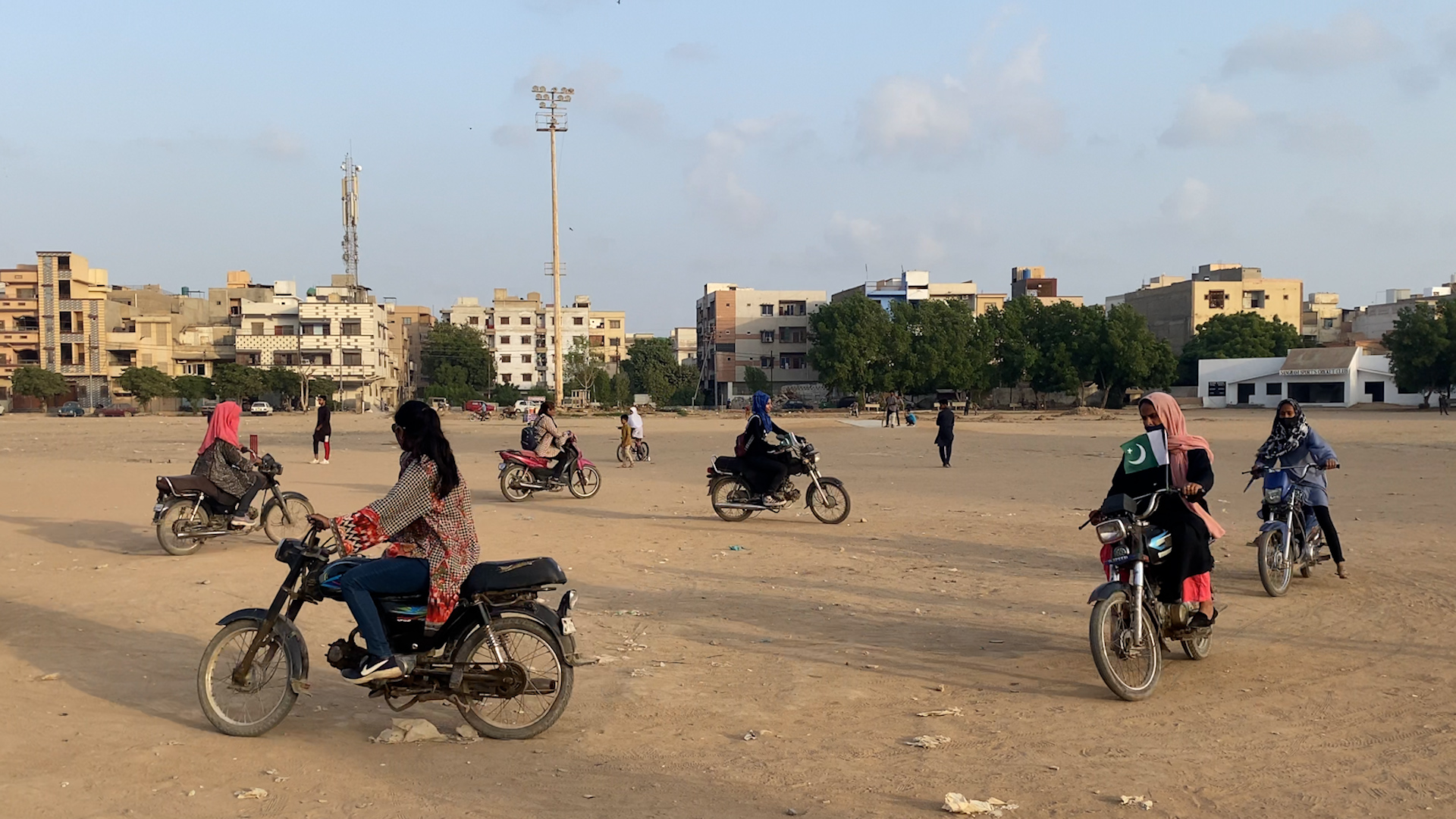
Marina Syed, who founded Rowdy Riders in 2017, trains women to ride motorbikes in Karachi, Pakistan, on August 10, 2021. (AN photo)
Syed was undeterred. She borrowed a bike from a friend and began to ride secretly. After weeks of crashing into bushes, skidding on muddy playgrounds and bruising her arms and legs, Syed became confident enough to ride herself to university and eventually to work.
The first time she drove a few kilometers away from her house alone, Syed said she felt “awesome.”
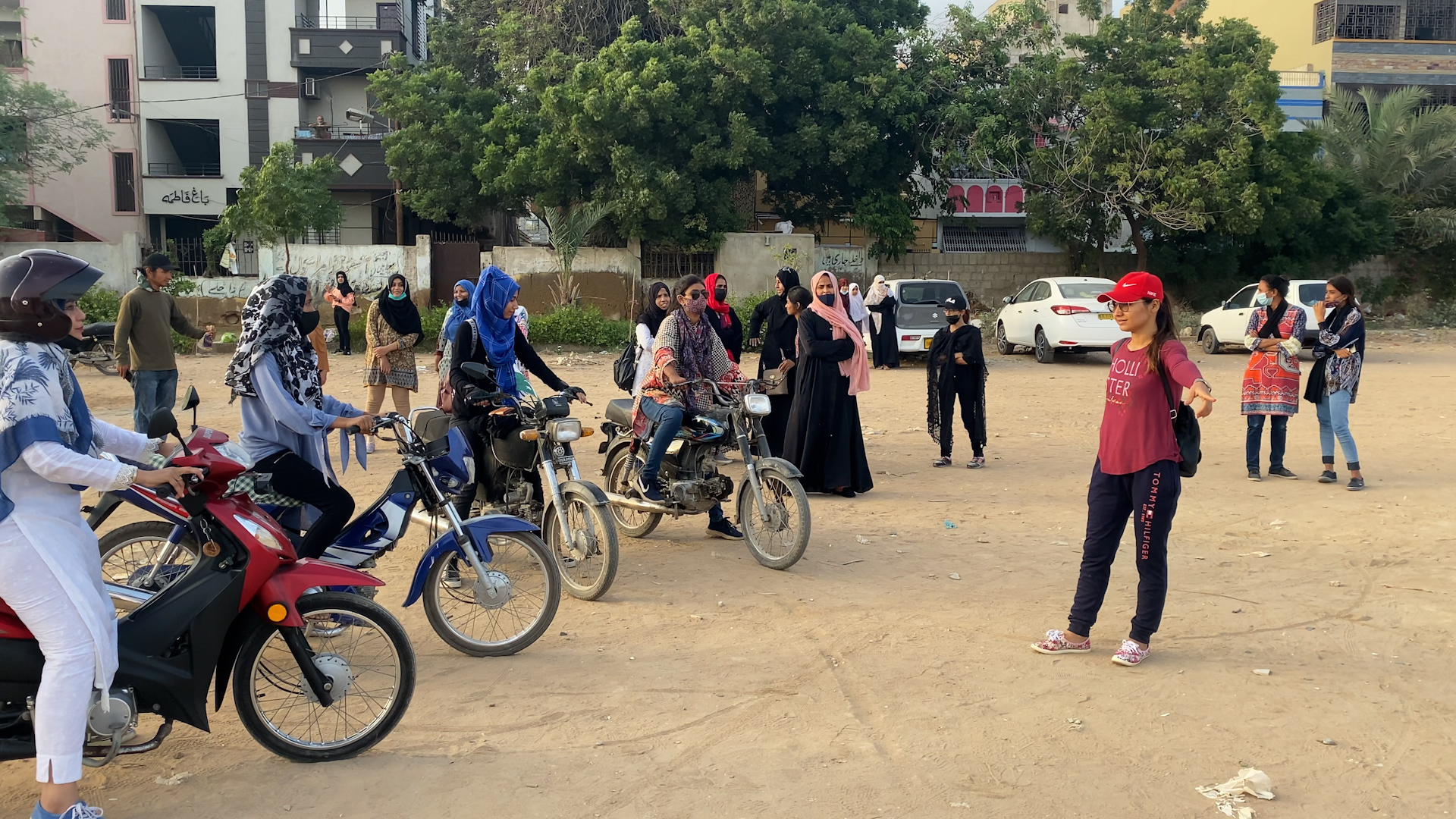
Marina Syed, who founded Rowdy Riders in 2017, trains women to ride motorbikes in Karachi, Pakistan, on August 10, 2021. (AN photo)
It was almost two years later, in 2016, that she used savings to buy her own bike — a used 70cc motorbike. Even then, she had to hide her bike from her parents and park it at least two blocks from her house.
Then came a turning point, in 2017, when Syed decided to take part in a bike rally from Karachi to Kashmir.
“It was a 1,627-kilometer sponsored tour on a 250cc motorbike,’ she said. “For the first time, I rode out of Karachi and realized my mistakes and my skills improved.”
After the tour ended, Syed decided to launch Rowdy Riders, which she now runs with her brother Syed Ghazanfar Shah on a dusty ground in a lower middle-class neighborhood of Karachi. A three-month course at the club costs Rs10,000 and classes run every day from 5-7pm. Those who can’t afford to pay the fees get free classes.
Students start by learning to follow traffic rules, wear appropriate biking gear and be mindful of others on the road. Then the bike riding begins.
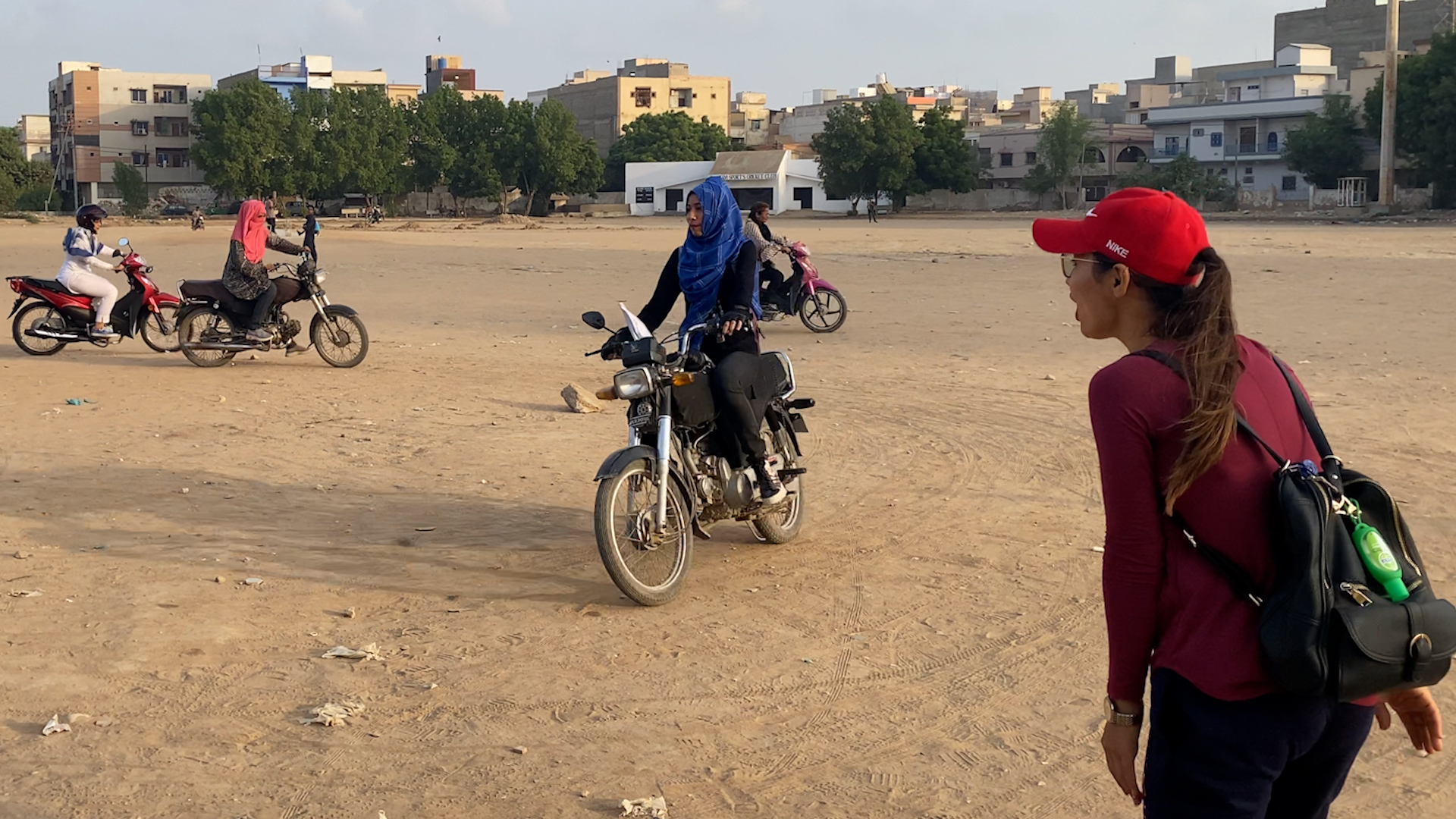
Marina Syed, who founded Rowdy Riders in 2017, trains women to ride motorbikes in Karachi, Pakistan, on August 10, 2021. (AN photo)
Today, over 400 women have passed out of Rowdy Riders, Syed said, saying the school had become a sorority of sorts, with many bikers coming to visit even after graduating and groups getting together for weekend rides across the city.
Most are grateful for the gift of self-reliance.
“Learning how to ride a bike has helped me save a lot of money,” Farkhunda Feroz, a public servant, said about her experience at the school. “There was no one at home to take me [to work] and a rickshaw would charge too much.”
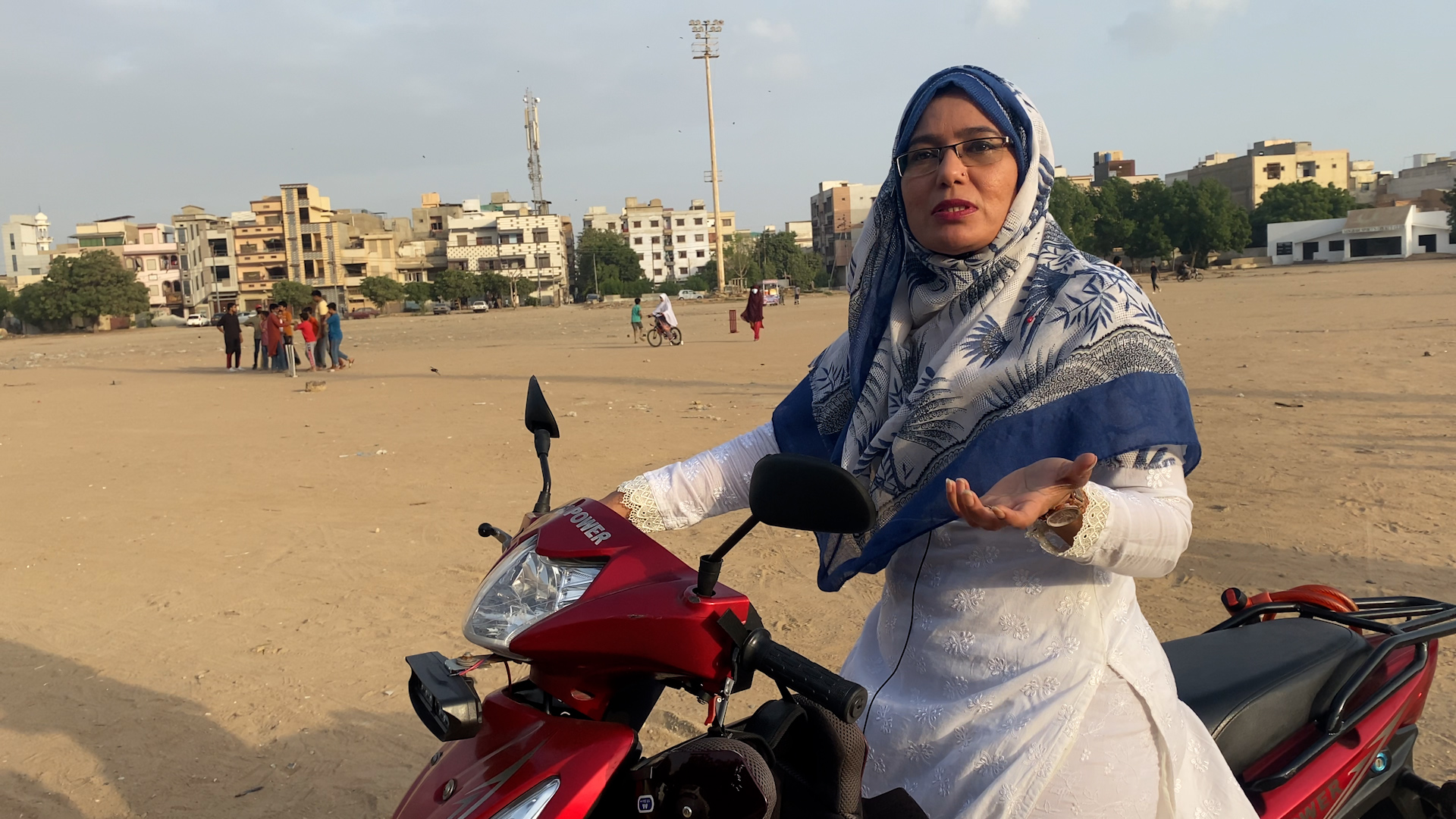
Farkhunda Feroz, a public servant and student of motorcycling school owner Marina Syed, speaks to Arab News in Karachi, Pakistan, on August 10, 2021. (AN photo)
Syed said while she has had all kinds of clients, one memorable one was the wife of a cleric who arrived at the school in a burqa.
“She was fully covered, and I could only see her eyes,” Syed said. “He [the husband] wanted me to teach her to ride so that she could pick and drop their kids [from school].”
“I was so happy when after completing her training, she came riding on a scooter to meet me one day,” Syed said.
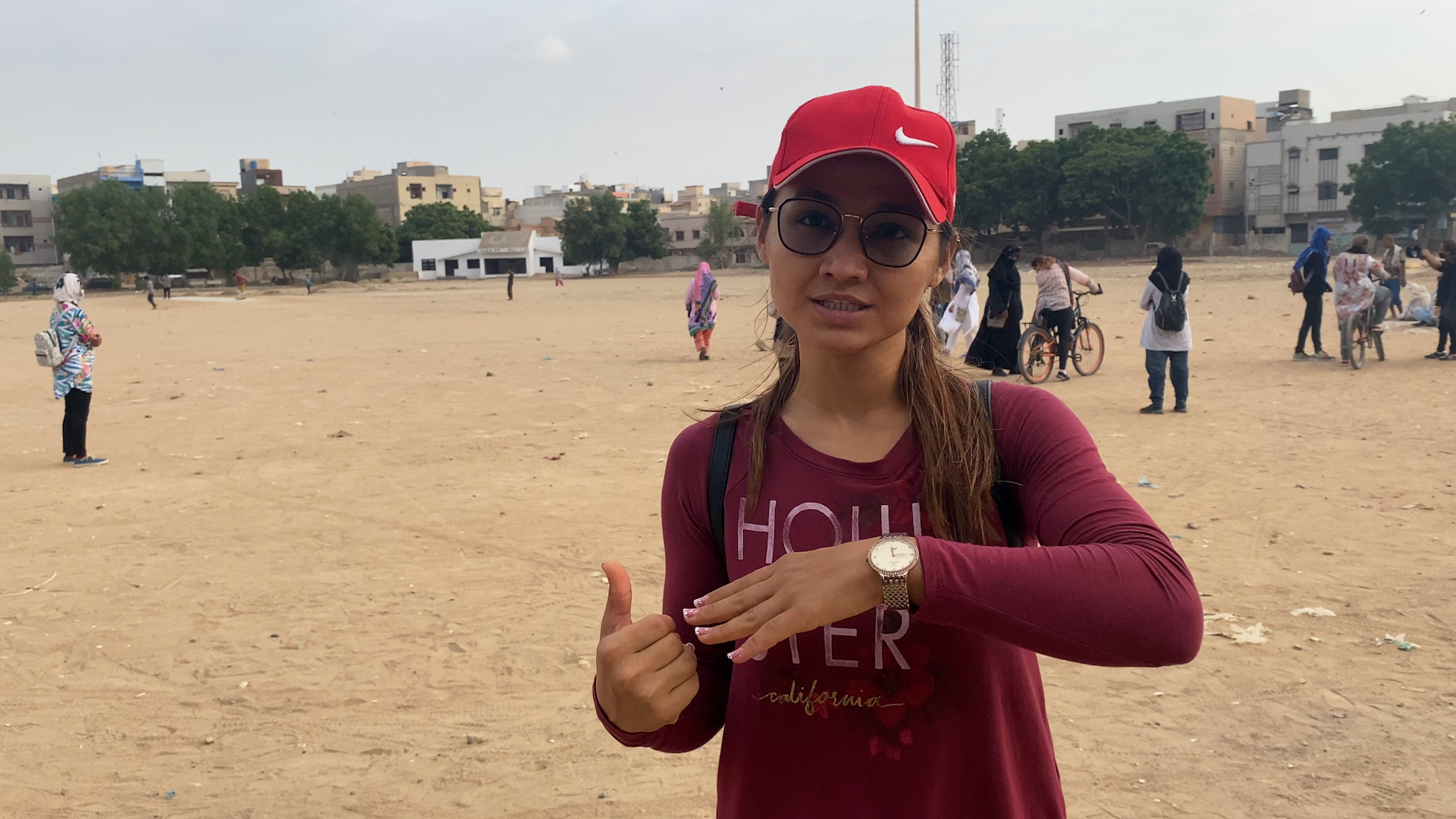
Marina Syed, the founder of Rowdy Riders, speaks to Arab News in Karachi, Pakistan, on August 10, 2021 (AN photo)
Another “inspiring example” was of an elderly man who enrolled his two daughters.
“An uncle who didn’t know how to ride a bike himself asked me to train his daughter,” Syed said. “Later, his younger daughter joined too.”
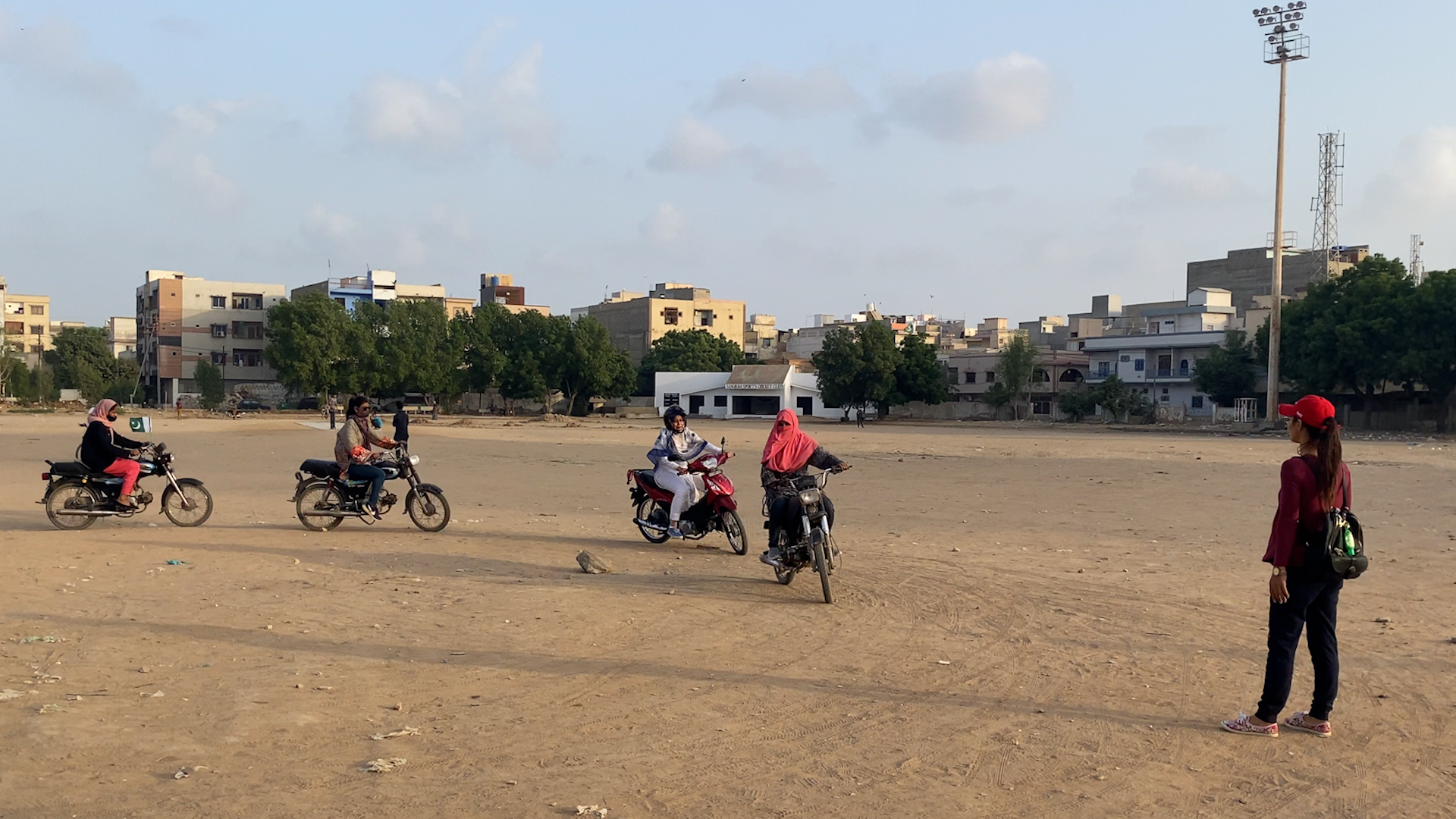
Marina Syed, who founded Rowdy Riders in 2017, trains women to ride motorbikes in Karachi, Pakistan, on August 10, 2021. (AN photo)
When asked what her advice was for first-time riders, Syed said:
“Take it slow. Perfect is not the one who rides fast but one who can ride slowly and with balance.”