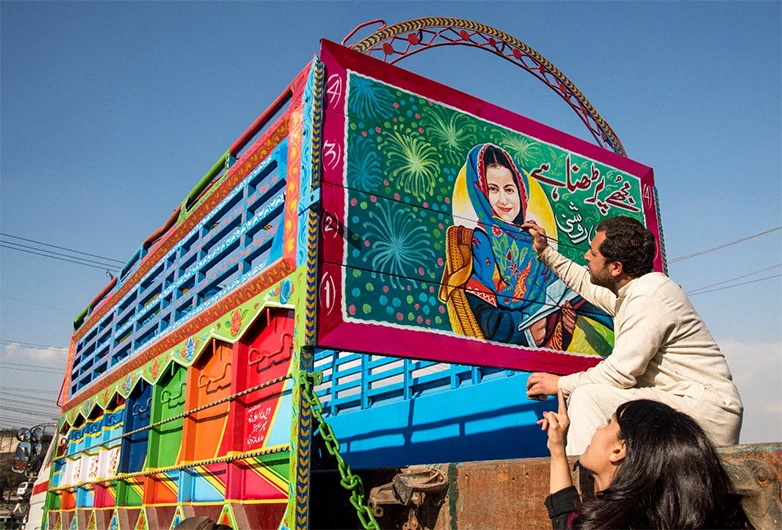
In Pakistan, truck art helps bring missing children home

A truck artist paints a portrait of a missing child for the Truck Art Child Finder project of Roshni Helpline and Berger Paints in Karachi, Pakistan, 2019. (Photo courtesy: Samar Minallah)
Short Url
Updated 13 August 2021
Follow

In Pakistan, truck art helps bring missing children home

  • Thousands of children go missing in Pakistan every year, many abducted for ransom or trafficked into slavery
  • Seven children have been found through the Truck Art Child Finder initiative of Roshni Helpline 

RAWALPINDI: In Pakistan, where truck art brings color and humorous messages to the landscape of roads, some drivers have replaced the traditionally vivid paintings on their vehicles with realistic portraits of missing children, hoping to bring them home.
The campaign, the Truck Art Child Finder, uses the popular art medium to spread awareness on how to report such crimes and seek help. It was launched in 2019 by the Roshni Helpline and multinational paint producer Berger Paints. Seven children have been recovered through the program so far.
According to the Roshni Helpline 1138, over 3,000 children are reported missing in Pakistan every year. Many are abducted to be sold to childless families, put on the streets to beg, or trafficked into sexual slavery.
The idea to use truck art to find missing children came from filmmaker and rights activist Samar Minallah, who believed the familiar art form would have more outreach than missing person posters that attract scant attention.
“Truck art is a strong medium that is loved and owned by Pakistanis,” Minallah told Arab News. “In the case of missing children, the ‘talaash-i-gumshuda’ messages painted on random walls are not enough to spread the word.”
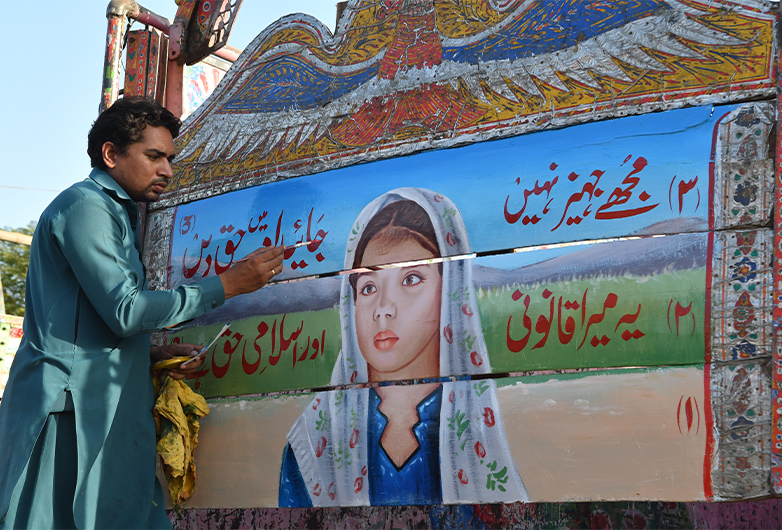


A truck artist paints a portrait of a missing child for the Truck Art Child Finder project of Roshni Helpline and Berger Paints in Karachi, Pakistan, 2019. (Photo courtesy: Samar Minallah)

“We teamed up and painted not just the information and helpline of missing children but also got their portraits made on the trucks. The pictures were provided by the families of the missing children to Roshni. The trucks became mobile billboards that were moving from one part of Pakistan to another.”
There now are 20 such trucks covering different routes across the country.
The most challenging part of the project, Minallah said, was convincing the drivers to use their vehicles for the unconventional purpose.
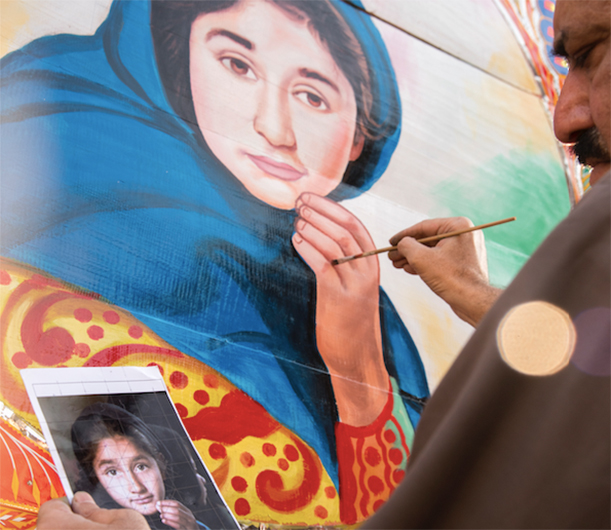


A truck artist paints a portrait of a missing girl from a photo provided to Roshni Helpline by her family for the Truck Art Child Finder project in Karachi, Pakistan, 2019. (Photo courtesy: Samar Minallah)

“For them a truck is a valued possession which must be decorated in the best possible manner,” she said. “A missing child’s picture and message went against the usual brightly colored images and quirky messages that trucks have.”
All the materials for the campaign were provided by multinational paint company, Berger Paints, which told Arab News in a statement it was “thankful” to Roshni Helpline for the “opportunity to work with them and assist them in this tremendous endeavor.”
For Amna Baig, assistant superintendent of Islamabad Police Kohsar, the campaign has brought much needed publicity to the problem of missing children. Pakistan has no central database for such cases, she said.
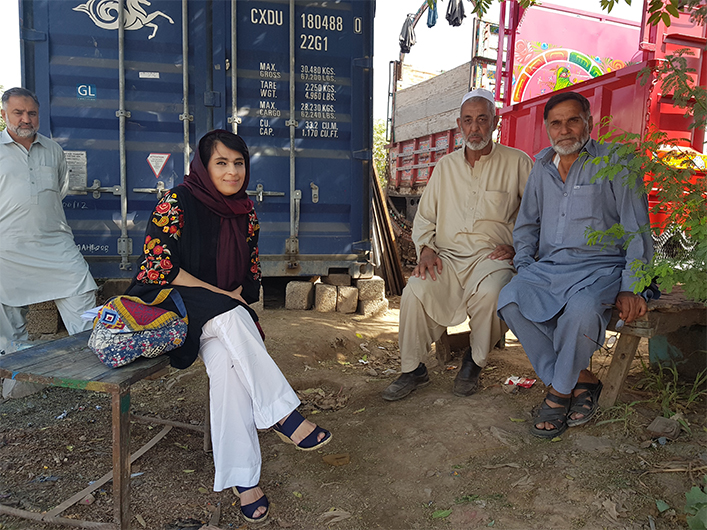


Activist Samar Minallah sits with artists involved in the Truck Art Child Finder project in Karachi, Pakistan, 2019. (Photo courtesy: Samar Minallah)

“So, it is at times hard to get the word out about these cases,” Baig said. “Campaigns like this, I can only imagine how much visibility they bring. The trucks, you can see them on the roads, across so many commercial hubs. I think it’s brilliant and it should be continued.”
Since its founding in 2016, Roshni Helpline has recovered 5,200 missing children.
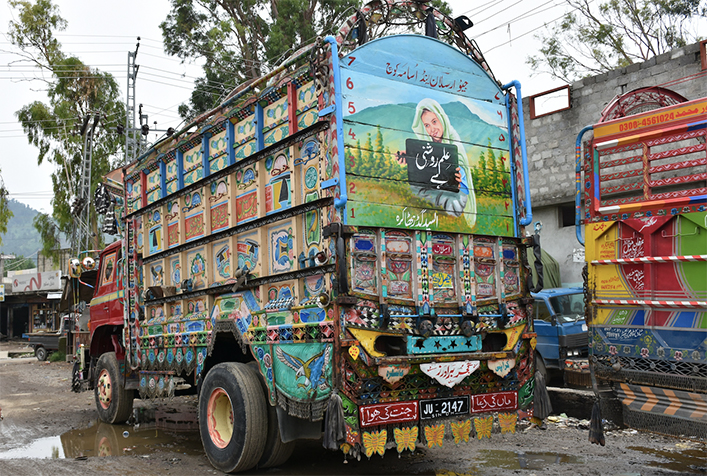


A truck painted with portraits of missing children for the Truck Art Child Finder is seen in Karachi, Pakistan, 2019. (Photo courtesy: Samar Minallah)

“When we started with these 20 cases, the public response was amazing,” Roshini Helpline founder Muhammad Ali told Arab News. “The interest of the people was great — they would look at a truck, take pictures, share it on social media.”
“These trucks are moving all over Pakistan, so we were receiving calls from everywhere,” he said. “We will continue the next phase of the campaign after Muharram.”

Death toll in Pakistan shopping plaza fire rises to 67, officials say

Updated 6 sec ago
Follow

Death toll in Pakistan shopping plaza fire rises to 67, officials say

  • Rescue teams still searching for damaged Gul Plaza in Karachi where blaze erupted on Saturday, says police surgeon
  • Karachi has a long history of deadly fires, often linked to poor safety standards, weak regulatory enforcement

KARACHI: The death toll from a devastating fire at a shopping plaza in Pakistan’s southern port city of Karachi jumped to 67 on Thursday after police and a hospital official confirmed that the remains of dozens more people had been found.

Police surgeon Dr. Summaiya Syed said rescue teams were still searching the severely damaged Gul Plaza in the Karachi, where the blaze erupted on Saturday.

Most remains were discovered in fragments, making identification extremely difficult, but the deaths of 67 people have been confirmed, she said. Asad Raza, a senior police official in Karachi, also confirmed the death toll. Authorities previously had confirmed 34 deaths.

Family members of the missing have stayed near the destroyed plaza and hospital, even after providing their DNA for testing. Some have tried to enter the building forcibly, criticizing the rescue efforts as too slow.

“They are not conducting the search properly,” said Khair-un-Nisa, pointing toward the rescuers. She stood outside the building in tears, explaining that a relative who had left to go shopping has been missing since the blaze.

Another woman, Saadia Saeed, said her brother has been trapped inside the building since Saturday night, and she does not know what has happened to him.

“I am ready to go inside the plaza to look for him, but police are not allowing me,” she said.

There was no immediate comment from authorities about accusations they have been too slow.

Many relatives of the missing claim more lives could have been saved if the government had acted more swiftly. Authorities have deployed police around the plaza to prevent relatives from entering the unstable structure, while rescuers continue their careful search.

Investigators say the blaze erupted at a time when most shop owners were either closing for the day or had already left. Since then, the Sindh provincial government has said around 70 people were missing after the flames spread rapidly, fueled by goods such as cosmetics, clothing, and plastic items.

The cause of the fire remains under investigation, though police have indicated that a short circuit may have triggered the blaze.

Karachi has a long history of deadly fires, often linked to poor safety standards, weak regulatory enforcement, and illegal construction.

In November 2023, a shopping mall fire killed 10 people and injured 22. One of Pakistan’s deadliest industrial disasters occurred in 2012, when a garment factory fire killed at least 260 people.