

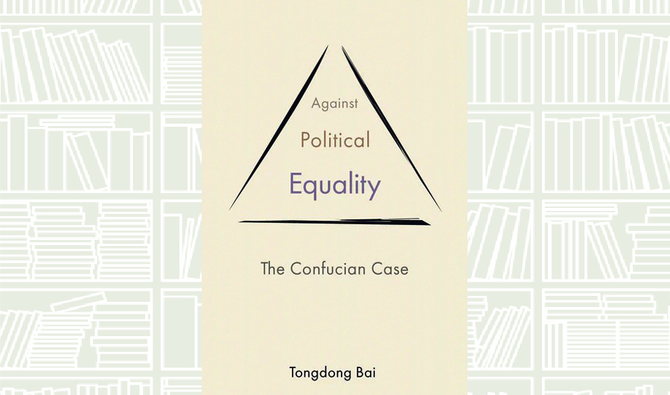

Author: Tongdong Bai
What might a viable political alternative to liberal democracy look like? In Against Political Equality, Tongdong Bai offers a possibility inspired by Confucian ideas.
Bai argues that domestic governance influenced by Confucianism can embrace the liberal aspects of democracy along with the democratic ideas of equal opportunities and governmental accountability to the people. But Confucianism would give more political decision-making power to those with the moral, practical, and intellectual capabilities of caring for the people. While most democratic thinkers still focus on strengthening equality to cure the ills of democracy, the proposed hybrid regime—made up of Confucian-inspired meritocratic characteristics combined with democratic elements and a quasi-liberal system of laws and rights—recognizes that egalitarian qualities sometimes conflict with good governance and the protection of liberties, and defends liberal aspects by restricting democratic ones.
Bai applies his views to the international realm by supporting a hierarchical order based on how humane each state is toward its own and other peoples, and on the principle of international interventions whereby humane responsibilities override sovereignty.
Exploring the deficiencies posed by many liberal democracies, Against Political Equality presents a novel Confucian-engendered alternative for solving today’s political problems.


