

Funding secured for Indonesia, UAE project to build southeast Asia’s largest floating solar plant


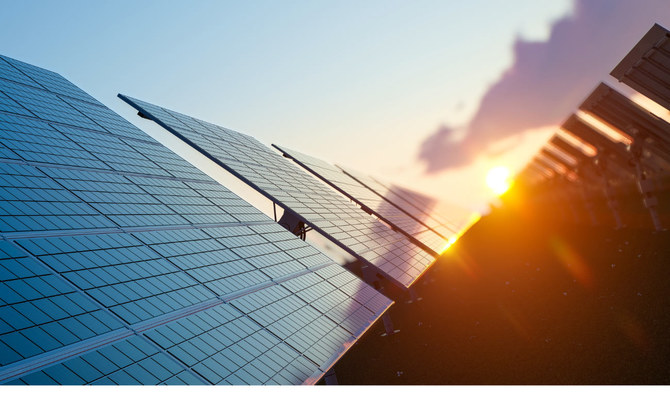
Masdar and PJBI have secured $140 million from multinational lenders for the project’s financing. (Shutterstock)
Short Url
Updated 06 August 2021
Follow

Funding secured for Indonesia, UAE project to build southeast Asia’s largest floating solar plant


JAKARTA: A 145-megawatt floating solar power plant, the largest in Southeast Asia, being built by Indonesia and the UAE could start operating next year, officials announced on securing final funding approval for the project.

Made up of more than 17,000 islands, Indonesia aims to achieve 23 percent renewable energy use by 2025, and 30 percent by 2050. Currently, 13 percent of its energy comes from renewable sources.

The development, built atop the Cirata reservoir in West Java province, will be the country’s first photovoltaic power plant. It is 51 percent owned by PT PJBI, a subsidiary of Indonesia’s state power utility Perusahaan Listrik Negara (PLN), with UAE renewable energy company Masdar owning the other 49 percent.

Masdar and PJBI have secured $140 million from multinational lenders for the project’s financing.

During a press conference, PJBI chief executive officer, Gong Matua Hasibuan, said: “We passed the critical phase of reaching financial close on Aug. 2 when our lenders Standard Chartered bank, Sumitomo Mitsui Banking Corp., and Societe Generale confirmed that we have fulfilled all the requirements to get funding for this project.”

Addressing the same briefing, Indonesia’s state-owned enterprises deputy minister, Pahala Nugraha Mansury, said: “The Cirata floating power plant is expected as a venue for a transfer of technology in renewable energy development from UAE’s leading global renewable energy firm.”

He added that Indonesia hoped the link up would strengthen cooperation with the UAE.

The power plant is one of the projects under $22.9 billion investment agreements secured by Indonesian President Joko Widodo in Abu Dhabi last year.

Construction of the floating photovoltaic power plant has already started, and when completed it will cover around 3 percent, or 250 hectares, of the total area of the Cirata reservoir, where PJBI already operates a 1,008-megawatt hydropower plant.

PLN’s chief executive officer, Zulkifli Zaini, said: “We are optimistic that with all the stakeholders’ support, this environmentally friendly power plant project could start its operation on target by the end of 2022.”

He added that the floating power plant would be a “revolutionary development” for the country’s national renewable energy targets, generating enough electricity to power the equivalent of 50,000 homes, and offsetting 214,000 tons of carbon dioxide emissions each year.

“The Cirata floating solar power plant will contribute about 0.2 percent to our renewable energy mix,” Zaini added.

PLN currently operates power plants that produce 63 gigawatts of energy, out of which 7.9 gigawatts come from renewable sources.

While the Cirata project will be Indonesia’s first plant of its kind, the Ministry of Energy and Mineral Resources has estimated that the country could generate about 40 gigawatts from similar ones that could be developed in 375 locations on lakes and reservoirs.

According to a recent report by the Jakarta-based Institute for Essential Services Reform, it was feasible for Indonesia to use 100 percent of renewable energy in the power, heat, and transport sectors, but it would require at least $20 billion investment per year for the rest of this decade, increasing to $60 billion per year from 2030 to 2040.


North Korea accuses South of another drone incursion

Updated 12 sec ago
Follow

North Korea accuses South of another drone incursion

  • The North Korean military tracked a drone “moving northwards” over the South Korean border county of Ganghwa
  • South Korea said it had no record of the flight

SEOUL: North Korea accused the South on Saturday of flying another spy drone over its territory this month, a claim that Seoul denied.
The North Korean military tracked a drone “moving northwards” over the South Korean border county of Ganghwa in early January before shooting it down near the North Korean city of Kaesong, a spokesperson said in a statement carried by the state-run Korean Central News Agency (KCNA).
“Surveillance equipment was installed” on the drone and analysis of the wreckage showed it had stored footage of the North’s “important targets” including border areas, the spokesperson said.
Photos of the alleged drone released by KCNA showed the wreckage of a winged craft lying on the ground next to a collection of grey and blue components it said included cameras.
South Korea said it had no record of the flight, and Defense Minister Ahn Gyu-back said the drone in the photos was “not a model operated by our military.”
The office of South Korean President Lee Jae Myung said a national security meeting would be held on Saturday to discuss the matter.
Lee had ordered a “swift and rigorous investigation” by a joint military-police investigative team, his office said in a later statement.
On the possibility that civilians operated the drone, Lee said: “if true, it is a serious crime that threatens peace on the Korean Peninsula and national security.”
Located northwest of Seoul, Ganghwa County is one of the closest South Korean territories to North Korea.
KCNA also released aerial images of Kaesong that it said were taken by the drone.
They were “clear evidence” that the aircraft had “intruded into (our) airspace for the purpose of surveillance and reconnaissance,” Pyongyang’s military spokesperson said.
They added that the incursion was similar to one in September when the South flew drones near its border city of Paju.
Seoul would be forced to “pay a dear price for their unpardonable hysteria” if such flights continued, the spokesperson said.
South Korea is already investigating alleged drone flights over the North in late 2024 ordered by then-President Yoon Suk Yeol. Seoul’s military has not confirmed those flights.
Prosecutors have indicted Yoon on charges that he acted illegally in ordering them, hoping to provoke a response from Pyongyang and use it as a pretext for his short-lived bid to impose martial law.

- Cheap, commercial drone -

Flight-path data showed the latest drone was flying in square patterns over Kaesong before it was shot down, KCNA said.
But experts said the cheap, commercially available model was unlikely to have come from Seoul’s armed forces.
“The South Korean military already has drones capable of transmitting high-resolution live feeds,” said Hong Min, an analyst at the Korea Institute for National Unification.
“Using an outdated drone that requires physical retrieval of a memory card, simply to film factory rooftops clearly visible on satellite imagery, does not hold up from a military planning perspective.”