

Saudi youth use less cash as Kingdom pushes for cashless society

60 percent of individuals Kingdom-wide still rely on paper money at least once a week. (Reuters)
Short Url
Updated 05 August 2021
Follow

Saudi youth use less cash as Kingdom pushes for cashless society

  • Only 18 percent of Saudis aged between 16 and 22 years use cash
  • Almost half of people 60 and above use cash

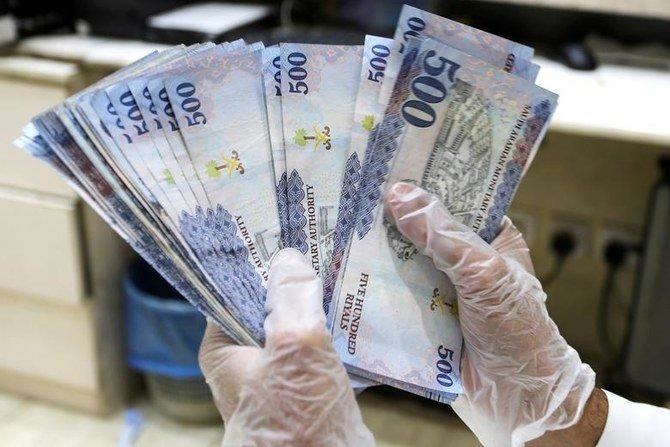
RIYADH: Youth in Saudi Arabia are using less cash compared to other age groups, a sign that the Kingdom’s plans to create a cashless society is on course.

Only 18 percent of Saudis aged between 16 and 22 years use cash, while almost half of people who are 60 and above use cash till date, a report by Fintech Saudi showed.

The report also showed that 20 percent of the population in central region of Saudi Arabia, which includes the capital Riyadh, use cash in their everyday transactions, while 37 percent of those living in the western region use paper money in their daily dealings.

However, paper currency is far from total demise even as the overall number of transactions carried out using cash have declined. Fintech Saudi’s survey results showed that around 60 percent of individuals Kingdom-wide still rely on paper money at least once a week and one out of four people in Saudi use cash every day.

Under Saudi Vision 2030, the Kingdom aims to increase the number of non-cash transactions to 70 percent in 2025.

“The COVID-19 outbreak has led to an acceleration in cashless activity with digital payments increasing by 75 percent over the past year, whilst cash withdrawals from ATMs and other payment points have declined by 30 percent over the same period,” the report said.


Closing Bell: Saudi main index closes in red at 11,167  

Updated 11 February 2026
Follow

Closing Bell: Saudi main index closes in red at 11,167  

RIYADH: Saudi Arabia’s Tadawul All Share Index dipped on Wednesday, losing 46.43 points, or 0.41 percent, to close at 11,167.54. 

The total trading turnover of the benchmark index was SR4.88 billion ($1.30 billion), as 66 of the listed stocks advanced, while 192 retreated. 

The MSCI Tadawul Index decreased, down 5.52 points, or 0.37 percent, to close at 1,506.55. 

The Kingdom’s parallel market Nomu lost 153.40 points, or 0.65 percent, to close at 23,486.52. This comes as 32 of the listed stocks advanced, while 31 retreated. 

The best-performing stock was Tourism Enterprise Co., with its share price surging 9.95 percent to SR14.36. 

Other top performers included Mobile Telecommunication Co., Saudi Arabia, which saw its share price rise by 5.32 percent to SR11.48, and Al Masar Al Shamil Education Co., which saw a 4.86 percent increase to SR22.89. 

On the downside, Almoosa Health Co. was the day’s weakest performer, with its share price falling 4.81 percent to SR150.40. 

Dallah Healthcare Co. fell 3.81 percent to SR113.50, while Saudi Research and Media Group dropped 3.44 percent to SR100.90. 

On the corporate front, Arabian Plastic Industrial Co. has signed a non-binding memorandum of understanding with K. K. Nag to explore the establishment of a specialized manufacturing facility for expanded polypropylene products. 

According to a Tadawul statement, the agreement sets out initial mutual obligations and rights between the two parties as part of APICO’s broader expansion strategy to increase production capacity and meet rising industrial demand. 

The company’s share price rose 1.21 percent to SR43.52 on the parallel market.