RIYADH: Saudi Arabia reiterated its support for Tunisia’s security and stability, its confidence in its leadership to overcome the circumstances and achieve prosperity for Tunisians, and called on the international community to stand by the country to face its health and economic challenges.
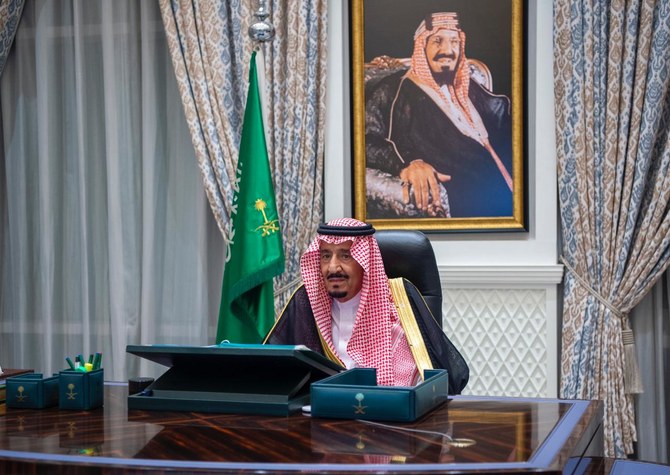
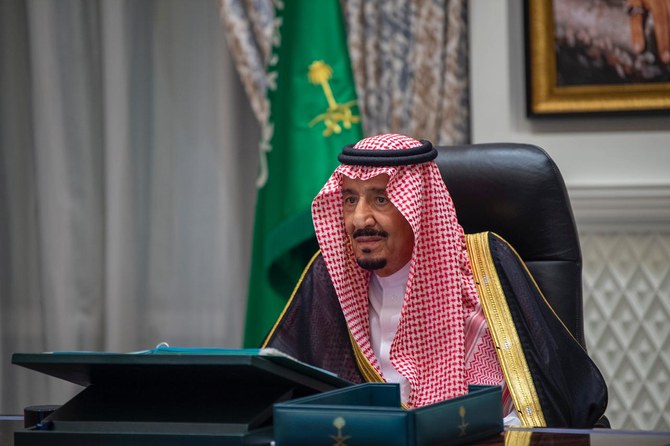
The stance was confirmed during a weekly meeting by the Council of Ministers that was chaired by King Salman, where they reviewed a number of reports on Arab, regional and international developments.
The king opened the meeting by praising the success of the Hajj pilgrimage, which enabled pilgrims to perform the ritual in a safe and healthy environment, with no cases of COVID-19 recorded among worshipers.
Acting Minister of Media Dr. Issam bin Saad bin Saeed said the cabinet was briefed on all the communication between the Kingdom and a number of countries over the past few days to advance relations and enhance coordination, “to maintain international peace and security, as well as to strengthen multilateral frameworks through partnerships and collective action,” Saudi Press Agency reported.
The council of ministers said Saudi Arabia would continue to be at the forefront of contributors to supporting development, prosperity and peace for the entire world, which was included in Crown Prince Mohammed bin Salman’s statement at the financing the Global Partnership for Education summit held in London on Thursday.
The ministers said this comes from the Kingdom’s interest and keenness to support international initiatives and programs that enhance the economies of education and educational systems in the beneficiary countries, to provide high-quality services to those who need them most in light of the crisis caused by the pandemic.
The Council of Ministers also discussed the Kingdom’s statement at the International Conference on Central and South Asia in Uzbekistan, that it continues to work with its partners in international organizations to combat the coronavirus pandemic, foster an environment conducive to development and growth, increase trade partnerships across regions, and support all efforts to combat terrorism and extremism.
The relief aid provided by Saudi Arabia to a number of Arab and Islamic countries to tackle the pandemic is an extension of the humanitarian role it plays toward the most affected countries, to continue extending help and assistance, and to contribute to supporting international efforts, the cabinet said.
The ministers condemned the continued attempts of the Iranian-backed Houthi militia to target civilian objects and populated areas in the Kingdom with ballistic missiles and drones, and to threaten shipping lines and international trade in the Red Sea.
They praised Saudi air defenses for thwarting these hostile attempts, and the Arab coalition’s contribution to securing freedom of navigation and the safety of ships transiting the Bab Al-Mandab Strait.
The cabinet discussed local and international developments to do with the coronavirus pandemic, the Kingdom’s inoculation campaign which has administered more than 27 million doses of the vaccine, raising the country’s ranking globally in vaccine rates.
The cabinet authorized the health minister to discuss with the US a draft memorandum of understanding between the Saudi Ministry of Health and the Department of Health and Human Services to cooperate in the fields of public health and medical sciences.
The cabinet also approved the regional protocol for technical cooperation to borrow and transfer experts, technicians, devices, equipment and materials in emergency cases.
It also approved a protocol between the Saudi government and the Center for Environment and Development for the Arab Region and Europe (CEDARE) to establishment its regional office in the Kingdom.
The ministers also approved a joint customs cooperation agreement between the Saudi Zakat, Tax and Customs Authority and the Bahrain Customs Affairs.


![]()
![]()
![]()

Saudi Arabia reiterates support for Tunisia’s security, stability - cabinet

Short Url
https://arab.news/gxdfs
Saudi Arabia reiterates support for Tunisia’s security, stability - cabinet
- Cabinet said the Kingdom continues to be at the forefront in supporting development, prosperity and peace for the entire world
- The cabinet discussed local and international developments to do with the coronavirus pandemic


Latest updates


© 2026 SAUDI RESEARCH & PUBLISHING COMPANY, All Rights Reserved And subject to Terms of Use Agreement.