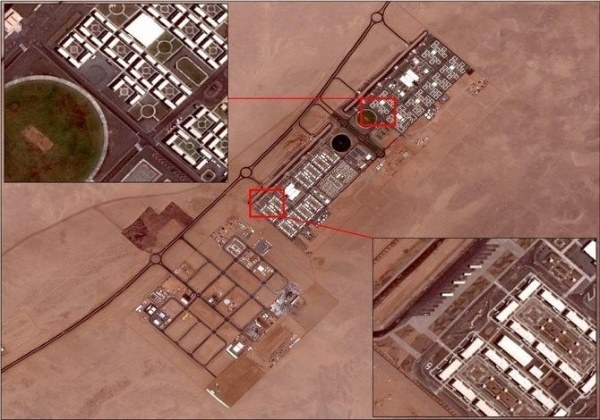

RIYADH: Saudi Arabia’s Red Sea Development Company signed a contract with King Abdulaziz City for Science and Technology (KACST) to provide high-resolution data for key locations at the company’s headquarters.
The data is collected using satellites to monitor the progress of the Red Sea project, which covers an area of 28,000 square kilometers, and to track developments in real estate assets more effectively.
The CEO of the Red Sea Development Company, John Pagano, said that this technical work will enable the company to monitor any unexpected effects in the development of real estate assets on the surrounding environment, and work immediately to find alternative solutions.
Pagano said the Red Sea Project’s stakeholders and its affiliates can obtain reliable and detailed images on a monthly basis, adding it was important to understand how the actual development processes affect the natural destination environments.
He also said that this partnership will enable the company to monitor the main assets, both natural and real estate, closely during the construction phase, which will support efforts to lead renewable tourism worldwide.
We're delighted to announce our partnership with The King Abdulaziz City for Science and Technology (@KACST) to provide high-resolution satellite images of key locations at #TheRedSea Project ona monthly basis. Read more: https://t.co/cmdVTgjpIj #LeadingTheWay pic.twitter.com/r2p0T8BjZK
— The Red Sea Development Company (@TheRedSeaGlobal) August 1, 2021
Pagano added that KACST, through the National Consortium on Remote Sensing in Transportation (NCRST), will capture monthly high-resolution data for the Red Sea project, using the GeoEye-1, WorldView, and Pleiades satellites.
This will allow the images to be color-balanced as they are on the ground, and each will carry the coordinates of its geographical location. The images will be integrated with the company’s Geographical Information Systems (GIS) and Building Information Modeling (BIM) systems and will be available to its employees from the planning, engineering, and environment departments.
The company’s GIS department will periodically compare the data provided by KACST with the latest versions of the master plans and detailed designs of the project to monitor changes and avoid any environmental damage.
The images will be used to determine the best methods and locations to perform construction and development activities. It will also be an important part of the project’s monthly progress reports.
Dr. Talal Alsedairy, the supervisor of the Space and Aeronautics Center at KACST, said that NCRST will support the company by providing them with high-resolution images of the project area that will enable them to have a more comprehensive perspective on how the project is progressing and the impact it may have on the surrounding environment.