



KARACHI: The provincial administration of Sindh was widely criticized by businessmen and traders on Saturday for imposing a nine-day lockdown to curb the rising number of coronavirus cases since they believed the decision would hurt Pakistan’s national economy.
“We are estimating Rs50 billion in losses to local traders and business community during these nine days,” said the chairman of Karachi Tajir Ittehad Atiq Mir. “The country’s economy is already weak and such steps will damage it further.”
Mir said he feared the business community in Pakistan’s southern port city would not be able to pay direct taxes to federal, provincial and city authorities, if the lockdown was allowed to persist.
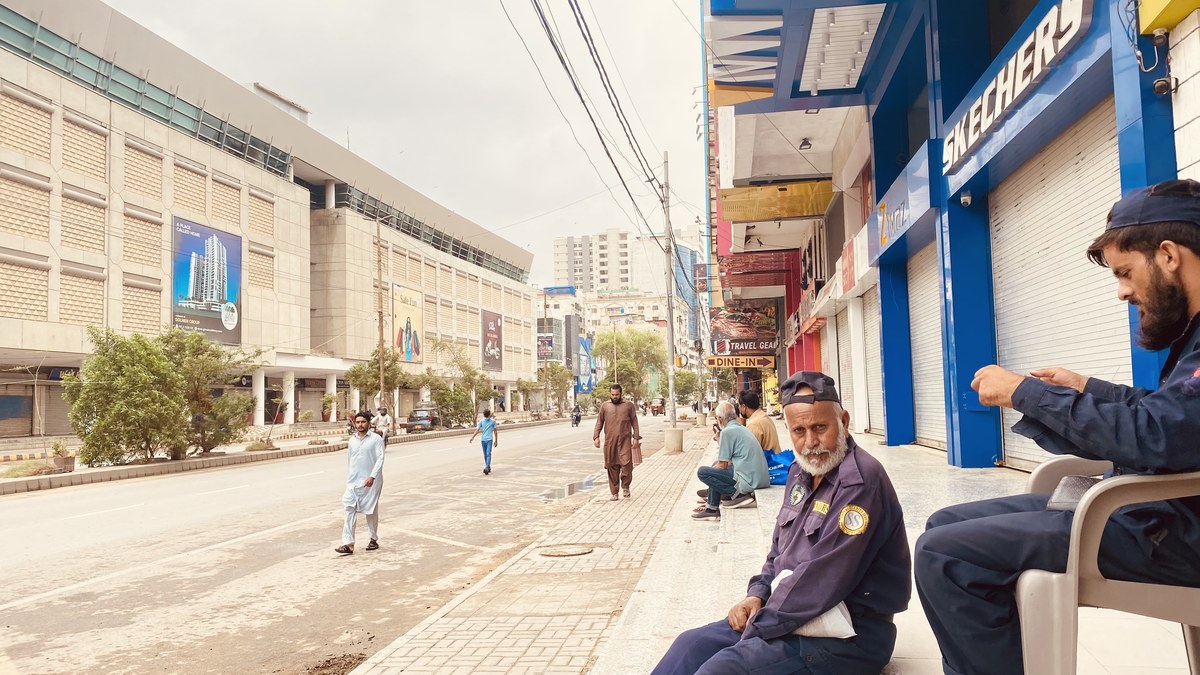
A guard is busy using his mobile phone in Karachi on July 31, 2021, though the place otherwise looks deserted due to a lockdown imposed by the provincial administration of Sindh on Friday. (AN photo)
“We will bear these ten days but defy the authorities and open our businesses if they decided to extend the lockdown,” he continued.
The Sindh government on Friday announced an extensive lockdown in Karachi, the country’s commercial capital, to control the rising number of COVID-19 cases and prevent the spread of the delta variant of the coronavirus.
“There will be a lockdown from July 31 to August 8,” Chief Minister Murad Ali Shah told the media after a meeting of the provincial coronavirus taskforce. “A partial lockdown will be imposed across the province, but Karachi city will get our greater focus.”
He added the lockdown would “specifically focus on the retail industry,” though he maintained that essential services would remain open and vaccination centers would continue to function as well.
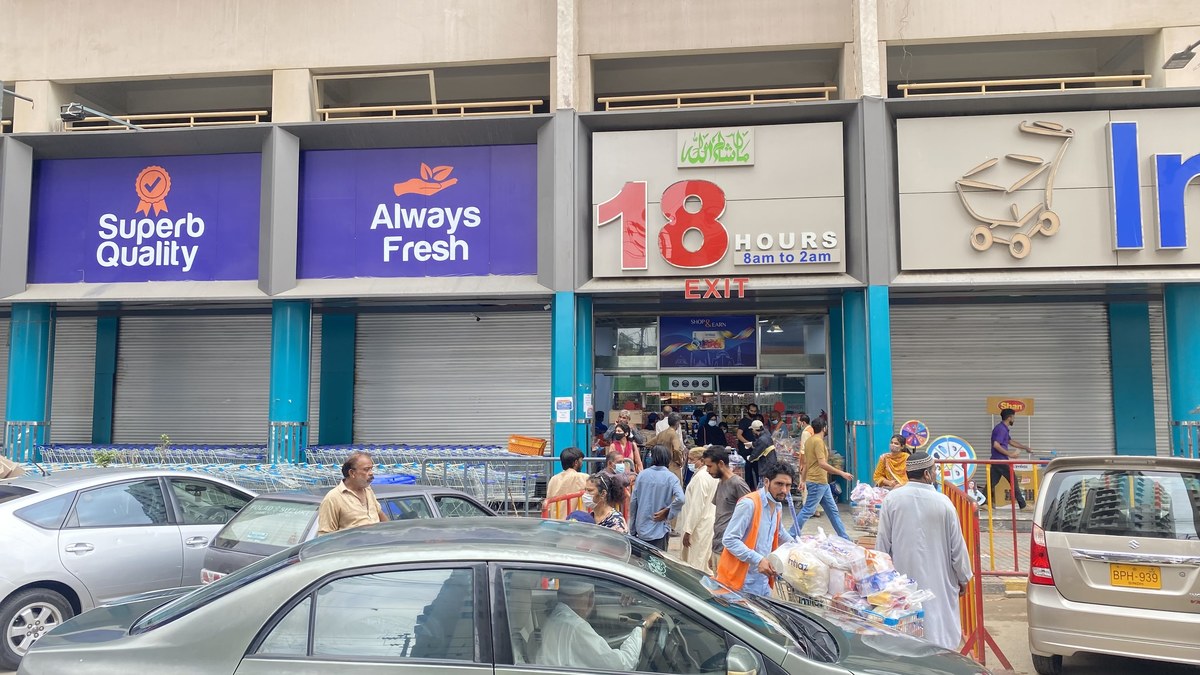
People are buying groceries at a supermarket in Karachi on July 31, 2021. The Sindh government on Friday announced a lockdown in Pakistan’s southern port city to curb the rising number of COVID-19 cases, though it exempted grocery and medical stores from the virus restrictions. (AN photo)
Shah announced he had taken federal government and other stakeholders into confidence before taking the decision.
In a statement issued on Friday, the country’s information minister, Fawad Hussain Chaudhry, said, however, that the Sindh administration would not be allowed to impose a complete lockdown in the province.
He quoted Article 151 of the Constitution, saying that Pakistan was a single market and the port in Karachi was the jugular vein of its economy.
“Any move that can affect the country’s economic lifeline cannot be allowed,” Chaudhry added.
Speaking to Arab News, Mian Nasser Hyatt Maggo, president the Federation of Pakistan Chambers of Commerce and Industry (FPCCI), implored the Sindh administration to “reassess its decision since it would destroy businesses.”
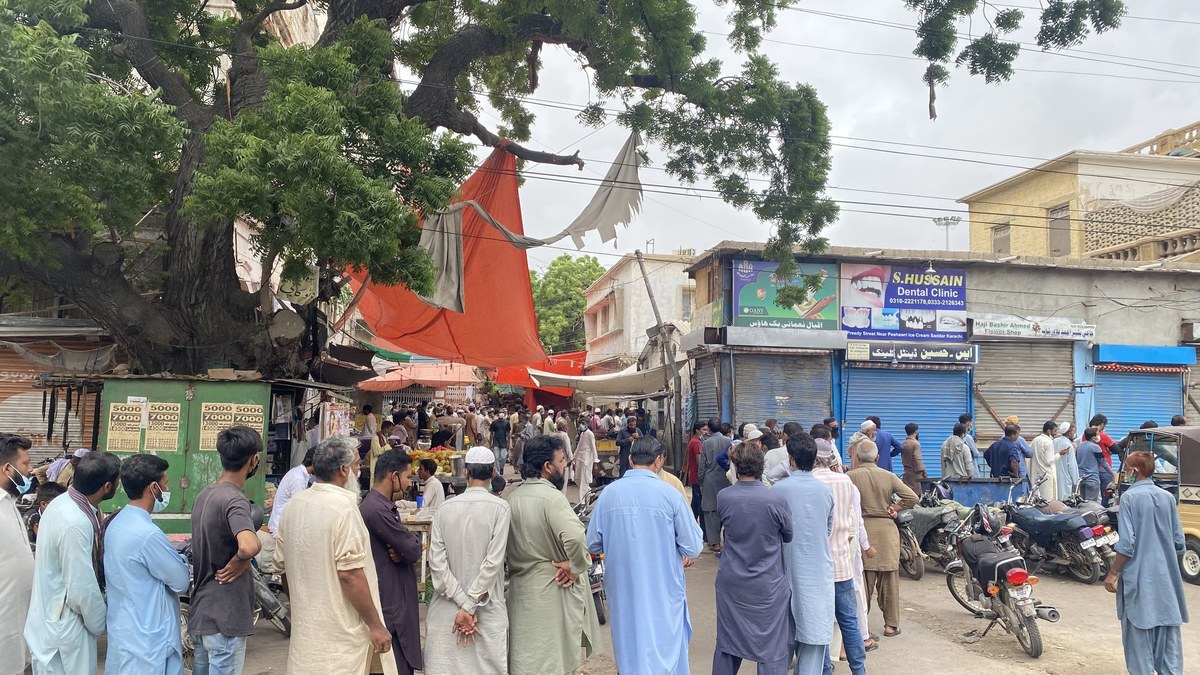
A large number of people queue up at a vaccination center in Karachi on July 31, 2021, as the provincial government imposed a lockdown on Friday to bring down the number of COVID-19 cases in the city. (AN photo)
The FPCCI president suggested the government should focus on an inclusive vaccination drive and make businesses follow the officially prescribed health guidelines.
He added all industries should be allowed to operate seven days a week so they could carry out their production activities.
Maggo said if industries and businesses remained under restrictions, it would become impossible for their owners to pay salaries to employees.
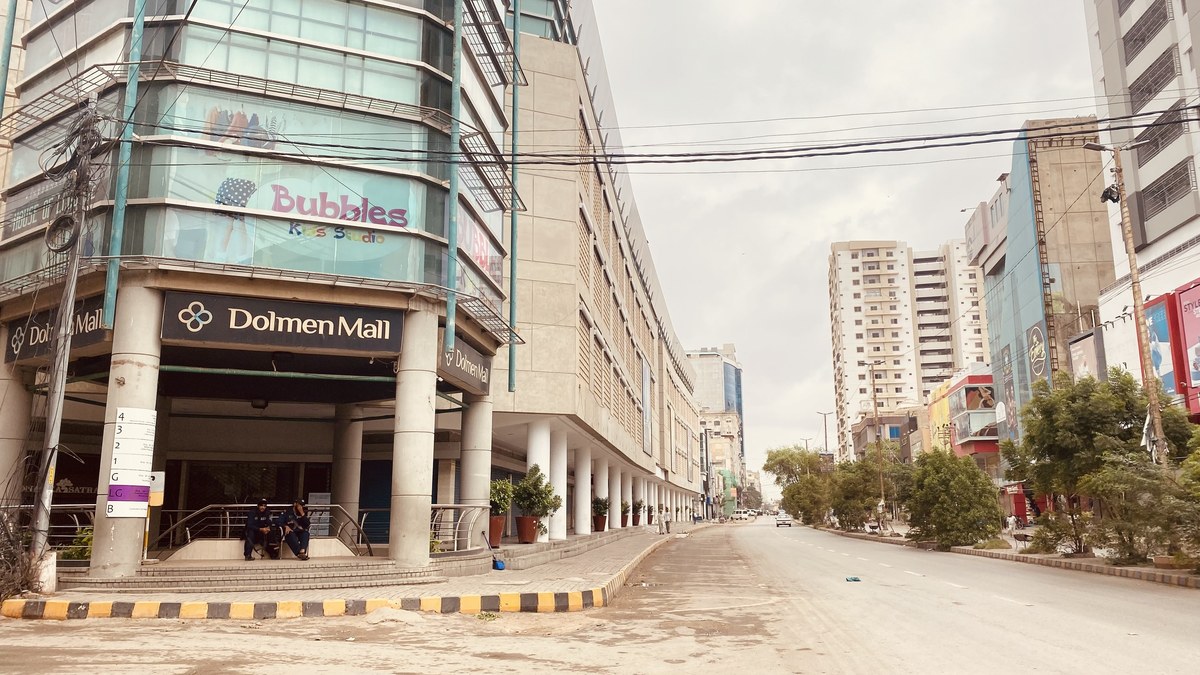
Karachi’s busy Tariq Road wears a deserted look on July 31, 2021, after the Sindh administration announced a lockdown in the city on Friday. (AN photo)
Athar Sultan Chawla, convener of All Pakistan Restaurants Association, said the lockdown would further destroy the country’s vulnerable food industry.
“We have been facing partial lockdown for the last 16 months which has severely damaged our industry,” he said. “This is despite the fact that it directly employs over 2.5 million people and uses local produce.”
Chawla added over 20 percent of restaurants had already shut down in the country, rendering thousands of workers jobless.
“If this policy continues, more people will be unemployed,” he continued. “We have the right to ask the government how the takeaway service can spread the virus? Outdoor dining should also be allowed since restaurants have been taking necessary precautionary measures.”
Chawla added that restaurant industry had become a “soft target.”


