


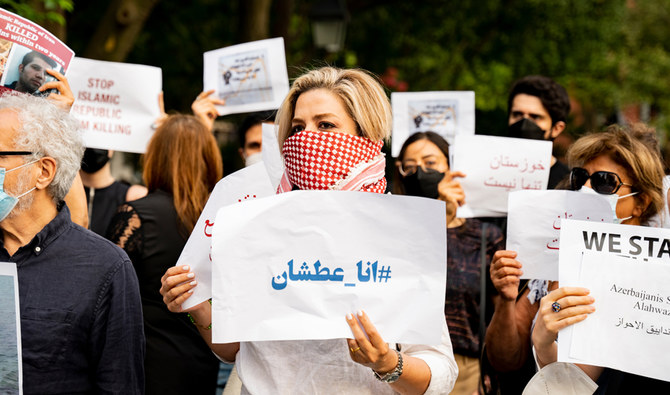

LONDON: Human Rights Watch (HRW) on Friday condemned Iran’s violent crackdown on protests in Khuzestan province.
Amnesty International and UN Commissioner for Human Rights Michelle Bachelet have also expressed condemnation in the past week.
HRW reported hundreds arrested and at least nine deaths, including a child. “Unconfirmed reports indicate the number of deaths and arrests may be higher,” it added.
On July 15, massive protests broke out in Khuzestan over water shortages, spearheaded by the province’s Arab community demonstrating against government negligence and anti-Arab discrimination.
Iranians in several other provinces have joined in solidarity. Iranian officials have blamed “rioters” for the killing of protesters.
Opinion
This section contains relevant reference points, placed in (Opinion field)
But HRW said: “Videos shared on social media from protests in cities in Khuzestan show security officials shooting firearms and teargas toward protesters.”
Karim Dahimi, a London-based Ahwazi human rights activist, told Arab News that the death toll could go higher since many protesters “haven’t gone hospital for fear of being arrested and returned home with heavy injuries.”
He said Iranian authorities have set conditions for the return of victims’ bodies to families, including “protesters’ mobile number, information on who they were in contact with, who was with them, and who informed the parents.”
Another condition is that the fathers of victims go on camera and claim that “the protesters killed my son, and my son had no involvement in the demonstrations,” Dahimi added.
“Some families are under pressure and want to take the bodies, so they’ve accepted the government’s conditions. Other families haven’t.”
Eight of the protesters killed are Ahwazi Arabs and the ninth is Bakhtiari, Dahimi said. The crackdown on the mass protests is disproportionately impacting Iran’s Arab minority.
Shadi Sadr, a lawyer and co-founder of London-based NGO Justice for Iran, tweeted that the hundreds of protesters and activists arrested are “mostly of Arab Ahwazi ethnicity.” They have been arrested “in their homes and workplaces,” he added.
HRW said Iranian authorities “should immediately and unconditionally release peaceful protesters, provide information about deaths, and allow an independent international investigation into security agencies’ alleged use of lethal force. All those responsible for abuses should be held to account.”


