

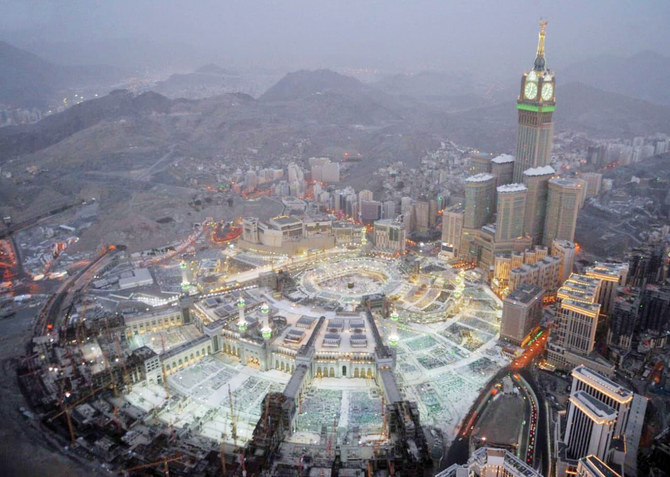

MAKKAH: The hospitality sector in Makkah is beginning to look forward to a strong recovery from the devastating economic effects of the COVID-19 pandemic, and experts predict hotels could begin to see results within two years.
The city, the third-most densely populated in the Kingdom, is particularly well served in terms of hotels — almost two-thirds of all those in Saudi Arabia can be found there. Before the pandemic it was a thriving sector, its growth fueled by the ever-increasing numbers of visitors from around the world who flock to Makkah for the annual Hajj pilgrimage or to complete their Umrah rituals.
COVID-19 changed everything. However, experts predict that after the dramatic decline in business caused by the pandemic, “hotel recuperation” plans could begin to yield results by 2023 as the world slowly starts to emerge from lockdown.
Fadhel Manqal, manager of a hotel in the city and a member of the Makkah Chamber of Commerce and industry hotels committee, told Arab News that the sector has faced immense challenges for almost two years.
“The sector has experienced an economic downturn,” he said. “This has crippled its economic power, which is an important contributor to the local economy. It has borne the burden of the effects of the pandemic, which has had a negative effect on all areas of the global economy, including significant implications for the hotel sector.
FASTFACT
The city, the third-most densely populated in the Kingdom, is particularly well served in terms of hotels — almost two-thirds of all those in Saudi Arabia can be found there.
“Makkah’s hotels were not spared; they have suffered substantial losses, leading some to close down and others to suspend their activities or recover partially. Many have suffered losses worth billions.”
Manqal said that the hotel sector in Makkah is the strongest in the Middle East, with more than 1,300 hotels that are expected to receive 30 million pilgrims by 2030, as visitor numbers increase as a result of the National Transformation Program and the wider Saudi Vision 2030. But it is still suffering real hardship, he added, despite the early signs of recovery.
The hospitality industry has been irreversibly changed by the health crisis, he said, adding that despite the efforts of some governments to minimize the effects and reduce losses, it has been an economic catastrophe for the sector and the fates of many businesses hang in the balance.
“Not everyone is capable of recovery, adapting or even reorganizing,” said Manqal. “The large five-star hotel chains near the Grand Mosque in Makkah will certainly recover quickly, especially the ones in the central area or the commercial districts near the holy sites in Al-Aziziyah.
“There is no doubt that the unfolding effects on the industry pose a challenge even for more-experienced hotel owners.” For this reason it is vital that businesses plan for the future and confront obstacles, he added.
Saudi authorities began to look for ways to help people and plan for recovery early in the pandemic, said Manqal. For example, they provided assistance through the SANED unemployment insurance program for the families of Saudi hotel workers.
With continued support from the authorities, and the gradual return of Umrah pilgrims from within the Kingdom and, in initially limited numbers, other countries as vaccination rates increase around the world, Manqal said that he expects the sector to begin to recover by 2023.
This gives hospitality providers time to consider their options and develop a better understanding of their perfect hotel guest, he added, but some service providers will face greater challenges than others, particularly those that were heavily dependent on the annual Hajj and Umrah seasons.
Economic analyst Fadl Abu Al-Ainain told Arab News that he expects the sector will continue to experience hardship until the end of this year and that greater public and private sector support, in the form of exceptional incentive programs, as well as the Kingdom’s rapidly expanding vaccination program, will alleviate the continuing effects of the pandemic on Makkah’s hospitality industry.
“Recovery is linked to the return of pilgrims at levels similar to those in the past, and this cannot be achieved due to the coronavirus,” he said. “Consequently, change in the sector is closely linked to a full recovery from the pandemic. Thus, there should be greater focus on reducing the effects of the pandemic on the sector through the provision of government support, as well as measures to reduce the financial burdens on the sector.
“There should be a mechanism for coping with exceptional circumstances, which would also require an enhancement of crisis management that would cover financial and operational damage,” Al-Ainain added.
“The sector has not achieved efficiency in combating crises, and its ability to withstand shocks is nonexistent, but the pandemic situation might open the door for the development of strategies to urgently manage crises in the future.
“I think that reconsidering the value of lease agreements and fixed costs, in partnership with the government, are tools that could be used to address this crisis, and that more sharing of risk among all parties to a contract might reduce the magnitude of losses and the burden of them falling mostly on just one side.”
Several services can also be built upon within the hospitality industry to create diverse “backup sectors” that the industry can fall back in exceptional circumstances, Al-Ainain said, lamenting the fact that “no one searched for them in the past due to the steady and easy income during the high season.”


