Ancient rock art in Hima listed as Saudi Arabia’s sixth UNESCO World Heritage Site

1 / 5
The site at Hima, the sixth to be enlisted in Saudi Arabia, is home to one of the largest rock art complexes in the world and ancient wells. (SPA)
2 / 5
The site at Hima, the sixth to be enlisted in Saudi Arabia, is home to one of the largest rock art complexes in the world and ancient wells. (SPA)
3 / 5
The site at Hima, the sixth to be enlisted in Saudi Arabia, is home to one of the largest rock art complexes in the world and ancient wells. (SPA)
4 / 5
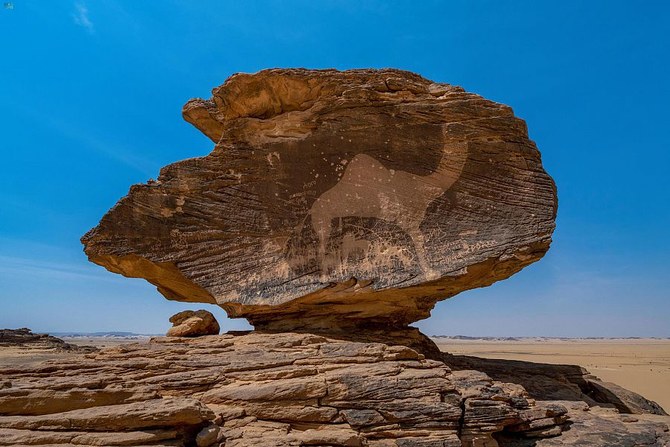
The site at Hima, the sixth to be enlisted in Saudi Arabia, is home to one of the largest rock art complexes in the world and ancient wells. (SPA)
5 / 5
The decision was made during the 44th session of the World Heritage Committee being held in Fuzho, China. (Twitter/@UNESCO)
Short Url
Updated 25 July 2021
Follow

Ancient rock art in Hima listed as Saudi Arabia’s sixth UNESCO World Heritage Site

  • Hima was a conduit for caravans on the trade and Hajj routes going to and from the southern parts of Arabia
  • People who passed through the area between pre- and post-historic times have left behind a substantial collection of rock art

JEDDAH: The ancient rock inscriptions at Hima in southwest Saudi Arabia on Saturday became the sixth location in the Kingdom to be included on UNESCO’s world heritage list.

Saudi Arabia has a “rich heritage of human civilizations. Efforts have borne fruit in making it known to the world,” Saudi Culture Minister Prince Badr bin Abdullah bin Farhan said.

Hima, in the western region of Najran, was a hub for caravans on trade and Hajj routes between the southern parts of Arabia and Mesopotamia, the Levant and Egypt. Travelers left behind a substantial collection of rock art depicting hunting, wildlife, plants, symbols and tools, and thousands of inscriptions in ancient scripts such as Musnad, Thamudic, Nabataean and early Arabic.

Wells in the area, once a vital source of fresh water in the vast desert of Najran, date back more than 3,000 years and contain fresh water to this day.

“We are thrilled to have this exceptional ancient site recognized by UNESCO as a world heritage site. The area has outstanding universal value, providing us with many lessons about the evolution of human culture and life in ancient times,” said Dr. Jasir Al-Herbish, chief executive of the Heritage Commission.

“We are working to preserve the area and conduct research to further understand the rock inscriptions, and are looking forward to welcoming more local and international visitors to come and see this historic cultural site for themselves.”

Hima joins Madain Saleh, Tarif in Diriyah, historic Jeddah, the rock art in Hail, and Al-Ahsa oasis on the UNESCO list.

The preservation and protection of the Kingdom's cultural and natural heritage is a key part of the Kingdom's 2030 Vision.

Overseen by the Heritage Commission, a raft of new discoveries has cemented the country’s reputation as a go-to destination for archeologists, historians and scientists looking to understand human history across the region.

Last year, the Commission announced one of the Kingdom's most ground-breaking discoveries – ancient human and animal footprints, dating back more than 120,000 years, in Tabuk, marking the first evidence of human life on the Arabian Peninsula.

The Kingdom has also taken serious measures toward protecting national and international heritage. In 2019, the Ministry of Culture signed a Memorandum of Understating with UNESCO to contribute $25 million to the organization’s strategy for the preservation of heritage worldwide.

(With SPA)

Saudi Arabia's heritage treasures
The five historic sites inscribed on UNESCO’s World Heritage List tell a story of universal importance

Enter


keywords

New youth development policy aims to support their role in Vision 2030

Updated 6 sec ago
Follow

New youth development policy aims to support their role in Vision 2030

  • General Policy for Youth Development seeks to amplify the involvement of youth in the workforce across government institutions, the private sector and nonprofit organizations

RIYADH: Saudi Arabia’s Ministry of Human Resources and Social Development has introduced a new policy aiming to empower youth participation in the Kingdom’s Vision 2030 goals, the ministry said in a statement on Sunday.

The General Policy for Youth Development seeks to amplify the involvement of youth in the workforce across government institutions, the private sector and nonprofit organizations.

It aims to not only empower Saudi youth to be pioneers within the Kingdom, but also to become problem solvers and innovators on a global scale, the ministry added.

The policy hopes to become an empowering guideline by providing youth with tools and building blocks that will help create a long-term and sustainable environment in the Kingdom for youth to thrive.

The General Policy for Youth Development focuses on five main areas of growth and youth involvement: economic empowerment, community participation, extending education and lifelong learning, health and wellbeing and national identity and religious values.

According to the ministry, all of these objectives are tackled by the policy as it aims to reduce legislative gaps, address youth-related issues and financially empower youth-led initiatives.

For example, some of the objectives highlighted by the policy emphasize digital safety, protection from discrimination and violence, equal opportunities between the two genders, and empowering youth with disabilities.

Prior to establishing the policy, the Ministry of Human Resources and Social Development conducted in-depth research in youth preparation programs by examining the policies of 20 leading countries in the field, backed by the ministry’s organizing of over 34 workshops with stakeholders.

In the ministry’s pursuit of research, it also held meetings with both local and foreign experts in carrying out surveys that have targeted more than 11,000 young men and women across the Kingdom.

In 2024, the Youth Development Strategy was launched; which was developed with the support of over 30 government and private entities — a milestone that encompasses the Kingdom’s dedication to supporting its youth in diverse ecosystems.

The General Policy for Youth Development is another step forward in making the Kingdom a hub for youth enrichment, as 69.4 percent of the population is under 35 years of age and 35.9 percent of the population are aged 15 to 34.

 The Ministry of Human Resources and Social Development quoted in its policy document King Salman speaking about the importance of empowering the youth: “You are the nation’s investment in the future.”