
PARIS: What worries one of the world’s leading climate scientists the most?
Heatwaves — and particularly the tendency of current models to underestimate the intensity of these bursts of deadly, searing temperature.
This is one of the “major mysteries” science still has to unravel, climatologist Robert Vautard told AFP, even as researchers are able to pinpoint with increasing accuracy exactly how human fossil fuel pollution is warming the planet and altering the climate.
“Today we have better climate projection models, and longer observations with a much clearer signal of climate change,” said Vautard, one of the authors of an upcoming assessment by the United Nations’ panel of climate experts.
“It was already clear, but it is even clearer and more indisputable today.”
The assessment, the first part of a trio of reports from the Intergovernmental Panel on Climate Change (IPCC), will be released on August 9 at the end of meetings starting Monday.
It focuses on the science underpinning our understanding of things like temperature increases, rising ocean levels and extreme weather events.
This has progressed considerably since the last assessment in 2014, but so has climate change itself, with effects being felt ever more forcefully across the planet.
'Phenomenal temperatures'
Scientists now have a greater understanding of the mechanisms behind “extreme phenomena, which now occur almost every week around the world,” said Vautard, adding that this helps better quantify how these events will play out in the future.
In almost real time, researchers can pinpoint the role of climate change in a given disaster, something they were unable to do at all until very recently.
Now, so-called “attribution” science means we can say how probable an extreme weather event would have been had the climate not been changing at all.
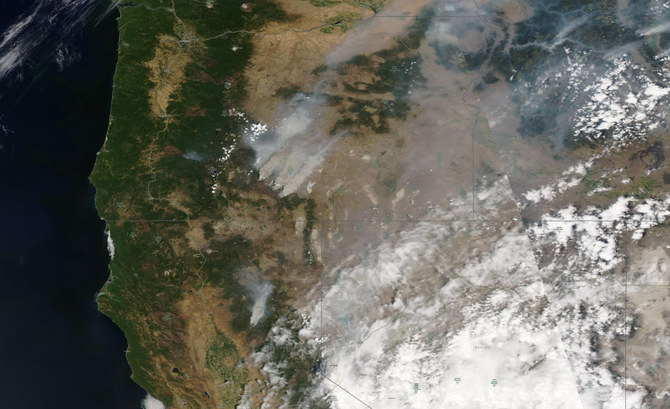
For example, within days of the extraordinary “heat dome” that scorched the western United States and Canada at the end of June, scientists from the World Weather Attribution calculated that the heatwave would have been “almost impossible” without warming.
Despite these advances, Vautard said “major mysteries remain.”
Scientists are still unsure what part clouds play “in the energy balance of the planet” and their influence on the climate’s sensitivity to greenhouse gases, he said.
But it is “phenomenal temperatures,” like those recorded in June in Canada or in Europe in 2019, that preoccupy the climatologist.
“What worries me the most are the heat waves” and the “thousands of deaths” they cause, said Vautard, who is director of France’s Pierre-Simon Laplace Institute, a climate research and teaching center.
With rainfall, scientists have a physical law that says water vapor increases by seven percent for every degree of warming, he said, with intense precipitation increasing by about the same amount.
But extreme heat is harder to predict.
“We know that heatwaves are more frequent, but we also know that our models underestimate the increasing intensity of these heatwaves, particularly in Europe, by a factor of two,” he said.
Climate models have come a long way, even since 2014, but there is still room for improvement to reduce these uncertainties.
“Before we had models that represented the major phenomena in the atmosphere, in the oceans,” said Vautard.
Today the models divide the planet’s surface into grids, with each square around 10 kilometers (six miles).
But even now he said the “resolution of the models is not sufficient” for very localized phenomena.
The next generation of models should be able to add even more detail, going down to an area of about a kilometer.
That would give researchers a much better understanding of “small scale” events, like tornadoes, hail or storm systems that bring intense rain like those seen in parts of the Mediterranean in 2020.
'Tipping points'
Even on a global scale, some fundamental questions remain.
Perhaps one of the most ominous climate concepts to have become better understood in recent years is that of “tipping points.”
These could be triggered for example by the melting of the ice caps or the decline of the Amazon rainforest, potentially swinging the climate system into dramatic and irreversible changes.
There are still “a lot of uncertainties and mysteries” about tipping points, Vautard said, including what level of temperature rise might set them off.
Currently, they are seen as low probability events, but he said that it is still crucial to know more about them given the “irreversible consequences on the scale of millennia” that they could cause.
Another crucial uncertainty is the state of the world’s forests and oceans, which absorb about half of the CO2 emitted by humans.
“Will this carbon sink function continue to be effective or not?” Vautard said.
If they stop absorbing carbon — as has been found in areas of the Amazon, for example — then more C02 will accumulate in the atmosphere, raising temperatures even further.
“It is a concern,” said Vautard.