STOCKHOLM: Ericsson said on Friday it was no longer banking on previously anticipated contract wins for 5G tenders in China as it gets caught in the crossfire of a political battle between Beijing and the West, sending its shares down 8 percent.
Chinese rival Huawei Technologies Co. Ltd. has been banned from selling equipment in Sweden, where Ericsson is based, and in some other western countries.
Ericsson had previously warned that Sweden’s ban might impact its business in China, which is undertaking a huge 5G build-out and where it generates just under 10 percent of its revenue. .
Chief Financial Officer Carl Mellander told Reuters on Friday that 5G tenders expected during the second quarter in China did not take place, and the company said in a statement that sales there fell by 2.5 billion Swedish crowns ($290 million).
Asked on an analyst call if Ericsson expected to recoup that money, Chief Executive Borje Ekholm replied: “No, it’s not coming back.”
Mellander said in an interview that it was “prudent to forecast materially lower market share in China going forward.”
Initial contract allotments for the second phase of 5G deployment in China are expected to be announced before the end of this month, according to two sources familiar with the matter.
Ericsson’s dour outlook was in sharp contrast to Nokia , along with Huawei one of Ericsson’s main rivals in the race to upgrade global wireless systems to 5G.
The Finnish group said this week it would likely raise its full-year outlook due to a stronger-than-expected second quarter.

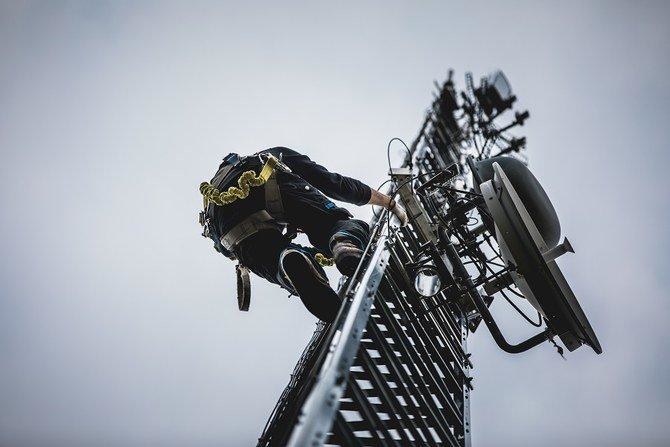
Ericsson’s 5G march hits a wall in China, shares fall
https://arab.news/bxyrb
Ericsson’s 5G march hits a wall in China, shares fall
- Company no longer banking on China 5G contract wins
- Sales in mainland China declined by 2.5 billion crowns
Egypt–Saudi power link set to boost regional energy integration, minister says
RIYADH: Electricity interconnection projects between Egypt and Saudi Arabia will strengthen regional energy cooperation and economic integration, Egypt’s minister of electricity and renewable energy said during a visit to a key cross-border power facility.
Mahmoud Esmat made the remarks while inspecting the Egypt–Saudi electricity interconnection station linking the two countries’ power grids, where he reviewed construction progress and equipment testing ahead of trial operations expected in the coming weeks, according to a statement from the Egyptian State Information Service.
The project is described as the first of its kind in the Middle East in terms of scale, manufacturing technology, operation, and application in grid interconnection lines.
The initiative supports the state’s broader vision to implement sustainable solutions aimed at ensuring the stability of the national unified grid and enhancing the reliability and quality of electricity supply.
It also aligns with Egypt’s allocation of 136.3 billion Egyptian pounds ($2.8 billion) to the electricity and renewable energy sector in its 2025–26 development plan, nearly double the 72.6 billion pounds set aside the previous year.
The plan focuses on diversifying energy sources, expanding renewable capacity, and strengthening the national grid to meet rising demand.
The statement said: “The minister toured the station’s departments and control and operation center, following up on the completion of testing for all equipment and components in preparation for launching operations and synchronizing the project with the unified power grids of Egypt and Saudi Arabia in the coming weeks.”
It added: “Esmat reviewed the implementation rate of the project and testing works, as well as the project’s timeline. He highlighted finalization of operational tests at the Badr transformer station and the Sakakin Taba 2 station, as well as the 500 kilovolts overhead transmission line extending approximately 320 km.”
The minister said the project forms part of broader efforts to build an integrated power network connecting the two countries, facilitating efficient and flexible electricity exchange and laying the groundwork for a unified Arab electricity market.
He added that the initiative reflects a clear vision and comprehensive strategy to strengthen the efficiency of the energy system while delivering both immediate and long-term solutions to safeguard grid stability and enhance service quality.


