STOCKHOLM: Ericsson said on Friday it was no longer banking on previously anticipated contract wins for 5G tenders in China as it gets caught in the crossfire of a political battle between Beijing and the West, sending its shares down 8 percent.
Chinese rival Huawei Technologies Co. Ltd. has been banned from selling equipment in Sweden, where Ericsson is based, and in some other western countries.
Ericsson had previously warned that Sweden’s ban might impact its business in China, which is undertaking a huge 5G build-out and where it generates just under 10 percent of its revenue. .
Chief Financial Officer Carl Mellander told Reuters on Friday that 5G tenders expected during the second quarter in China did not take place, and the company said in a statement that sales there fell by 2.5 billion Swedish crowns ($290 million).
Asked on an analyst call if Ericsson expected to recoup that money, Chief Executive Borje Ekholm replied: “No, it’s not coming back.”
Mellander said in an interview that it was “prudent to forecast materially lower market share in China going forward.”
Initial contract allotments for the second phase of 5G deployment in China are expected to be announced before the end of this month, according to two sources familiar with the matter.
Ericsson’s dour outlook was in sharp contrast to Nokia , along with Huawei one of Ericsson’s main rivals in the race to upgrade global wireless systems to 5G.
The Finnish group said this week it would likely raise its full-year outlook due to a stronger-than-expected second quarter.

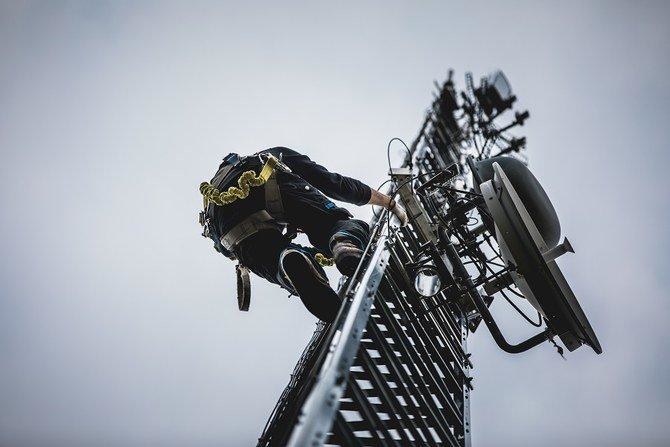
Ericsson’s 5G march hits a wall in China, shares fall
https://arab.news/bxyrb
Ericsson’s 5G march hits a wall in China, shares fall
- Company no longer banking on China 5G contract wins
- Sales in mainland China declined by 2.5 billion crowns
Saudi Arabia heading toward growth exceeding global average: McKinsey partner
RIYADH: Saudi Arabia is expected to achieve growth that exceeds the global average, thanks to Vision 2030 projects, particularly in the industrial sector, which is being fueled by the metals and mining sector, according to Jeffrey Lorsch, partner at McKinsey & Co., in comments to Al-Eqtisadiah.
He cited the growth of the mining sector as a driver, as it is linked to strategic projects, including automotive, aerospace, space, and defense industries.
A large part of its expansion depends on these projects, according to Lorsch, who stated that the available opportunities will support Saudi Arabia in achieving an annual growth rate that exceeds the global average.
However, he also warned of the negative impact of geopolitical tensions around the world on the metals sector.
“The government of Saudi Arabia’s outlook for the mining sector is quite robust,” Lorsch said. “We’ve seen a significant uptick in the sector in the last 10 years. The output of the sector has doubled or tripled since 2015, which reflects the investor confidence that we see.”
Seeking multilateral solutions
Global geopolitical tensions form the general framework for this year’s Future Minerals Forum, according to Lorsch. They are also a key factor shaping the methodology of the Future Minerals Forum Barometer, which was launched to monitor global transformations in the mining sector.
Lorsch emphasized that the large attendance at the conference clearly reflects the growing importance of critical minerals in the context of geopolitical tensions.
One of the forum’s most prominent efforts is to find multilateral solutions to develop the mining sector, both within Saudi Arabia and globally.
The FMF Barometer will analyze the impact of these tensions on mineral value chains, including the development of local and regional supply chains, after a historical reliance on global supply chains, according to Lorsch.
The McKinsey partner also emphasized the importance of involving the “super region” to ensure that the development of mineral resources in Global South countries genuinely contributes to their growth and leads to industrial development.
The barometer does not cover Saudi Arabia alone but includes the global market, where there is a massive need to significantly increase mineral supplies.
Strong future prospects for the mining sector in Saudi Arabia
Regarding the Kingdom, Lorsch confirmed that the future prospects for the mining sector are very strong, noting that the past 10 years have seen a remarkable increase in the sector’s performance.
He expected similar growth in the gold sector. “Looking forward, we’re going to see similar growth in the gold sector,” Lorsch added, pointing to Maaden’s announcement of additional gold resources that will lead to increased production capacity, alongside significant growth opportunities in phosphate, aluminum, and steel.
The McKinsey partner described the overall outlook for the sector as “very optimistic.”
Globally, Lorsch explained that McKinsey adopts a balanced approach in its growth forecasts.
“From a global economic growth perspective, I think we’re taking a fairly balanced approach. We see growth much more centered in the 2 to 3 percent, we see the Kingdom having more of a robust outlook,” he said.


