LONDON: Britain’s top domestic spymaster cautioned citizens on Wednesday to treat the threat of spying from Russia, China and Iran with as much vigilance as terrorism, in a shift of focus back to counter-espionage nearly two decades after the 9/11 attacks.
The Sept. 11, 2001 attacks on the United States made tackling terrorism the biggest priority for Western intelligence agencies, with vast resources being focused on the threat from home-grown and foreign-based militants.
But the growing assertiveness of post-Soviet Russia, the rise of China, and Iran’s sometimes daring espionage has forced the West’s spies to return their focus to counter-intelligence, or spies tracking, countering and tackling other spies.
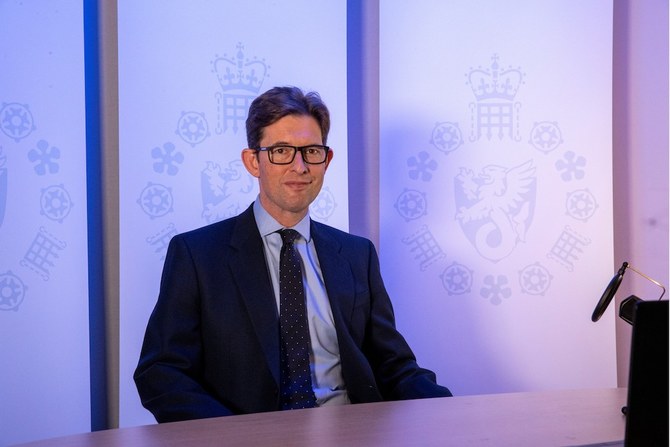
Security Service (MI5) Director General Ken McCallum said foreign spies killed, stole technology, sought to corrupt public figures, sow discord and attack infrastructure with potentially devastating cyberattacks.
“Some hostile actors are prepared to come to the UK to kill,” McCallum said in a speech at Thames House, MI5’s London headquarters.
Since a 2018 nerve agent attack in England targeting former Russian double agent Sergei Skripal, MI5 has disrupted hostile power activity that might have resulted in an attempted killing, he said, though he declined to give details.
‘STATE THREATS’
MI5’s biggest job is still tackling terrorism — and McCallum warned of the dangers emanating from Syria and Afghanistan — but said there was an important need to refocus attention on the threats from state actors such as Russia, China and Iran.
“We are aiming to double the amount of MI5 resources going into state threats activity,” he said. “Our counter-terrorism business has been heavily dominant for the last two decades and the state threats work has unavoidably been squeezed.”
British spies say China and Russia have each sought to steal commercially sensitive data and intellectual property as well as to interfere in domestic politics and sow misinformation.
Beijing and Moscow say the West is gripped with a paranoia about plots. Both Russia and China deny they meddle abroad, seek to steal technology, carry out cyberattacks or sow discord.
US prosecutors have charged four Iranians, alleged to be intelligence operatives for Tehran, with plotting to kidnap a New York journalist and human rights activist who was critical of Iran.
MI5 began as a counter-intelligence service in 1909, first focusing on the threat from Germany and then, after World War Two, focusing on the Cold War threat posed by the Soviet Union’s agents.


![]()

Spies from Russia, China and Iran seeking to steal technology, sow discord and meddle in the UK: MI5
Short Url
https://arab.news/84h8h
Spies from Russia, China and Iran seeking to steal technology, sow discord and meddle in the UK: MI5
- Iran’s sometimes daring espionage has forced the West’s spies to return their focus to counter-intelligence
- McCallum warned of the dangers emanating from Syria and Afghanistan


Latest updates


© 2026 SAUDI RESEARCH & PUBLISHING COMPANY, All Rights Reserved And subject to Terms of Use Agreement.