Bear necessities: Rescued cub prepares in Islamabad for life back in Kashmir wild

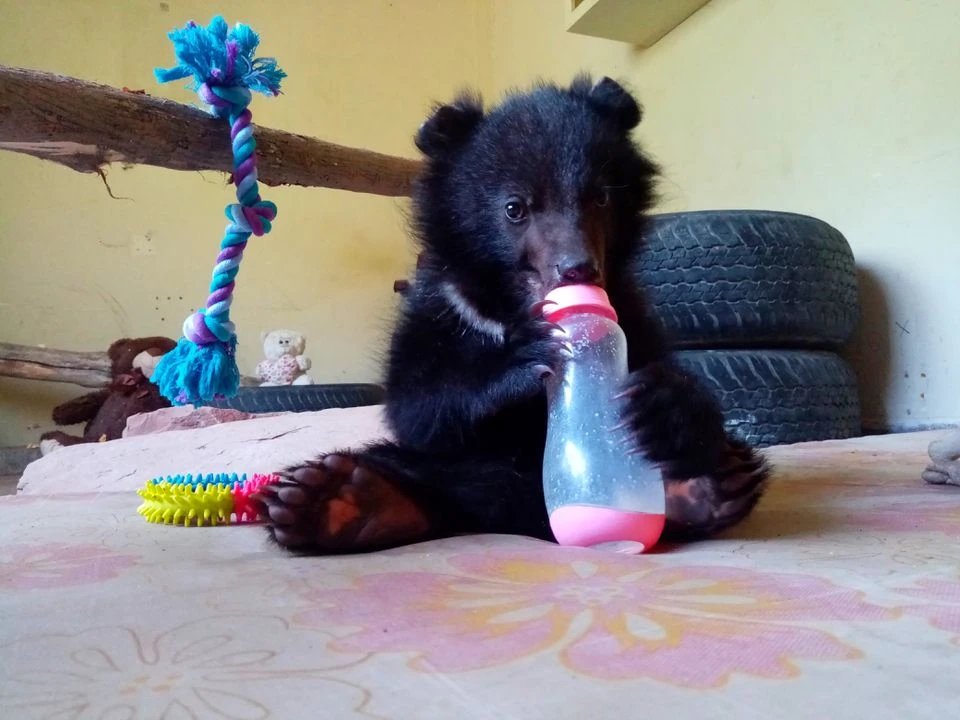
A six-month-old Asian black bear cub named Daboo is seen after rescued, at the premises of Wildlife Management Board in Islamabad, Pakistan, June 4, 2021. (REUTERS)
Short Url
Updated 14 July 2021
Follow

Bear necessities: Rescued cub prepares in Islamabad for life back in Kashmir wild

  • When Pakistani poachers shot and killed his mother, the future looked bleak for Daboo
  • But before poachers could sell him off, he was rescued and put in an animal sanctuary in Islamabad

ISLAMABAD: When Pakistani poachers shot and killed his mother, the future looked bleak for Daboo. Still too young to open his eyes, the black bear cub was put in a sack and had his ears cut off in preparation for being sold to baiters.
But before the poachers could make the sale, he was rescued and taken to an animal sanctuary in Islamabad.
“He was a little baby bear that was stolen from his mother; in fact his mother was murdered,” said Rina Satti, chairperson at Islamabad Wildlife Management Board (IWMB), where he is being nursed back to health.
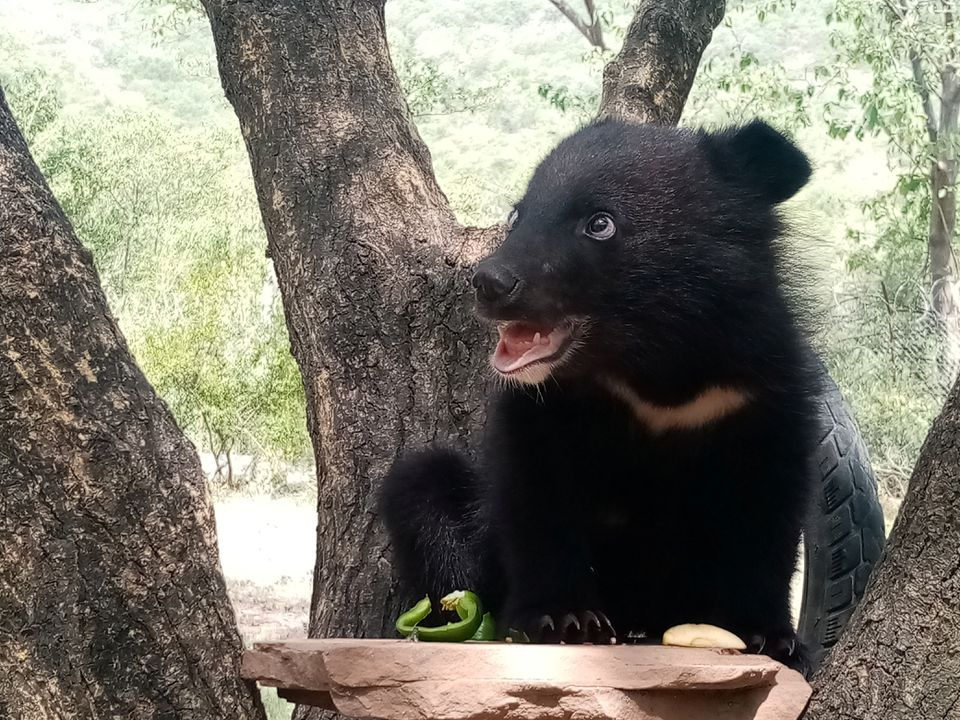


A six-month-old Asian black bear cub name Daboo, is seen playing after rescued, at the premises of Wildlife Management Board in Islamabad, Pakistan July 1, 2021. (REUTERS)

Though banned, bear-baiting persists in some parts of Pakistan and, at the time of his rescue, two-month-old Daboo was half starving and suffering from scabies and a severe ear infection.
Now, two months on, filled out and with a glossy black coat, he plays in his wooded sanctuary, taking baths and nibbling at the fruit and vegetables scattered among shrubs as his carers try to teach him how to fend for himself.
They hope to release him, microchipped, back into the wild when he turns one, near the heavily militarised Line of Control in Kashmir that separates Himalayan Pakistan and India, where he was captured.
“We will take him to his habitat, but we will not just leave him there,” said IWMB caretaker Anees Hussain. “We will have to keep monitoring him for some time to ensure that he can survive there.”
Pakistan mulls 'Super App' for public services, document verification in major technology push

Updated 7 sec ago
Follow

Pakistan mulls 'Super App' for public services, document verification in major technology push

  • Pakistan has been urging technology adoption in public, private sectors as it seeks to become a key tech player globally
  • The country this month launched the Indus AI Week to harness technology for productivity, skills development and innovation

KARACHI: Pakistan is planning to launch a “Super App” to deliver public services and enable digital document verification, the country's information technology (IT) minister said on Sunday, amid a major push for technology adoption in public and private sectors.

Pakistan, a country of 240 million people, seeks to become a key participant in the global tech economy, amid growing interest from governments in the Global South to harness advanced technologies for productivity, skills development and innovation.

The country's information and communications technology (ICT) exports hit a record $437 million in Dec. last year, according to IT Minister Shaza Fatima Khawaja. This constituted a 23% increase month on month and a 26% increase year on year.

Pakistan's technology sector is also advancing in artificial intelligence (AI) and cloud computing, marked by the launch of Pakistan’s first sovereign AI cloud in November, designed to keep sensitive data domestic and support growth in the broader digital ecosystem.

“In developed countries, citizens can access all government services from a mobile phone,” Fatima said, announcing plans for the Super App at an event in Karachi where more than 7,000 students had gathered for an AI training entrance test as part of the ‘Indus AI Week.’

“We will strive to provide similar facilities in the coming years.”

Khawaja said the app will reduce the need for in-person visits to government offices such as the National Database and Registration Authority (NADRA) and the Higher Education Commission (HEC).

The Indus AI Week initiative, which ran from Feb. 9 till Feb. 15. was aimed at positioning Pakistan as a key future participant in the global AI revolution, according to the IT minister.

At the opening of the weeklong initiative, Prime Minister Shehbaz Sharif announced that Pakistan would invest $1 billion in AI by 2030 to modernize the South Asian nation’s digital economy.

“These initiatives aim to strengthen national AI infrastructure and make the best use of our human resource,” Khawaja said, urging young Pakistanis to become creators, inventors and innovators rather than just being the consumers of technology.