

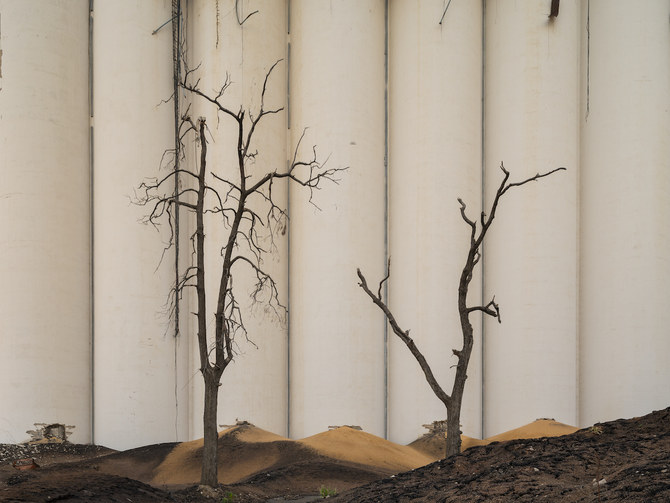

DUBAI: There have been many photographers from newspapers going down every weekend to the silos at the port, but I think what was very special about my visit was how much of me there was in it. It really was about the roads that I took and the experiences that I had while I was there. I think this is what other photographers didn’t have, partly because of the chance I got with a French engineer named Emmanuel. We got pretty close and even went inside one of the silos, which is something not a lot of photographers have done.
The experience really started with Emmanuel, who contacted me and asked if I would like to join him on his investigation, based on laser scans. We had to do several scans and compare them to see if the structure is moving. When I first when down there, it was really overwhelming. It was a lot to take in. That’s why I took a lot of shots. It’s my method. I go back to them later and analyze what I have. When the explosion happened, I was in the middle of it, and the first thing that I did was take my camera out and start shooting photos. Honestly, I thought we were going to die.
The trees were one of the most captivating scenes over there, in what I call ‘the desert of Beirut.’ There’s, like, a road between them. It’s as if they are guarding the site. Everything after them is hell — it’s an apocalyptic scene. When you are walking towards them, you get this overwhelming feeling, because the trees are so big. They’re like giants with big hands, telling us to stay away.
I don’t see it as something hopeful or something negative. It’s a very factual, real representation. You can take it to a different meaning by talking about the silos. In a sense, they protected everything that was beyond them. These trees were on the opposite side of the blast and though they’re still standing — like a big part of the city — they are dead on the inside


