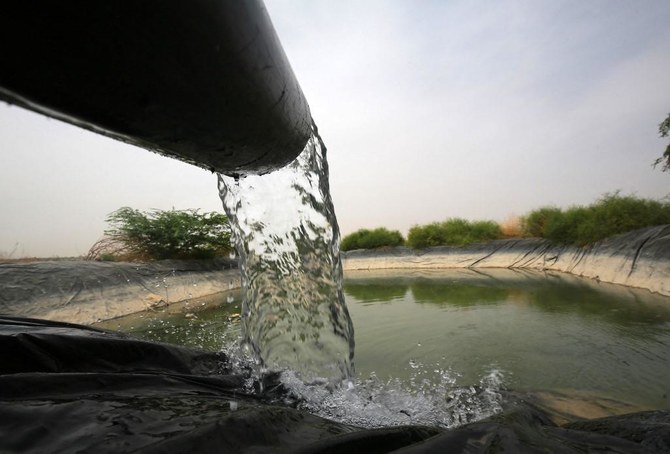
AMMAN: Jordan reached an agreement Thursday to purchase an additional 50 million cubic meters of water from Israel and to increase its exports to the occupied West Bank from $160 million a year to around $700 million, the two countries announced in official statements.
The agreements, concluded during a meeting between their foreign ministers, signaled improved relations with Israel's new government following years of strained ties under former Prime Minister Benjamin Netanyahu.
Jordan's Foreign Minister Ayman Safadi and his Israeli counterpart Yair Lapid — the guiding force behind the new government formed last month — met at the King Hussein Bridge between Jordan and the Israeli-occupied West Bank on Thursday.
Jordan said technical teams will iron out the details in the coming days, and that talks on implementing the export ceiling will be held among Israeli, Jordanian and Palestinian officials.
Safadi called for renewed efforts to achieve a two-state solution to the Israeli-Palestinian conflict and for Israel to halt “illegal” measures that undermine such efforts.
He stressed the importance of maintaining the status quo at the Al-Aqsa Mosque compound, a flashpoint holy site in Jerusalem that is under Jordanian custodianship. He also said it would be a “war crime” to evict Palestinian families from their homes in east Jerusalem. Both issues fueled tensions that helped ignite an 11-day war in Gaza between Israel and the territory's militant Hamas rulers in May.
Lapid called Jordan an “important neighbor and partner,” and said Israel would work to strengthen ties and expand economic cooperation.
Gidon Bromberg, the Israeli director of EcoPeace Middle East, a Jordanian, Palestinian and Israeli environmentalist group, said the deal marks a “dramatic increase” in water exports from Israel, which he said had not exported more than 10 million cubic meters per year until now.
He said Jordan still faces a water deficit of 500 million cubic meters a year and would have to import considerably more to ensure a continuous supply for all its needs. Jordan is one of the driest countries on earth and its water shortages are expected to worsen with climate change.
Israel and Jordan made peace in 1994 and maintain close security ties, but relations have been strained in recent years over tensions at Al-Aqsa, Israel's expansion of Jewish settlements in war-won lands and the lack of any progress in the long-moribund peace process.
Both Jordan and the Palestinians were adamantly opposed to the Trump administration's Mideast plan, which would have allowed Israel to annex up to a third of the occupied West Bank. Israel captured east Jerusalem and the West Bank from Jordan in the 1967 war, territories the Palestinians want as part of their future state.
The announcement came days before Jordan’s King Abdullah II is to visit the White House. The Biden administration has called on all sides to take steps that could help lay the groundwork for a resumption of possible peace talks.


![]()

Jordan, Israel agree to water deal, more West Bank trade
Short Url
https://arab.news/9ssup
Jordan, Israel agree to water deal, more West Bank trade
- Lapid called Jordan an “important neighbor and partner,” and said Israel would work to strengthen ties
- Jordan said technical teams will iron out the details in the coming days


Latest updates


Recommended


© 2026 SAUDI RESEARCH & PUBLISHING COMPANY, All Rights Reserved And subject to Terms of Use Agreement.