ISLAMABAD: Pakistan’s National Assembly is all set to refer a bill on domestic violence for vetting to the Council of Islamic Ideology today (Thursday) since the government wants to make sure all its provisions are in line with Islamic injunctions.
The bill was passed by the lower house of parliament in April before being approved by the Senate after certain amendments in April. Some lawmakers, however, raised objections over its provisions, requesting the government to send it to the council for advice.
The council is a constitutional body that evaluates legal provisions within the framework on Islam when asked by the authorities and advises the legislature over religious issues, though its recommendations are not binding on parliament.
The government is expected to ask the National Assembly speaker today to refer the bill to the council for advice and see if its provisions are in line with the injections of Islam.
According to a senior official who works with the country’s human rights ministry, there is nothing wrong with the bill that could be fixed by the council.
“The government is now sending the draft legislation to the council, so let’s see how they respond to it,” Muhammad Hussain Mangi, the ministry's director general, told Arab News.
He added it was “an important piece of legislation” that should be implemented to establish an effective system of protection and rehabilitation of women against domestic violence.
The draft legislation defines domestic violence as “all acts of physical, emotional, psychological, sexual and economic abuse committed by a respondent against women, children, vulnerable persons, or any other person with whom the respondent is or has been in a domestic relationship that causes fear, physical or psychological harm to the aggrieved person.”
The crime is punishable by simple imprisonment from six months to three years and a fine from Rs.20,000 to Rs.100,000.
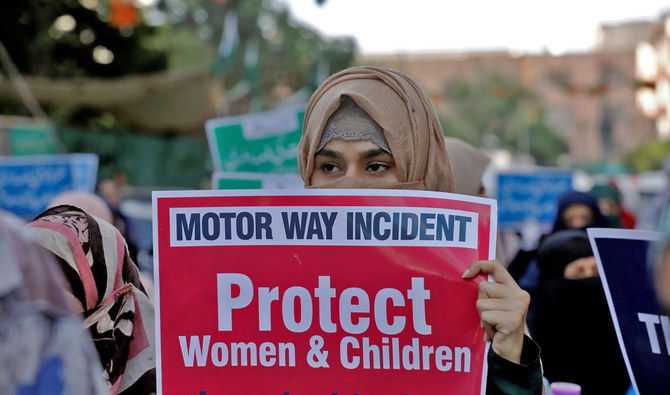
Rights activists have questioned the government’s decision to send the bill to the council for vetting, describing it as yet another “delaying tactic” to avoid the implementation of the law that is designed to protect women and other vulnerable members of the society.
Alia Amirali, a member of Women Democratic Forum, said the government should have first explained to the public why it thought that the articles of the law were against the teachings of Islam before sending it to council for advice.
“If women get justice in case of a domestic violence, is it against the injunctions of Islam,” she questioned, adding that religion was being used as a weapon against women and vulnerable members of the society to keep them compliant.
“The referral of the bill to the council for vetting signals to the public that the government was not serious in enacting and implementing such laws,” Amirali told Arab News.
Under the United Nations human rights conventions ratified by Pakistan, particularly the Convention on the Elimination of all forms of Discrimination Against Women (CEDAW), all states are obliged to take legislative measures for the protection of women in domestic life.
Maria Farooq, a high court advocate and women’s rights activist, said that recommendations of the Council of Islamic Ideology on the bill should be progressive and help report the underreported cases of domestic violence.
“The government may incorporate the council’s recommendations in the bill if they help strengthen the legislation in protecting the women’s rights,” she told Arab News. “If a law is passed without proper consultation and vetting, its scope remains limited and courts also interpret it in their own ways.”


![]()

Pakistan refers domestic violence bill to Council of Islamic Ideology for advice
Short Url
https://arab.news/55642
Pakistan refers domestic violence bill to Council of Islamic Ideology for advice
- The draft legislation proposes three years imprisonment and fine for perpetrators of domestic abuse
- Rights activists question the referral of the bill to the council without specifying provisions that are thought to be in contravention to Islamic injunctions
Latest updates





© 2026 SAUDI RESEARCH & PUBLISHING COMPANY, All Rights Reserved And subject to Terms of Use Agreement.