



ALEXANDIRIA: If war and politics have divided Yemen, songs and music have brought its people together.
A group of Yemeni singers, musicians and activists have called upon Yemenis to mark July 1 as Yemeni Song Day to bring to life and protect traditional and modern Yemeni music.
“Following our keen interest in the Yemeni identity, heritage and culture, a group of friends, artists, poets, composers, activists and influencers decided to launch what we called Yemeni Song Day,” Yahya Anbah, a Yemeni singer said, calling on people from all walks of life to join the campaign.
The initiative drew positive responses as artists, celebrities, politicians and ordinary people shared their songs, turning social media into a massive online concert.
From the Houthi-held Sanaa to the government-controlled parts of Taiz, Yemenis arranged musical activities that attracted large gatherings. Local artists sang famous songs as their delighted fans danced.
In Sanaa, wearing traditional dress, Fatima Muthanna, a young singer, sang patriotic songs. On her Facebook page, which has more than 83,000 followers, she urged Yemenis to use music as a “weapon” to bring about peace in the war-torn country.
“Singing is our only outlet in this life. This microphone is my weapon and the weapon of every artist carrying the message of peace, love and affection,” she said.
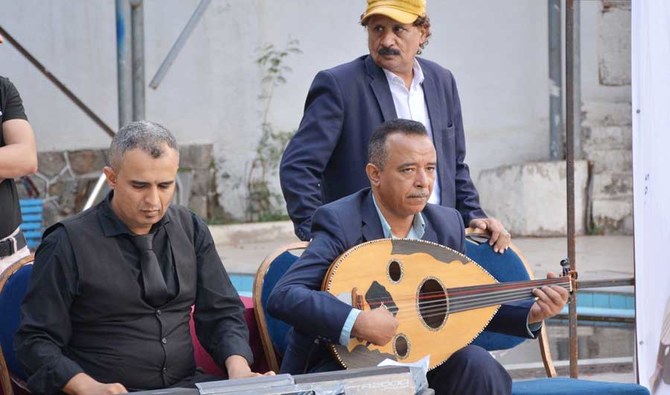
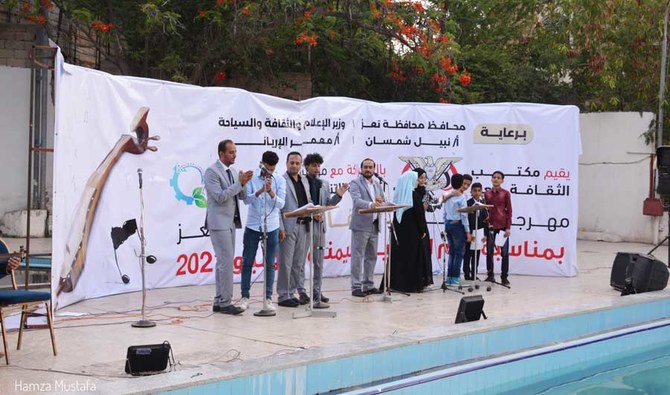
In the southern city of Taiz, not far from the battlefield, the local office of the Ministry of Culture arranged a concert to celebrate, which brought together local singers to entertain the public.
Some Yemenis celebrated by sharing short clips of themselves singing and dancing while doing their daily household chores.
Alfat Al-Dubae, an activist, sang local songs while cooking food. “My voice is not beautiful, but this festival forces even those who cannot sing to sing,” she said on Facebook.
Some shared photos with famous singers, while others remembered dead singers such as the Yemeni-born Saudi national Abu Bakr Salem Belfkih.
Ahmed Fatehi, a Yemeni singer, composer and oud player, performed duets with others. Fatehi called upon Yemeni officials to honor veteran musicians and help poor families of dead singers. 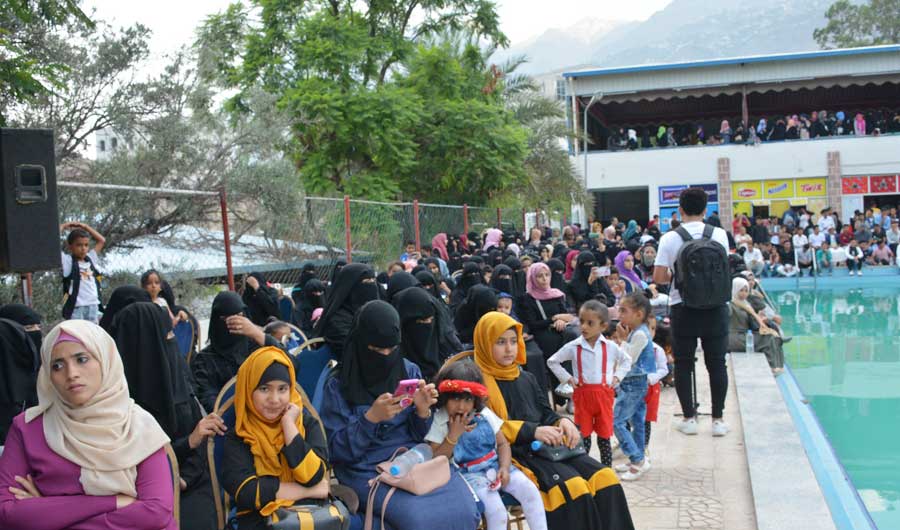
“The officials should express their gratitude to the pioneers of Yemeni music by visiting their families and giving them moral and financial assistance,” the singer told Arab News, adding that some old-timers died because they couldn’t afford medical treatment.
International cultural, educational and heritage organizations also participated in the campaign by sharing their funded programs for reviving Yemeni musical heritage.
The UNESCO office for the Gulf Cooperation Council and Yemen said on Twitter that the song “Al-Ghana Al-Sanaani” was listed as part of the world’s heritage in 2008, and that it was working with Yemen’s authorities to add more songs to the list.
The Saudi Development and Reconstruction Program for Yemen posted on Twitter: “Yemeni songs reflect the musical heritage and are a cultural marker of the people of Yemen. On #YemeniSongDay, we celebrate the melodies of the past and present-day Yemen.”
In addition to the war, Yemenis attributed the massive response to the festival to the growing moral policing of people by the Iran-backed Houthis.
The rebels have banned people from hiring singers for weddings and launched a crackdown on arts, models and actors.
Tweeting from Sanaa, Khaled Al-Ruwaishan, a former minister of culture, said Yemenis challenged the Houthi’s repressive rules on arts and music by singing and observing Yemeni Song Day.
“They tried to ban singing in the countryside of Sanaa. The people responded by singing, and making a festival for it. What a response. Our people are alive and our soul is glowing despite all the sorrows,” the former minister said.
Yemen’s Ministry of Information, Tourism and Culture gave the campaign official recognition by announcing that July 1 would be recognized as the official Yemeni Song Day, and announced it would establish a museum for Yemeni music in the southern port city of Aden.


