


DALLAS: This was always going to be an unusual World Cup fixture.
On paper, it was a dead rubber: Reigning champions Argentina already through; debutants Jordan already out. La Albiceleste coach Lionel Scaloni had rested his captain, Lionel Messi, with one eye on bigger ties ahead, yet the 70,649 who filled Dallas Stadium had come for a spectacle, and — with or without their talismanic history-maker — nothing was going to spoil the evening.
Outside the stadium, in a tribute to football’s most contested acronym, a goat was paraded dressed in a Messi shirt, while Jordanian fans offered their South American counterparts the chance to try their national dish, mansaf. Inside the futuristic arena, humorous banners and posters were held high for the cameras. One read: “Sorry Michael, we were Jordan first!”
Argentina controlled possession from the start, unsurprisingly given the 73 places between the two teams in FIFA’s world rankings. Jordan, however, refused to wilt and, even after conceding twice in the first half to Giovani Lo Celso and Lautaro Martinez, they returned after the break with renewed purpose, a pair of changes, and soon found reward.
It came minutes after Messi had removed his bib in preparation for entry, prompting a rise in decibels among the spectators. It was not only the fans whose focus had shifted to the sidelines, as Leandro Paredes switched off just long enough for Mousa Al-Taamari to meet Ehsan Haddad’s cross and sneak in a small piece of Jordanian history. The goal briefly changed the mood inside the stadium, but it would prove insufficient to alter the direction of the match.
For a debutant nation, playing the world champions carries meaning regardless of the result — as Ghana discovered against Brazil in 2006 and Slovakia against Italy in 2010. As the Jordan team swarmed their goalscorer, King Abdullah II celebrated jubilantly in the stands.
Yet the man without the bib had other plans for this tale. Jordan’s goal ensured they ended their campaign having scored in all three group stage matches, but it was quickly reduced to a footnote when Messi, the World Cup’s all-time leading goalscorer, came on with half an hour remaining and did what he has done for two decades: Made history.
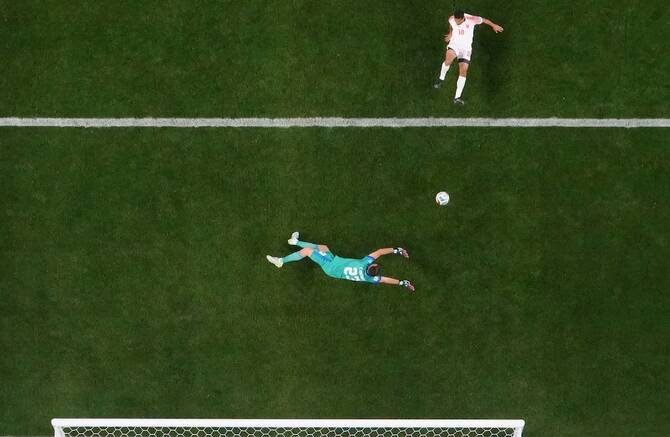
Twice, Messi’s quick feet drew fouls on the edge of the penalty area. His first free-kick sailed high, but his second curled round the Jordan wall — which had done little more than obscure goalkeeper Yazeed Abulaila’s view — and put him in the record books once again. He is now the only player in tournament history to score in seven consecutive World Cup matches.
Messi breaking records is familiar theater for Argentina, yet the watching Jordanians appreciated what they had seen. Shemagh scarves waved in the stands as they joined the applause. Al-Taamari later conceded that while he was pleased to score against the world champions, the defeat took the shine off his own achievement.
“We put in a performance we can be proud of and personally I’m happy that I scored,” he said. “But the joy isn’t complete because we didn’t qualify. We gave everything, and we’ll learn from our mistakes. The frustrating thing is if we had been more focused earlier in the tournament, we could have qualified.”
Defender Ehsan Haddad echoed the sentiment, pointing to fine margins and missed opportunities, but also to the wider significance of Jordan’s support across the US this month. “The Jordanian fans experienced two unforgettable weeks,” he said. “We saw them everywhere — in the streets, in the public squares. You could really see the excitement and passion of the Jordanian supporters wherever they went. Seeing the shemaghs represented on such a big stage was truly historic.”
Jordan head back to Amman now, their first World Cup campaign completed on the same day this extended tournament reached its midway point. Having briefly tested the world champions and stood on the same stage as the defining player of this generation, they can return with heads held high. The night, however, belonged once again to Messi.


