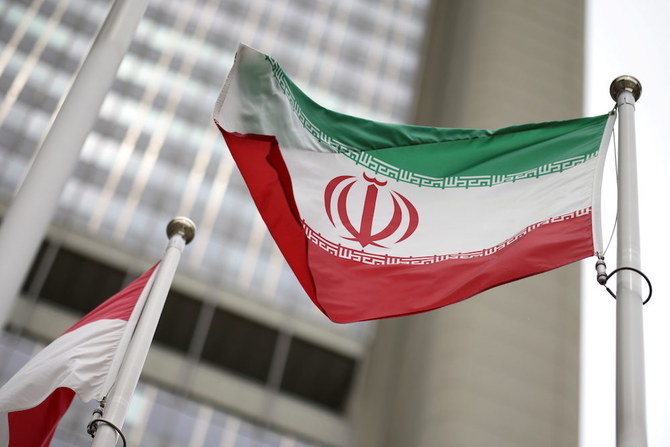
LONDON: Iran has given notice of concrete steps to produce uranium metal enriched to up to 20 percent purity for reactor fuel, the UN atomic watchdog said on Tuesday, describing a move that is likely to anger Western powers in talks to revive the Iran nuclear deal.
Iran has been in indirect talks with the United States since April to revive the 2015 deal, which former US President Donald Trump abandoned. The deal imposed curbs on Iran’s nuclear program in return for the lifting of sanctions, and after Trump withdrew, Iran began violating many of its restrictions.
Tehran has already produced a small amount of uranium metal this year that was not enriched. That is a breach of the deal, which bans all work on uranium metal since it can be used to make the core of a nuclear bomb.
Iran has outlined plans to produce enriched uranium metal, saying it is developing fuel for its Tehran Research Reactor, but Washington and its European allies dispute Tehran’s intentions and have called on it to stop.
“Today, Iran informed the Agency that UO2 (uranium oxide) enriched up to 20 percent U–235 would be shipped to the R&D laboratory at the Fuel Fabrication Plant in Esfahan, where it would be converted to UF4 (uranium tetrafluoride) and then to uranium metal enriched to 20 percent U–235, before using it to manufacture the fuel,” an International Atomic Energy Agency statement said.
Summarizing a report to its member states, the IAEA described the plan as a “multi-stage process,” suggesting it will take time before the enriched metal is produced.
The report is likely to increase tensions in the talks, which include the other parties to the 2015 deal. The talks adjourned on June 20 and a date for their resumption has not yet been set.
The US on Tuesday called Iran’s decision an “unfortunate step backwards” but said the window for diplomacy to allow both to resume compliance with the 2015 nuclear deal remained open.
“It is worrying that Iran chooses to escalate its non-performance of its (nuclear deal) commitments, especially with experiments that have value for nuclear weapons research. It’s another unfortunate step backwards for Iran, particularly when we for our part have demonstrated our sincere intention and willingness to return to the (deal),” US State Department spokesman Ned Price told reporters at a briefing.
“We continue to urge Iran to stop this brinksmanship, to return to Vienna prepared for real talks, and to be in a position to be prepared to finish the work that we have started in April,” he said.
Germany, France and Britain also voiced “grave concern” over the move by Iran that they say is a serious violation of its commitments under the 2015 nuclear deal with world powers, warning that it threatens the outcome of talks aimed at bringing the US back into the agreement.
Uranium metal can also be used for a nuclear bomb, and research on its production is specifically prohibited under the nuclear deal. The IAEA already said in February that its inspectors had confirmed that Iran has begun the production of uranium metal.
The three European powers’ foreign ministers issued a joint statement saying of Tehran’s latest step that “Iran has no credible civilian need for uranium metal (research and development) and production, which are a key step in the development of a nuclear weapon.”
They said it was “all the more concerning” given that no date has been set for the resumption of negotiations in Vienna, and that Iran has “significantly curtailed” IAEA access.
“We have repeatedly stressed that time is on no-one’s side,” the statement said. “With its latest steps, Iran is threatening a successful outcome to the Vienna talks despite the progress achieved in six rounds of negotiations to date.”
Bob Einhorn, a nonproliferation expert at the Brookings Institution think tank, said: “This is clearly an escalation — clearly another message by Iran that in the absence of any restoration of (the nuclear deal), they are going to continue ramping up their capability and their pressure.”
(With AP, AFP and Reuters)

Iran gives IAEA notice of escalating uranium metal work
Short Url
https://arab.news/w4mt5
Iran gives IAEA notice of escalating uranium metal work
- US warns Iran to stop nuclear ‘brinksmanship’
- European powers say ‘Iran has no credible civilian need for uranium metal and production, which are a key step in the development of a nuclear weapon’
Thousands flock to Bethlehem to revive Christmas spirit after Gaza war
- Bethlehem canceled celebrations the past two years due to the Israel-Hamas war
- The city where Christians believe Jesus was born relies heavily on tourism that has been severely impacted
BETHLEHEM, West Bank: Thousands of people flocked to Bethlehem’s Manger Square on Christmas Eve as families heralded a much-needed boost of holiday spirit. The giant Christmas tree that was absent during the Israel-Hamas war returned on Wednesday, overlooking a parade of scouts playing songs on bagpipes.
The city where Christians believe Jesus was born canceled Christmas celebrations for the past two years. Manger Square had instead featured a nativity scene of baby Jesus surrounded by rubble and barbed wire in homage to the situation in Gaza.
Cardinal Pierbattista Pizzaballa, the top Catholic leader in the Holy Land, kicked off this year’s celebrations during the traditional procession from Jerusalem to Bethlehem, calling for “a Christmas full of light.”
Arriving in Manger Square, Pizzaballa said he came bearing greetings from Gaza’s tiny Christian community, where he held a pre-Christmas Mass on Sunday. Among the devastation, he saw a desire to rebuild.
“We, all together, we decide to be the light, and the light of Bethlehem is the light of the world,” he told thousands of people, Christian and Muslim.
Despite the holiday cheer, the impact of the war in the Israeli-occupied West Bank is acute, especially in Bethlehem, where around 80 percent of the Muslim-majority city’s residents depend upon tourism-related businesses, according to the local government.
The vast majority of people celebrating were residents, with a handful of foreigners in the crowd. But some residents said they are starting to see signs of change as tourism slowly returns.
Loss of tourism devastates Bethlehem
“Today is a day of joy, a day of hope, the beginning of the return of normal life here,” said Bethlehem resident Georgette Jackaman, a tour guide who has not worked in more than two years.
She and her husband, Michael Jackaman, another guide, are from established Christian Bethlehem families that stretch back generations. This is the first real Christmas celebration for their two children, aged 2 1/2 and 10 months.
During the war, the Jackamans pivoted to create a website selling Palestinian handicrafts to try to support others who have lost their livelihoods.
During the Gaza war, the unemployment rate in the city jumped from 14 percent to 65 percent, Bethlehem Mayor Maher Nicola Canawati said earlier this month.
A visitor from France, Mona Riewer, said that “I came because I wanted to better understand what people in Palestine are going through, and you can sense people have been through a very hard time.”
Although friends and family cautioned her against coming due to the volatile situation, Riewer said being in Bethlehem helped her appreciate the meaning of the holiday.
“Christmas is like hope in very dark situations, a very vulnerable child experiencing harshness,” she said.
Despite the Gaza ceasefire that began in October, tensions remain high across much of the West Bank.
Israel’s military continues to carry out frequent raids in what it says is a crackdown on militants. Attacks by Israeli settlers against Palestinians have reached their highest level since the United Nations humanitarian office started collecting data in 2006. Israel captured the West Bank in the 1967 Mideast war.
The internationally recognized Palestinian Authority has limited autonomy in parts of the territory, including Bethlehem. Palestinian President Mahmoud Abbas is expected to attend midnight Mass for the first time in two years, the mayor said.
As poverty and unemployment have soared, about 4,000 people have left Bethlehem in search of work, the mayor said. It’s part of a worrying trend for Christians, who are leaving the region in droves.
Christians account for less than 2 percent of the West Bank’s roughly 3 million residents. Across the Middle East, the Christian population has steadily declined as people have fled conflict and attacks.
The beginning of a return to normal life
Fadi Zoughbi, who previously worked overseeing logistics for tour groups, said his children were ecstatic to see marching bands streaming through Bethlehem’s streets.
The scouts represent cities and towns across the West Bank, with Palestinian flags and tartan draped on their bagpipes, drummers spinning mallets adorned with pompoms. For the past two years, the scouts marched silently as a protest against the war.
Irene Kirmiz, who grew up in Bethlehem and now lives in Ramallah, said the scout parade is among her favorite Christmas traditions. Her 15-year-old daughter plays the tenor drum with the Ramallah scouts.
But her family had to wake up at 5 a.m. to arrive in time for the parade and waited upwards of three hours at Israeli checkpoints. The drive previously took 40 minutes without the checkpoints that have increasingly made travel difficult for Palestinians, she said.
“It’s very emotional seeing people trying to bounce back, trying to celebrate peace and love,” Kirmiz said.
The Israeli Ministry of Tourism estimates 130,000 tourists will visit Israel by the end of December, including 40,000 Christians. In 2019, a banner year for tourism before the pandemic, the tourism ministry said 150,000 Christian tourists visited during Christmas week alone.
During the previous two years, the heads of churches in Jerusalem urged congregations to forgo “any unnecessarily festive activities.” They encouraged priests and the faithful to focus on Christmas’ spiritual meaning and called for “fervent prayers for a just and lasting peace for our beloved Holy Land.”
The city where Christians believe Jesus was born canceled Christmas celebrations for the past two years. Manger Square had instead featured a nativity scene of baby Jesus surrounded by rubble and barbed wire in homage to the situation in Gaza.
Cardinal Pierbattista Pizzaballa, the top Catholic leader in the Holy Land, kicked off this year’s celebrations during the traditional procession from Jerusalem to Bethlehem, calling for “a Christmas full of light.”
Arriving in Manger Square, Pizzaballa said he came bearing greetings from Gaza’s tiny Christian community, where he held a pre-Christmas Mass on Sunday. Among the devastation, he saw a desire to rebuild.
“We, all together, we decide to be the light, and the light of Bethlehem is the light of the world,” he told thousands of people, Christian and Muslim.
Despite the holiday cheer, the impact of the war in the Israeli-occupied West Bank is acute, especially in Bethlehem, where around 80 percent of the Muslim-majority city’s residents depend upon tourism-related businesses, according to the local government.
The vast majority of people celebrating were residents, with a handful of foreigners in the crowd. But some residents said they are starting to see signs of change as tourism slowly returns.
Loss of tourism devastates Bethlehem
“Today is a day of joy, a day of hope, the beginning of the return of normal life here,” said Bethlehem resident Georgette Jackaman, a tour guide who has not worked in more than two years.
She and her husband, Michael Jackaman, another guide, are from established Christian Bethlehem families that stretch back generations. This is the first real Christmas celebration for their two children, aged 2 1/2 and 10 months.
During the war, the Jackamans pivoted to create a website selling Palestinian handicrafts to try to support others who have lost their livelihoods.
During the Gaza war, the unemployment rate in the city jumped from 14 percent to 65 percent, Bethlehem Mayor Maher Nicola Canawati said earlier this month.
A visitor from France, Mona Riewer, said that “I came because I wanted to better understand what people in Palestine are going through, and you can sense people have been through a very hard time.”
Although friends and family cautioned her against coming due to the volatile situation, Riewer said being in Bethlehem helped her appreciate the meaning of the holiday.
“Christmas is like hope in very dark situations, a very vulnerable child experiencing harshness,” she said.
Despite the Gaza ceasefire that began in October, tensions remain high across much of the West Bank.
Israel’s military continues to carry out frequent raids in what it says is a crackdown on militants. Attacks by Israeli settlers against Palestinians have reached their highest level since the United Nations humanitarian office started collecting data in 2006. Israel captured the West Bank in the 1967 Mideast war.
The internationally recognized Palestinian Authority has limited autonomy in parts of the territory, including Bethlehem. Palestinian President Mahmoud Abbas is expected to attend midnight Mass for the first time in two years, the mayor said.
As poverty and unemployment have soared, about 4,000 people have left Bethlehem in search of work, the mayor said. It’s part of a worrying trend for Christians, who are leaving the region in droves.
Christians account for less than 2 percent of the West Bank’s roughly 3 million residents. Across the Middle East, the Christian population has steadily declined as people have fled conflict and attacks.
The beginning of a return to normal life
Fadi Zoughbi, who previously worked overseeing logistics for tour groups, said his children were ecstatic to see marching bands streaming through Bethlehem’s streets.
The scouts represent cities and towns across the West Bank, with Palestinian flags and tartan draped on their bagpipes, drummers spinning mallets adorned with pompoms. For the past two years, the scouts marched silently as a protest against the war.
Irene Kirmiz, who grew up in Bethlehem and now lives in Ramallah, said the scout parade is among her favorite Christmas traditions. Her 15-year-old daughter plays the tenor drum with the Ramallah scouts.
But her family had to wake up at 5 a.m. to arrive in time for the parade and waited upwards of three hours at Israeli checkpoints. The drive previously took 40 minutes without the checkpoints that have increasingly made travel difficult for Palestinians, she said.
“It’s very emotional seeing people trying to bounce back, trying to celebrate peace and love,” Kirmiz said.
The Israeli Ministry of Tourism estimates 130,000 tourists will visit Israel by the end of December, including 40,000 Christians. In 2019, a banner year for tourism before the pandemic, the tourism ministry said 150,000 Christian tourists visited during Christmas week alone.
During the previous two years, the heads of churches in Jerusalem urged congregations to forgo “any unnecessarily festive activities.” They encouraged priests and the faithful to focus on Christmas’ spiritual meaning and called for “fervent prayers for a just and lasting peace for our beloved Holy Land.”
© 2025 SAUDI RESEARCH & PUBLISHING COMPANY, All Rights Reserved And subject to Terms of Use Agreement.