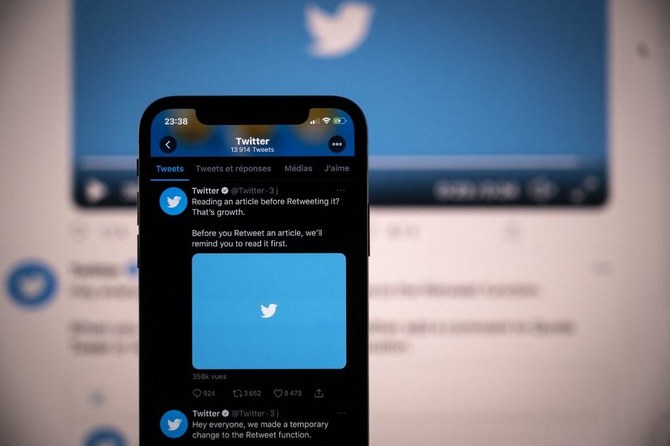
Twitter loses immunity over user-generated content in India

Indian police have filed at least five cases against Twitter or its officials. (File/AFP)
Short Url
Updated 06 July 2021
Follow

Twitter loses immunity over user-generated content in India

  • Twitter loses protection over user-generated content in India as the platform fails to comply with new IT rules.
  • India’s new IT rules which became effective end-May are aimed at regulating content on social media firms and making them more accountable to legal requests.

NEW DELHI: Twitter Inc. no more enjoys liability protection against user-generated content in India as the US microblogging giant has failed to comply with new IT rules, the Indian government said in a court filing.
The statement is the first time Prime Minister Narendra Modi’s administration has officially said Twitter has lost its immunity after repeatedly criticizing the company for non-compliance.
The dispute and the public spat has raised concern that American firms will find it difficult to do business amid a more stringent regulatory environment.
India’s IT ministry told the High Court in New Delhi that Twitter’s non-compliance amounted to a breach of the provisions of the IT Act, causing the US firm to lose its immunity, according to the filing dated July 5.
The filing came in a case filed by a Twitter user who wanted to complain about some allegedly defamatory tweets on the platform, and said the company was not complying with the new law that requires appointment of certain new executives.
Twitter declined to comment. The company has previously said it was making all efforts to comply.
India’s new IT rules which became effective end-May are aimed at regulating content on social media firms and making them more accountable to legal requests for swift removal of posts and sharing details on the originators of messages.
Technology minister Ravi Shankar Prasad has slammed Twitter for deliberately defying the law and said all social media firms must abide by the new rules.
In recent weeks, as acrimony grew between New Delhi and Twitter, Indian police have filed at least five cases against the company or its officials, including some related to child pornography and a controversial map of India on its career page.
Police in two Indian states have named Twitter India chief Manish Maheshwari in complaints. Separately, the state of Uttar Pradesh has challenged in the Supreme Court a bar on police action against Maheshwari, after a lower court protected him against arrest over an accusation that the platform was used to spread hate.


Gabon cuts off Facebook, TikTok after protests

Updated 18 February 2026
Follow

Gabon cuts off Facebook, TikTok after protests

Libreville, Gabon: Facebook and TikTok were no longer available in Gabon on Wednesday, AFP journalists said, after regulators said they were suspending social media over national security concerns amid anti-government protests.
Gabon’s media regulator on Tuesday announced the suspension of social media platforms until further notice, saying that online posts were stoking conflict.
The High Authority for Communication imposed “the immediate suspension of social media platforms in Gabon,” its spokesman Jean-Claude Mendome said in a televised statement.
He said “inappropriate, defamatory, hateful, and insulting content” was undermining “human dignity, public morality, the honor of citizens, social cohesion, the stability of the Republic’s institutions, and national security.”
The communications body spokesman also cited the “spread of false information,” “cyberbullying” and “unauthorized disclosure of personal data” as reasons for the decision.
“These actions are likely, in the case of Gabon, to generate social conflict, destabilize the institutions of the Republic, and seriously jeopardize national unity, democratic progress, and achievements,” he added.
The regulator did not specify any social media platforms that would be included in the ban.
But it said “freedom of expression, including freedom of comment and criticism,” remained “a fundamental right enshrined in Gabon.”

‘Climate of fear’

Less than a year after being elected, Gabonese President Brice Oligui Nguema has faced his first wave of social unrest, with teachers on strike and other civil servants threatening to do the same.
School teachers began striking over pay and conditions in December and protests over similar demands have since spread to other public sectors — health, higher education and broadcasting.
Opposition leader Alain-Claude Billie-By-Nze said the social media crackdown imposed “a climate of fear and repression” in the central African state.
In an overnight post on Facebook, he called on civil groups “and all Gabonese people dedicated to freedom to mobilize and block this liberty-destroying excess.”
The last action by teachers took place in 2022 under then president Ali Bongo, whose family ruled the small central African country for 55 years.
Oligui overthrew Bongo in a military coup a few months later and acted on some of the teachers’ concerns, buying calm during the two-year transition period that led up to the presidential election in April 2025.
He won that election with a huge majority, generating high expectations with promises that he would turn the country around and improve living standards.
A wage freeze decided a decade ago by the Bongo government has left teachers struggling to cope with the rising cost of living.
Authorities last month arrested two prominent figures from the teachers’ protest movement, leaving teachers and parents afraid to discuss the strike in public.