


LONDON: Dozens of members of the European Parliament (MEPs) have released a statement condemning human rights abuses in Iran, calling for further sanctions and urging the EU to “address the yearning of the Iranian people for freedom and democracy.”
The 63 MEPs said they “have deep concerns about the ongoing human rights violations in Iran,” adding: “The failure of the UN and the international community to address the alarming human rights situation, including the massacre of 30,000 political prisoners in 1988, has emboldened the mullahs and led to further deterioration.”
They praised the EU’s decision to sanction members of Iran’s ruling elite following a deadly crackdown on protests in November 2019 as a “step in the right direction,” but said it should be followed by “other necessary measures.”
The MEPs specifically highlighted the plight of women in Iran.
“Under President (Hassan) Rouhani’s tenure, 118 women have been executed, making Iran the No. 1 one executioner of women in the world,” the statement said.
“Iranian women have spearheaded all protests and courageously countered all suppressive measures against them, and we stand by them.”
The MEPs said the EU should focus on supporting the demands of the Iranian people. “During nationwide protests over the past few years, the Iranian people have clearly rejected (the) current dictatorship and expressed their desire for genuine change, an outcome that remains in the hands of the Iranian people and their resistance movement,” they added.
BACKGROUND
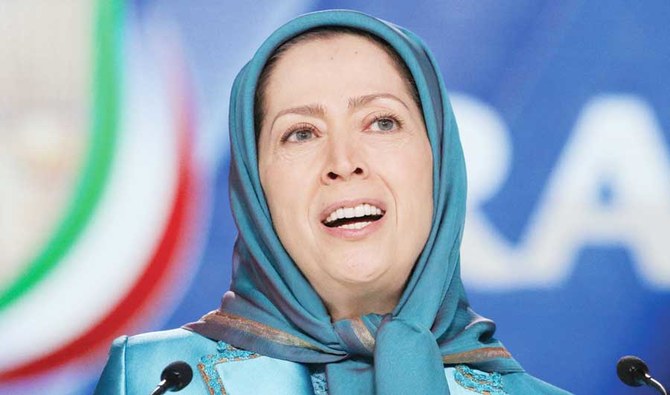
The members of the European Parliament said they espouse a nuclear-free, democratic Iran that refrains from endorsing and planning terrorism abroad — ideals endorsed by the National Council of Resistance of Iran, led by President-elect Maryam Rajavi.
The MEPs said they espouse a nuclear-free, democratic Iran that refrains from endorsing and planning terrorism abroad — ideals endorsed by the National Council of Resistance of Iran, led by President-elect Maryam Rajavi.
“The 10-point plan outlined by the Iranian opposition President Maryam Rajavi, first presented by her in the Council of Europe and the European Parliament, calling for a democratic republic based on free and fair elections … and a non-nuclear Iran, deserves our support,” the MEPs added.
“We call on the EU to adopt a firm policy on Iran, to give priority to human rights, and to hold to account those responsible for human rights violations and terrorism.”
They urged the EU to use its new European Magnitsky Act, which allows the bloc to “freeze assets and impose travel bans on individuals involved in serious human rights abuses,” to sanction the Iranian leadership.
The statement did not name Iran’s new President Ebrahim Raisi. But if the EU chooses to employ the Magnitsky Act to impose sanctions, given his well-publicized role in the 1988 massacres of political prisoners, Raisi could well be in the bloc’s economic firing line.


