Pro-Trump social media app hacked on launch day as half million sign up

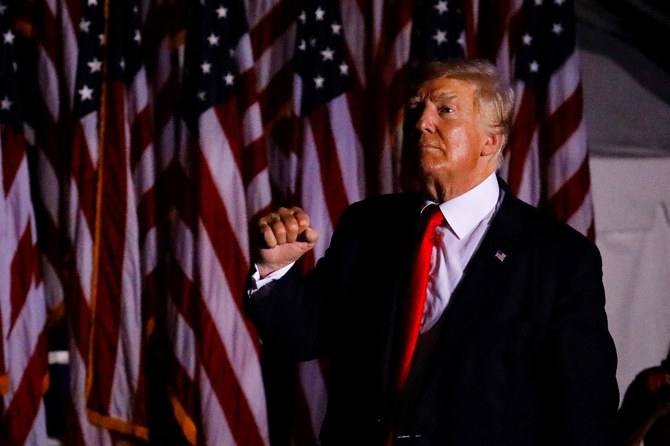
Trump was permanently banned from Twitter and remains suspended by Facebook until at least 2023. (File/AFP)
Short Url
Updated 05 July 2021
Follow

Pro-Trump social media app hacked on launch day as half million sign up

  • A social media app created by former members of the Donald Trump administration was hacked upon its launch.

A social media site launched on Sunday by Jason Miller, a senior adviser to former US President Donald Trump, was briefly hacked, and more than 500,000 people have registered to use the site, Miller said.

GETTR, a Twitter-style platform with posts and trending topics, has advertised itself on the Google and Apple app stores as “a non-bias social network for people all over the world.”

“The problem was detected and sealed in a matter of minutes, and all the intruder was able to accomplish was to change a few user names,” Miller said in an emailed statement to Reuters.

A writer for Salon posted screenshots on Twitter of several GETTR profiles, including those of former Secretary of State Mike Pompeo and Miller himself, that were altered to read “JubaBaghdad was here, follow me in twitter :).”

Asked about security on the new social media said, Miller said the situation had been “rectified.”

Miller had teased the Trump team's plans to start a new social media platform for months following moves by Twitter and other sites to block the former president after the Jan. 6 riot where his supporters stormed the Capitol.

Former Trump adviser Steve Bannon on Sunday described GETTR as “the Twitter killer” in a post on the new site.

Trump was permanently banned from Twitter and remains suspended by Facebook until at least 2023 and by Alphabet's YouTube until the company determines the risk of violence has decreased.

Miller told Fox News earlier this week he hoped Trump would join but that the former president was considering a number of options. He said Trump was not funding the platform.


Lebanon’s official media scale back Hezbollah coverage after Cabinet ban

Updated 12 March 2026
Follow

Lebanon’s official media scale back Hezbollah coverage after Cabinet ban

  • Information Minister Paul Morcos instructs outlets to comply with government decision
  • Journalists, social media urged to avoid content that could provoke hate speech, incitement

BEIRUT: Lebanon has begun implementing a Cabinet decision taken earlier this month to ban Hezbollah’s security and military activities by scaling back coverage of the group on official media platforms.

The measure, which was described in political circles as a significant and bold step, came after decades during which news about the party and the speeches of its leaders were published verbatim and broadcast live through official media outlets, like the state-run National News Agency, TV station Tele Liban and Radio Lebanon.

“No one is imposing censorship,” an official source told Arab News.

“Rather, there is a commitment to the decisions of the state. It is no longer possible for a speech that attacks the Lebanese government and the state to be published through its official media outlets.”

Information Minister Paul Morcos issued a circular instructing directors of official media outlets to comply with the government’s decision to ban the broadcast of speeches or statements by Hezbollah Secretary-General Sheikh Naim Qassem and statements issued by the group’s armed wing, particularly when they contain criticism of the state.

Morcos also ordered that Hezbollah statements be handled in the same manner as those issued by other political parties, meaning they should not be published verbatim. He further instructed media outlets to avoid using the term “Islamic resistance,” except when it appears directly within Hezbollah statements.

The first manifestations of the decision were Tele Liban’s abstention from live broadcasting a speech by Qassem and a statement made on Tuesday by lawmaker Mohammed Raad, who heads the Hezbollah parliamentary bloc.

The group’s supporters described the move as an attempt “to restrict the resistance, Hezbollah and its leadership in the official media.”

Some argued on social media that preventing the use of terms like “resistance” or “holy warriors (Mujahedin)” and replacing them with expressions such as “Hezbollah” and “fighters” was “aimed at brainwashing and stripping the party of its resistance identity.”

During a Cabinet session on Thursday, Morcos raised the issue of content circulating on social media that incites murder and sectarian strife. This comes against the backdrop of the war that Hezbollah waged from Lebanon against Israel on March 2, without state approval, which led to a sharp division in Lebanese public opinion.

Morcos, who is also Cabinet spokesperson, said after the session that what was being published “exceeds the bounds of freedom of opinion, the press and expression.”

Prime Minister Nawaf Salam considered it to fall under the penal code, specifically regarding crimes that harm national unity, he said, and that “we are against strife in all its forms.”

Morcos also urged journalists, influencers and social media users to remain aware of the sensitivity of the current situation and to avoid content that could provoke strife, hate speech or incitement.

He acknowledged, however, that, according to a legal study, he has no authority over social media, even on media-related matters.

“The Ministry of Information does not exercise a guardianship role and lacks judicial police powers,” he said.

“These authorities rest with the public prosecution offices, which are overseen by the minister of justice and fall within the domain of criminal law and criminal prosecution.”

The ban was agreed during a Cabinet session on March 2, after Hezbollah launched six rockets from Lebanese territory toward northern Israel, the first such attack since the November 2024 ceasefire, prompting retaliatory strikes.

The Cabinet reaffirmed that “the decision of war and peace rests exclusively with the Lebanese state and its constitutional institutions,” and called on Hezbollah to hand over its weapons to the state while limiting its role to political activity within the legal and constitutional framework.