


RIYADH: As the Future Investment Initiative (FII), Saudi Arabia’s flagship investment forum, approaches its fifth anniversary in October, the event’s organizing body is tackling a burning global issue.
The FII Institute is proactively addressing one of the most divisive topics currently facing the world’s investment community: Environmental, social, and governance (ESG) principles and how best to measure them.
“We have a moral responsibility as the FII Institute to own this global conversation about ESG, because it is becoming a very hot topic,” Richard Attias, the institute’s chief executive officer, told Arab News.
ESG has certainly become a major talking point, as companies and leaders struggle to strike a balance between being environmentally and socially conscious and meeting the expectations of profit-focused shareholders.
Investment banking giant Goldman Sachs last year announced it would refuse to take companies public if their board did not have at least one diverse member, putting a strong focus on female participation. Rival global bank HSBC earlier this year announced plans to phase out financing for the coal industry over the next two decades, following pressure from its shareholders.
At the exact same time, the CEO of French food giant Danone was ousted by his shareholders because he “did not manage to strike the right balance between shareholder value creation and sustainability.”
Attias noted that many company leaders were struggling to balance this dilemma.
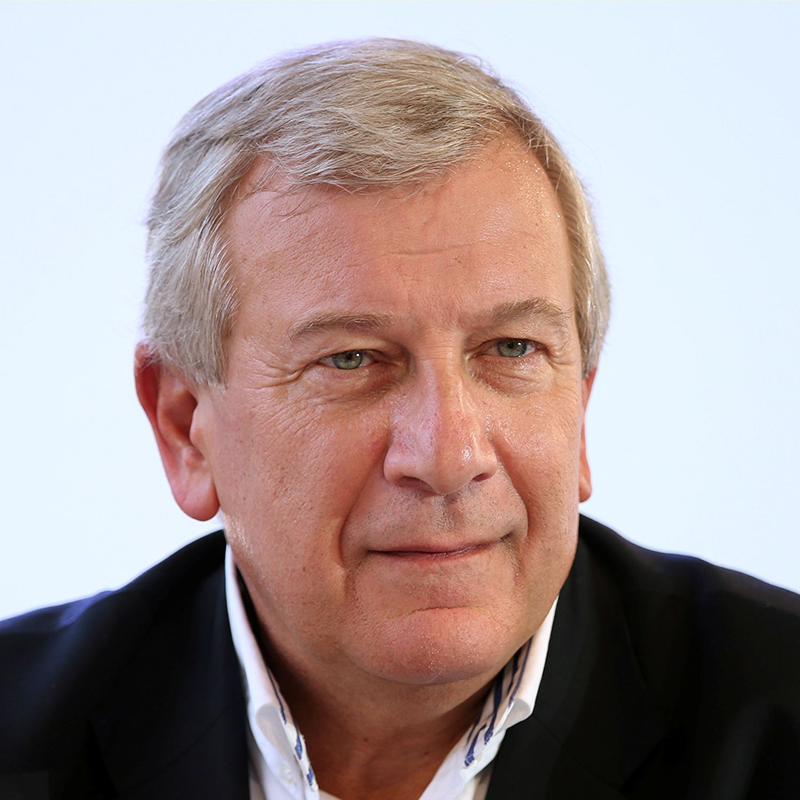
Richard Attias, CEO of the FII Institute. (Supplied)
He said: “Should I just focus on what my shareholders were telling me before, which is to be profitable, or should I be absolutely obsessed by these ESG issues, which will have potentially a short-term impact on profits?”
Directing the conversation on this issue is Hawazen Nassief, the FII Institute’s ESG adviser and vice president of ESG and external affairs at National Energy Services Reunited Corp. (NESR).
She told Arab News: “There’s all these debates that are being held as we speak, between different regions of the world, different economies, and there’s absolutely no consensus.
“Today, the way the rating methodologies are designed globally, they’re designed in a way that inherently has a lot of bias against some market structures that exist in emerging markets.

Hawazen Nassief, the FII Institute’s ESG Advisor and Vice President. (Supplied)
“We approach ESG from all three pillars, so we look at the governance, we look at the environment, and we look at the social aspects. But, you know, countries or companies, depending on where they are in the world, give more weightage to some of these over the others,” she said.
A report by the FII Institute earlier this year highlighted another major stumbling block in the debate — the vast inconsistencies in the existing rating systems currently on offer. For example, according to one rating method the British firm BAE Systems was ranked as “high risk” while another classed it as a “leader in ESG.”
“We don’t want to stigmatize anybody. We don’t want to label anyone as good or bad. Our approach at the FII is to help everyone improve because everybody needs to become an active player in this movement, otherwise it will be an elitist kind of movement and the emerging markets will be the biggest losers, and we don’t want that, we want this movement to move everybody in the right direction,” Nassief added.
We have a moral responsibility as the FII Institute to own this global conversation about ESG.
Richard Attias, FII Institute CEO
In order to be the catalyst for the movement, the FII Institute is proactively developing its own ratings methodology that investors can use to assess the ESG performance of companies, and which is inclusive of emerging market realities within their operating environments.
Attias said: “We cannot say that one size fits all, or this is the standard that everyone should use, it will apply equally in different markets. The challenges will be different, and that’s the kind of system we’re trying to create, a system that is nuanced, that is inclusive, that is holistic, and that really is customized for the needs and priorities of different markets.”
Nassief pointed out the issue of gender balance as an example where ratings could differ from country to country and lead to different outcomes.
Our approach at the FII is to help everyone improve because everybody needs to become an active player in this movement.
Hawazen Nassief, FII Institute’s ESG adviser
She said: “If you’re putting a KPI (key performance indicator) for companies in Germany you cannot use that same standard and apply it in Saudi Arabia or in Oman because the entry of women into the workplace is a relatively recent phenomenon.
“The specific KPIs or metrics underneath that theme should be different, or should be customized, with the understanding that companies cannot reach the same target within the same timeline or time frame.”
The institute has appointed an independent body to help with the development of its rating methodology and is in active dialogue with stakeholders in Asia, South America, Africa, and throughout the Middle East.
Nassief was confident that in October the rating system would offer a much needed and more balanced view of the world in relation to ESG.
“There aren’t any rating methodologies today that focus solely on emerging markets, and that’s what we’re creating … we’re bringing to the market something new, something that doesn’t exist today,” she added.


